U.S. Supreme Court puts the brakes on Trump tariffs, complicating the Fed’s rate-cut calculus
Summary
- The U.S. Supreme Court’s ruling that the Trump administration’s tariffs were unlawful has increased uncertainty over when the Fed will resume policy rate cuts.
- The Trump administration and the Treasury secretary said they will impose a 10% global tariff separate from existing tariffs and that no one should expect a decline in tariff revenue.
- Fed officials said they will monitor the economic fallout—including corporate decisions on investment and hiring and supply-chain restructuring—and step up engagement with market conditions and CEOs.
Forecast Trend Report by Period


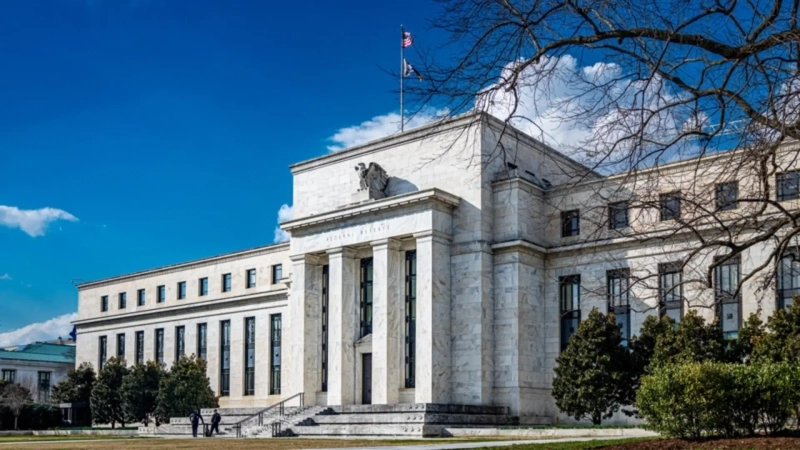
The U.S. Supreme Court ruled that the Donald Trump administration’s sweeping tariff measures were unlawful, further complicating the Federal Reserve’s monetary-policy calculus as it has been monitoring inflation and the broader economic trajectory.
According to Reuters on the 20th (local time), confidence within the Fed had been growing that tariff-driven price pressures would soon ease. But the ruling has introduced fresh uncertainty over when the Fed might resume cutting its policy rate. It has become harder to judge whether companies will shelve planned price hikes in light of the court decision, or whether policy uncertainty will prompt firms to delay hiring and investment as they did last year. Rate-futures markets also swung as bets split over whether the Fed will restart cuts in June or wait until July.
The Trump administration strongly pushed back against the ruling, announcing that—separate from existing tariffs—it would immediately impose a new 10% global tariff on imports from all countries, citing Section 122 of the trade law, among other authorities. U.S. Treasury Secretary Scott Bessent also said, “The legal battle over refunds for the invalidated tariffs, as mentioned in a speech to the Dallas Economic Club, could take anywhere from weeks to years. To fill the gap created by the Supreme Court ruling, we will use other lawful authorities to impose substitute tariffs,” adding, “No one should expect tariff revenues to decline.”
Fed officials are closely watching corporate responses and the economic fallout. Atlanta Fed President Raphael Bostic, speaking at an event in Birmingham, Alabama, said, “If companies have to be refunded the tariffs they paid, it would cause tremendous disruption,” adding that it remains unclear “whether this episode will reverse companies’ existing business models, including supply-chain restructuring, or whether the government can find new tools to impose tariffs at the same level.”
St. Louis Fed President Alberto Musalem told Fox Business that “if the new tariffs replace, on a one-for-one basis, the tariffs imposed under the existing International Emergency Economic Powers Act (IEEPA), my economic outlook would not change materially,” but added, “There could be a period of uncertainty as companies transition to paying different types of tariffs. I will communicate directly with key CEOs to understand how businesses respond.” Dallas Fed President Lorie Logan also said, “This ruling signifies new uncertainty,” adding that she would “closely monitor market conditions.”

Doohyun Hwang
cow5361@bloomingbit.ioKEEP CALM AND HODL🍀