Summary
- President Trump signed an order imposing a 10% global tariff on every country worldwide, saying it will take effect on the 24th.
- The measure is a 10% temporary tariff based on Section 122 of the Trade Act, and is intended to replace the existing reciprocal tariffs.
- The White House said key minerals, passenger cars, certain electronics and some aerospace products will be excluded from the new tariff.
Forecast Trend Report by Period


"10% temporary tariff takes effect on the 24th"
"Key minerals, passenger cars, etc. excluded"
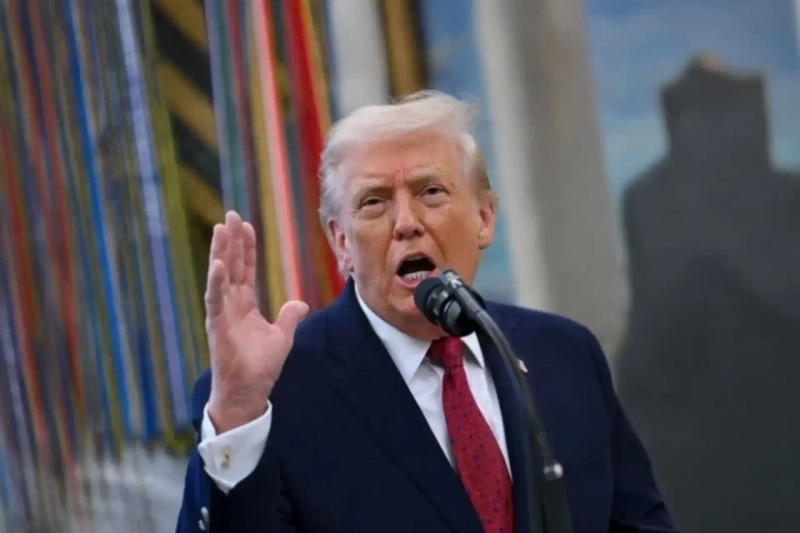
U.S. President Donald Trump on the 20th (local time) signed an order imposing a 10% global tariff on countries worldwide in response to a federal Supreme Court ruling invalidating country-by-country reciprocal tariffs.
In a post on the social media platform Truth Social that day, Trump said, "I just signed, from the Oval Office (the White House office), a global 10% tariff on every country in the world." He added that the tariff would "take effect almost immediately."
The move is based on Section 122 of the Trade Act. It is intended to replace the existing 10% baseline tariff, which can no longer be collected after the federal Supreme Court ruled that imposing reciprocal tariffs under the International Emergency Economic Powers Act (IEEPA) was unlawful.
Section 122 of the Trade Act grants the president authority to impose tariffs of up to 15% for up to 150 days to address balance-of-payments problems.
Trump had earlier said at a White House press briefing that the global tariff would "probably take effect in three days," and also said he would launch a tariff investigation under Section 301 of the Trade Act at the same time. Section 301 allows the U.S. to impose tariffs in response to unfair or discriminatory measures by foreign governments.
The federal Supreme Court that day found unlawful both the reciprocal tariffs based on the IEEPA and the imposition of fentanyl tariffs on the U.S., Canada and China, among others. It upheld the illegality rulings by the first and second instances. As a result, the Trump administration can no longer collect reciprocal tariffs it had imposed with differentiated rates by country.
South Korea’s reciprocal tariff, originally 25%, was lowered to 15% from November last year under a tariff agreement with the U.S., but Trump last month on the 26th pressured that he would raise reciprocal tariffs back to 25% along with auto tariffs, citing delays in the South Korean National Assembly’s processing of a special bill on U.S.-bound investment.
Analysts say that even if reciprocal tariffs are nullified, other measures such as auto tariffs remain, meaning the possibility of higher tariffs on South Korea has not disappeared entirely.
The White House said the 10% temporary tariff announced by Trump immediately after the Supreme Court’s ruling that reciprocal tariffs were unlawful will take effect at 0:01 a.m. Eastern Time on the 24th. In a proclamation that day, the White House explained that the new tariff would not apply to certain items including key minerals and passenger cars.
Items excluded from the tariff include certain electronics, parts related to passenger cars and buses, and some aerospace products. Natural resources and fertilizers that cannot be grown, mined or produced within the United States were also included as exceptions.
Shin Hyun-bo, Hankyung.com reporter greaterfool@hankyung.com

Korea Economic Daily
hankyung@bloomingbit.ioThe Korea Economic Daily Global is a digital media where latest news on Korean companies, industries, and financial markets.