PiCK
US Loosens the Shackles While Korea Tightens the Noose?…Diverging Paths on Stablecoin Legislation
Summary
- The United States said it is expanding conditions for broker-dealers and institutions to enter the virtual asset market through stablecoins, a haircut cut to 2%, and safe-asset treatment.
- The United States said it is seeking to bring the global stablecoin market into the regulated mainstream through the GENIUS Act, the Clarity Act, allowing nonbank issuance, and debates on interest payments.
- It was reported that South Korea is pushing the 51% rule, regulation capping controlling shareholders’ stakes in exchanges, and a blanket ban on stablecoin interest, raising concerns that market autonomy and innovation in the virtual asset market could be undermined.
Forecast Trend Report by Period


US grants stablecoins ‘safe-asset’ status
Debates on allowing nonbank issuance and interest payments
Korea sticks with the 51% rule and equity-stake restrictions
Industry: “Galapagos-style regulation…risk of being left behind”

National strategies to seize leadership in the global virtual asset (cryptocurrency) market are clearly diverging. The United States is widening on-ramps for institutional capital through deregulation and accelerating industry development, while South Korea is drawing criticism for pursuing stringent rules—such as the “51% rule” and limits on exchange ownership stakes—that constrain market autonomy.
“Grow the industry through deregulation”…US unlocks stablecoins
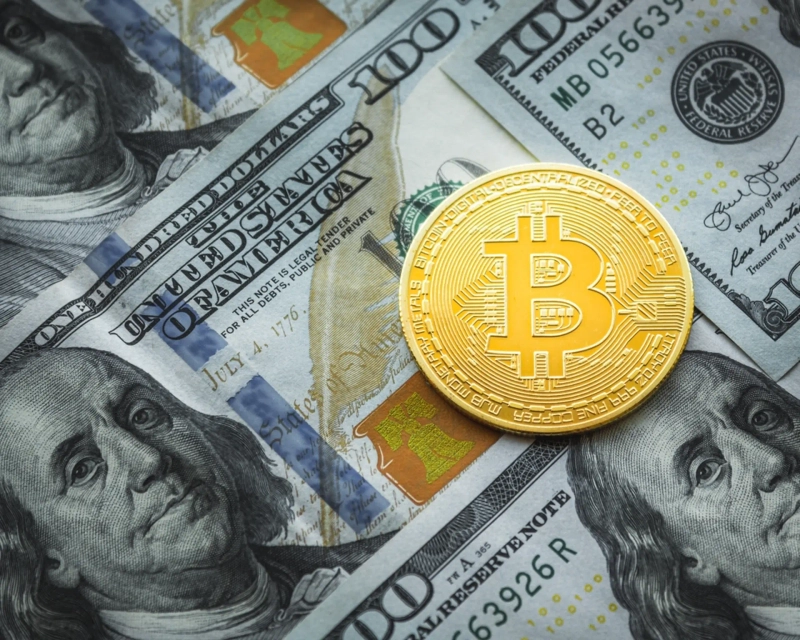
The biggest topic in the US virtual asset market lately has been the Securities and Exchange Commission’s (SEC) sweeping regulatory easing. On the 19th (local time), the SEC’s Division of Trading and Markets released new guidance clarifying the accounting treatment of payment stablecoins when applying broker-dealers’ net capital rules.
In particular, it sharply reduced the “haircut” (Haircut: risk-asset valuation discount rate) applied to payment stablecoins held by broker-dealers from 100% to 2%. A haircut refers to the percentage by which a broker-dealer discounts an asset’s book value—more heavily for volatile assets—when calculating the net capital it must maintain above a certain level to protect customers during periods of stress.
Until now, US broker-dealers effectively treated the haircut on stablecoins as 100%, meaning the asset value of stablecoins on their books was regarded as “0 won.” For regulated financial institutions, merely holding them was a massive financial burden. But with this move, payment stablecoins will now be treated as a “safe asset” on par with money market funds (MMFs) that hold US Treasuries and the like.
Forbes assessed the SEC’s move by saying, “Going forward, broker-dealers will be able to fully jump into a range of integrated virtual-asset services for institutional investors, including entry into tokenized securities (RWA) markets and the management of spot exchange-traded products (ETPs).”
The US is also moving quickly on legislation. Through the “GENIUS Act,” the United States early on allowed not only banks but also credit unions and nonbank financial institutions to issue payment stablecoins if they meet certain requirements. It left the door open for issuance as long as issuers register with federal or state supervisors and fulfill monthly reporting obligations. The global stablecoin market is currently led by nonbank private companies such as Tether (USDT) and Circle (USDC), and the US is moving to bring them into the regulated mainstream.
In addition, proposals to allow stablecoin interest payments—centered on the “Clarity Act”—are being actively discussed. While the banking sector is strongly opposed, the White House has stepped in to mediate. By restricting interest paid simply for holding while allowing rewards based on specific activities or transactions, it is seeking a reasonable compromise that supports industry growth.
As the US creates a more crypto-friendly environment, Meta, Facebook’s parent company, is also pushing to introduce stablecoin payment systems within its platforms in the second half of this year. Meta, however, signaled an indirect entry via partnerships, saying it has “no plan to issue its own stablecoin directly” to minimize regulatory risk.
Korea’s hardline ‘51% rule and stake limits’…blanket ban on interest payments too

By contrast, South Korea is raising the possibility of including tough regulations in the second-stage legislation process for the “Digital Asset Framework Act.” At the center of the controversy are the “51% rule,” which limits stablecoin issuance to bank-centered entities, and regulations that cap controlling shareholders’ stakes in virtual asset exchanges.
The “51% rule” is an issue the Bank of Korea has strongly advocated on the grounds of financial stability. It would grant eligibility to issue stablecoins only to bank-led consortia in which bank ownership exceeds “50%+1 share.” In addition, the “controlling shareholder stake regulation” being pushed by the Financial Services Commission would forcibly cap major shareholders’ stakes in exchanges at 15–20%—a level comparable to alternative trading systems (ATS) under the current Capital Markets Act. If implemented, it would fundamentally shake the governance structures of all domestic virtual asset exchanges, including Dunamu (Upbit), Bithumb, Coinone, Korbit, and Streami (Gopax).
The industry is strongly arguing that these two issues should be excluded from the bill to foster innovation in Korea’s virtual asset sector. But the political sphere appears instead to be doubling down on pushing the regulations through. After a meeting of the Democratic Party’s Digital Asset Task Force (TF) on the 24th, lawmaker Lee Jung-moon said, “(If we insist only on our views) there are drawbacks and harms in delaying the processing of the bill,” adding, “Including the government’s proposal in the TF plan could be a compromise,” leaving the door open to incorporating the regulations.
That same day, Democratic Party policy chief Han Jeong-ae went a step further with an even tougher stance. Han said that if the TF does not accept the issues of limiting controlling shareholders’ stakes in virtual asset exchanges and allowing bank-centered consortia to issue stablecoins, she would “introduce the bill directly.” Due to such political pressure, the ruling party’s draft of the Digital Asset Framework Act related to stablecoins—expected to be introduced as early as next week through consultations with financial authorities, the policy committee, and the presidential office—now appears highly likely to include the 51% rule and equity-stake restrictions as-is.
On top of that, the ruling party is also reviewing a policy to impose a blanket ban on stablecoin interest payments. It would broadly define the scope of “interest” that an issuer can pay to holders to include not only cash but also any form with property value such as discounts, rewards credits, and points—effectively blocking incentives.
Advisers affiliated with the TF said, “Not a single adviser openly expressed support for the 51% rule and exchange stake regulation,” adding, “There may be some neutral views, but most advisers are concerned that including the 51% rule and exchange stake regulation would undermine innovation.”
An industry official pointed out, “The US is focused on growing the market pie by allowing nonbanks to enter based on clear guidelines, but Korea is bogged down in Galapagos-style regulations that infringe market autonomy, such as the ‘51% rule’ and stake restrictions.” The official added, “Stablecoin safety and trust do not stem from the issuer’s ‘ownership structure,’ but from reserve transparency, firm redemption guarantees, and investor protection mechanisms in the event of bankruptcy,” and said, “Bank-led stablecoins are unlikely to deliver innovation.”

Doohyun Hwang
cow5361@bloomingbit.ioKEEP CALM AND HODL🍀