Bracing for Saudi-Iran supply disruptions? Oil exports rise amid tensions over possible U.S. strike
Summary
- Middle Eastern producers such as Saudi Arabia and Iran have sharply increased crude oil exports and loadings, a move seen as preparation for potential supply disruptions.
- With concerns rising over a possible military clash between the United States and Iran and a potential blockade of the Strait of Hormuz, the export surge was described as resembling patterns seen ahead of past spikes in military tensions.
- As markets focus on the outcome of nuclear talks between the United States and Iran, global oil prices—notably WTI—were reported to be flat around $65.42 a barrel.
Forecast Trend Report by Period


Saudi daily exports hit a three-year high
Iran boosts tanker loadings
Similar move seen last year ahead of a U.S. strike
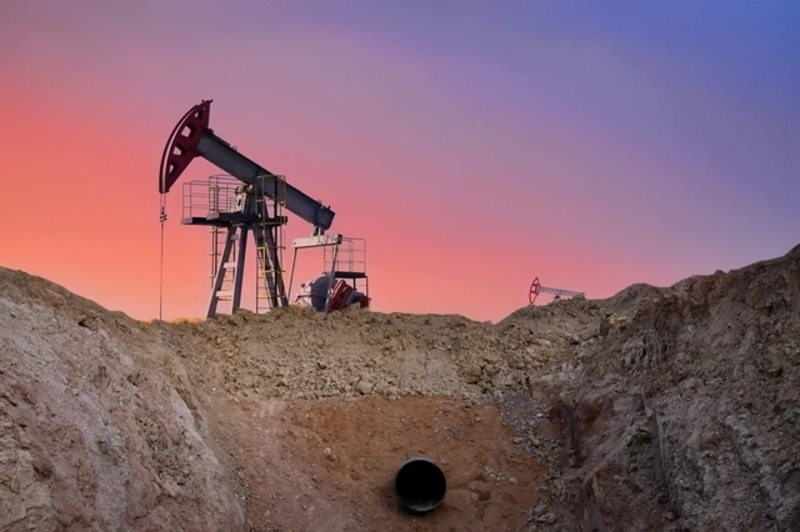
As concerns grow over a potential military clash between the United States and Iran, Middle Eastern countries appear to be increasing crude exports. Analysts say they are proactively supplying additional barrels in case disruptions emerge later.
According to tanker-tracking data compiled by Bloomberg, Saudi Arabia’s average crude loadings totaled about 7.3 million barrels a day from the 1st through the 24th of this month. If the trend holds, exports will average 400,000 barrels a day more than last month’s level. That would be the largest volume since April 2023.
Including flows from Iraq, Kuwait and the United Arab Emirates (UAE), crude exports from Middle Eastern producers are estimated to rise by about 600,000 barrels a day versus the same period last month.
The export increase comes as U.S. President Donald Trump steps up military pressure on Iran. Experts said Middle Eastern producers are expanding supply in preparation for the possibility of a U.S.-Iran military confrontation. Saudi Arabia also moved to ramp up output last June ahead of a U.S. strike on Iran’s nuclear facilities.
Iran has warned it would block the Strait of Hormuz if the United States attacks. The waterway, which links the Persian Gulf and the Arabian Sea, carries roughly a quarter of global seaborne crude trade. Saudi Arabia, along with Iraq, Kuwait, the UAE and Iran, exports oil via the strait—underscoring why any Iranian move to choke off Hormuz would inevitably disrupt shipments.
Bahri, Saudi Arabia’s largest crude tanker operator, is reported to have temporarily deployed at least five very large crude carriers (VLCCs). Shipping companies typically secure additional vessels only when their own fleets cannot meet cargo demand.
Still, some see Saudi Arabia’s export increase as coinciding with OPEC+’s gradual rollback of existing production cuts. Producers are set to hold a meeting this week to discuss output levels for April and beyond. Seasonal factors also played a role, as domestic crude consumption for power generation declines, allowing more barrels to be diverted to exports.
Iran sharply expanded loadings at Kharg Island, its key export hub. According to commodity analytics firm Kpler, about 20.10 million barrels were loaded onto tankers between Feb. 15 and 20—about three times the volume in the same period last month—exceeding 3 million barrels a day.
Bloomberg noted that “this surge resembles patterns seen in the past immediately before military tensions escalated,” adding that satellite imagery showed the number of tankers waiting near Kharg Island more than doubled in mid-month while crude volumes in on-island storage tanks declined.
Markets are watching the outcome of U.S.-Iran nuclear talks. The two countries are scheduled to hold a third round of negotiations in Geneva, Switzerland, on the 26th. Oil prices have been little changed this week. On the New York Mercantile Exchange, West Texas Intermediate (WTI) for April delivery traded at $65.42 a barrel, down $0.21 (0.32%) from the previous session.
By Han Myung-hyun wise@hankyung.com

Korea Economic Daily
hankyung@bloomingbit.ioThe Korea Economic Daily Global is a digital media where latest news on Korean companies, industries, and financial markets.