"Companies start selling dollars…FX supply-demand factors improving"
Summary
- Bank of Korea Governor Lee Chang-yong said that as expectations for the won-dollar exchange rate to reach 1,500 won have weakened, supply-demand factors—including corporate dollar selling—are changing.
- He said the National Pension Service’s announcement that it would cut overseas investment by more than US$20 billion and make FX hedging more flexible significantly contributed to the decline in the exchange rate.
- He warned that the domestic stock market has risen at an unprecedented speed, raising the risk of greater volatility in the event of shocks and vulnerability stemming from increased leverage.
Forecast Trend Report by Period


Lee Chang-yong: "National Pension Service’s FX hedging also contributed"
"A sharp short-term stock rally is a risk factor"
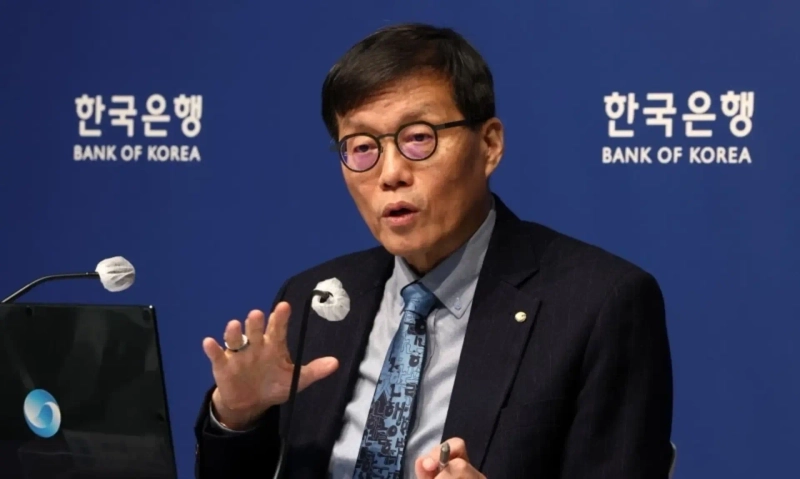
Bank of Korea Governor Lee Chang-yong said on the 26th that recent moves in the won-dollar exchange rate suggest "supply-demand factors are changing as expectations that the exchange rate would go to 1,500 won have weakened." He also cautioned that the stock market’s surge since the start of the year has been "rising at an unprecedented pace globally," warning that volatility could increase in the event of domestic or external shocks.
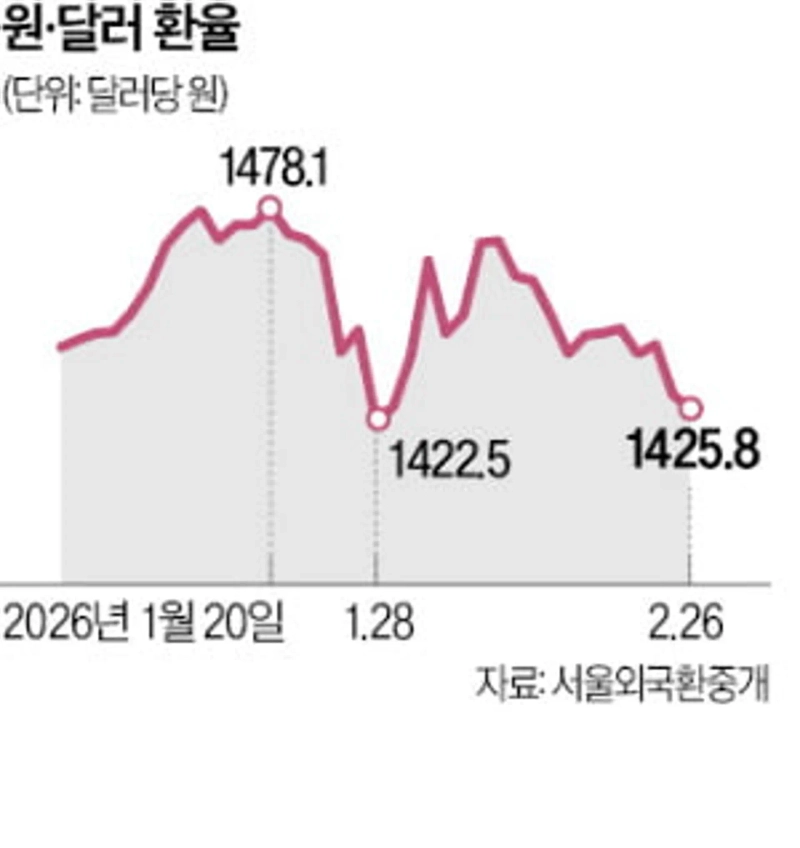
At a press briefing, Lee attributed the won-dollar rate’s recent fall to the 1,420-won range to shifts in expectations and supply-demand dynamics. On the fading expectation that the exchange rate would keep rising, he said, "It contributed significantly that the National Pension Service announced a few weeks ago it would cut overseas investment by more than US$20 billion and make FX hedging more flexible."
He added, "As expectations that the won-dollar rate would go to 1,500 won have weakened, companies have started selling the dollars they hold, and that is now acting as a supply-demand factor lowering the exchange rate." Citing a market in which the won is strong even as the dollar and yen have weakened over the past two days, he said this "shows that supply-demand factors are changing."
Regarding the 'National Pension New Framework' being discussed by the government, the Bank of Korea and the National Pension Service, he said, "The Bank of Korea has sufficiently conveyed its sense of the issues, and the government is also discussing improvements," adding that "once the direction is sorted out soon, there will be positive changes in the FX market as well."
Still, on the outlook for the exchange rate, Lee took a cautious stance, saying, "Volatility remains high, so it is too early to be reassured." While noting that "(dollar) outflows driven by the National Pension Service have decreased significantly," he said, "Personal investment this January and February, including in exchange-traded funds (ETFs), increased at nearly the same pace as in October and November last year, when it surged sharply."
On the recent sharp rise in stock prices, Lee said, "In addition to the government’s efforts to improve capital-market制度, the upswing is being supported by earnings improvements across various industries such as semiconductors," adding, "I view it positively that the domestic market has moved out of an undervalued state and leveled up (in terms of valuation levels)."
On foreign investors’ net selling of Korean stocks since the start of the year, he said, "Foreigners bought a lot of Korean stocks when prices were low amid martial law," and speculated that "they are taking profits because prices have risen significantly." He added, however, that he was concerned that "if leverage (borrowed investing) increases sharply during the (stock-price surge) process, it becomes vulnerable to volatility."
Reporter Jwa Dong-wook leftking@hankyung.com

Korea Economic Daily
hankyung@bloomingbit.ioThe Korea Economic Daily Global is a digital media where latest news on Korean companies, industries, and financial markets.