"U.S. aim is to topple Iran’s regime…different from last year’s strike on nuclear sites"
Summary
- The Donald Trump administration said it has launched a large-scale, sustained operation against Iran, with the goal of toppling the regime.
- The airstrikes were described as a joint operation by the U.S. and Israel, with key targets including Iran’s leadership and military facilities, and the destruction of substantial military capabilities such as missiles.
- Iran retaliated with missile attacks targeting nearby U.S. bases, and with nuclear talks under way, it was interpreted that reaching an agreement will be difficult, including over uranium enrichment.
Forecast Trend Report by Period


Broader operational scope and scale
than the June strike on nuclear facilities last year
U.S. targets Iran’s supreme leader
Outcome of the attacks still uncertain
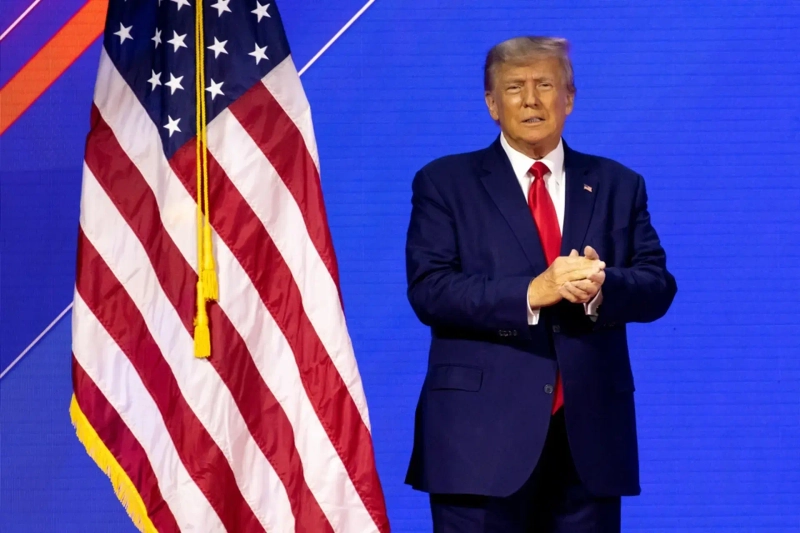
The Donald Trump administration in the United States, which has demanded that Iran abandon its nuclear program, has launched attacks against Iran. Unlike last June’s strikes on Iran’s nuclear facilities, analysts say this time the objective extends to toppling the regime. Iran retaliated by attacking U.S. bases in the Middle East and Israel.
U.S. President Donald Trump on the 28th (local time) released a video statement on Truth Social at around 2:30 a.m., saying, "The United States has begun a large-scale, sustained operation to ensure that this evil and radical dictatorship (the Iranian government) cannot threaten our core national security interests." The U.S. Department of Defense said the operation is named 'Epic Fury.'
The attack was confirmed as a joint U.S.-Israeli operation. Earlier, around 1 a.m. that day, smoke was seen rising over Tehran, Iran’s capital. Israel’s Channel 12, citing sources, reported that the airstrikes were decided on at dawn for a surprise attack.
After the start of the attacks, both countries called for regime change in Iran. President Trump said, "Our goal is to protect the American people by eliminating the imminent threat posed by the Iranian regime, an extremely brutal and horrific group." He then urged Iranians, after the strikes, to "take control of the government themselves." Israeli Prime Minister Benjamin Netanyahu likewise claimed the airstrikes would "create conditions for the brave Iranian people to shape their own destiny."
Expectations are growing that the scope and scale of this air campaign will be broader than 'Midnight Hammer,' last June’s operation that struck three nuclear sites. The New York Times (NYT) said, "President Trump’s remarks clearly distinguish the war aims of last June from today’s aims," adding, "The objective he described is to remove (Iran’s) leadership and open the way for revolution."
The targets are believed to have been Iran’s leadership and military facilities. The Times of Israel and the NYT, citing sources, reported that "the main targets of the first U.S.-Israeli strikes on Iran were Iran’s leadership and President Masoud Pezeshkian," and that "missiles dispersed across launch sites throughout Iran were also among the initial targets." In his video statement, President Trump claimed that following last year’s destruction of Iran’s nuclear program, the U.S. would this time destroy massive military capabilities such as missiles.
Iran moved quickly to retaliate. According to Iran’s semi-official Fars News Agency, Iran launched missile attacks targeting nearby U.S. bases in Qatar, Kuwait, the United Arab Emirates (UAE) and Bahrain. Iran’s Supreme National Security Council said on Telegram, "The enemy believes innocent Iranians will succumb to their despicable demands because of such cowardly acts," adding, "The armed forces of the Islamic Republic of Iran have begun a powerful response to their vicious actions."
The attack came as the U.S. and Iran were engaged in nuclear talks. The two sides held a third round of talks on the 26th in Geneva, Switzerland. While no conclusion was reached at the time, there was speculation that the risk of military conflict between the two had somewhat eased, after reports said they agreed to continue discussions with technical teams in Vienna, Austria, where the International Atomic Energy Agency (IAEA) headquarters is located.
However, the Trump administration appears to have concluded that it would be difficult to find common ground with Iran on the key issue of uranium enrichment.
President Trump has warned that he could carry out military strikes if Iran does not abandon its nuclear program. Earlier, on the 19th, he issued an ultimatum to Iran, saying "10 days or 15 days is almost the maximum" for an Iran that refuses to give up its nuclear program.
Over the past month, the U.S. has strengthened its military presence near the Middle East. After deploying the aircraft carriers USS Abraham Lincoln and USS Gerald R. Ford, it has also amassed airpower on the largest scale since the 2003 Iraq war.
By Han Myung-hyun wise@hankyung.com

Korea Economic Daily
hankyung@bloomingbit.ioThe Korea Economic Daily Global is a digital media where latest news on Korean companies, industries, and financial markets.