U.S. expert: Prolonged Hormuz blockade could deal a blow to South Korea’s economy, disrupt exports
Summary
- U.S. experts said they warned that a prolonged closure of the Strait of Hormuz could deal a severe blow to the South Korean economy, energy supplies, and the global supply chain.
- They said they were concerned that, although 70% of South Korea’s crude oil and 30% of its natural gas come from the Middle East and it holds supplies at strategic stockpiling sites and 52 days’ worth of LNG, a prolonged conflict is likely to significantly affect its export capacity.
- They said experts projected that a conflict tied to 20% of the world’s oil supply passing through the Strait of Hormuz could trigger a sharp rise in global oil prices, increasing the burden on consumers worldwide.
Forecast Trend Report by Period


70% of South Korea’s crude oil, 30% of natural gas supplied from the Middle East
"Potential for a sharp spike in global oil prices"
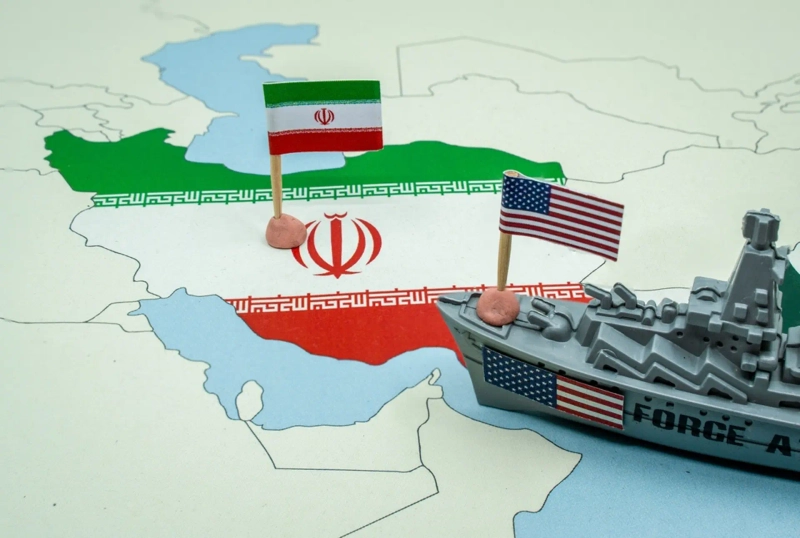
As the Strait of Hormuz crisis has become a reality amid large-scale joint airstrikes by the United States and Israel on Iran and Iran’s retaliatory attacks, a U.S. expert analysis warned that a prolonged closure of the strait could inflict serious damage on the South Korean economy.
James Kim, director of the Korea program at the Stimson Center, a U.S. think tank, warned on the 1st (local time) that the incident could shock South Korea’s economy via the energy supply sector.
Kim noted that roughly 70% of the crude oil South Korea imports and up to 30% of its natural gas are supplied from the Middle East region where the Strait of Hormuz is located, and that the two resources account for more than 56% of South Korea’s total energy consumption.
He said that "South Korea can manage as long as the conflict does not have a long-term impact on cargo movements through the Strait of Hormuz," citing that South Korea has stockpiled more than 100 million barrels of crude oil across nine strategic stockpiling sites and holds 52 days’ worth of liquefied natural gas (LNG).
However, he voiced concern that "if the conflict drags on in a state where international shipping has difficulty accessing the Strait of Hormuz, South Korea is likely to face significant impacts not only on maintaining power supply but also on its ability to produce goods within global supply chains and export them."
He also raised safety concerns for South Koreans, citing statistics from the Overseas Koreans Agency showing that 17,823 South Koreans were residing in the Middle East as of last year and an estimate that 295,000 South Koreans visit the region annually.
Senior fellow Emma Ashford also pointed out that about 20% of the world’s daily oil supply passes through the Strait of Hormuz, projecting that oil prices could surge.
Ashford emphasized that "historically, initial oil price spikes can occur not only with a partial blockade but even when insurers begin to grow wary of safe passage along sea routes."
She added that oil prices may not rise sharply due to increased U.S. shale oil output and alternative energy sources, but warned that "if a large-scale war with Iran ends up affecting maritime transport for other Gulf countries as well, prices could easily jump, increasing the burden on consumers worldwide."
A Stimson Center expert assessed that the strikes raise issues in terms of legitimacy, effectiveness, and long-term repercussions.
Senior fellow Christopher Preble criticized the war carried out without congressional approval or public debate as "unconstitutional, reckless, and a betrayal of the promise to put the interests of the American people first."
Kelly Grieco, a senior fellow, also noted the limits of effectiveness, saying, "Air power can destroy facilities, degrade military capabilities, and remove commanders, but it cannot reshape domestic politics."
Research analyst Evan Cooper warned that "President Trump’s decision to reject diplomacy and choose force will ultimately encourage nuclear proliferation and make adversaries hesitant to engage in diplomacy with the United States."
Choi Soo-jin, Hankyung.com reporter naive@hankyung.com

Korea Economic Daily
hankyung@bloomingbit.ioThe Korea Economic Daily Global is a digital media where latest news on Korean companies, industries, and financial markets.