Gulf states issue 'strong condemnation' over Iranian drones and missiles… military retaliation also floated
Summary
- The foreign ministers of the six Gulf Cooperation Council member states said they condemn Iran’s drone and ballistic missile strikes as a “treacherous attack” and warned of the possibility of a military response.
- They stressed that stability in the Gulf region is a fundamental pillar of global economic stability and urged Iran to immediately halt its attacks.
- They said Iran’s concentrated attacks caused damage to Gulf states’ airports—including Dubai International Airport—as well as civilian infrastructure and energy facilities, and resulted in civilian casualties.
Forecast Trend Report by Period


Fires break out across Dubai, the 'New York of the Middle East'
Gulf states condemn 'treacherous attack'
Iran claims it is "trying to strike only military facilities"
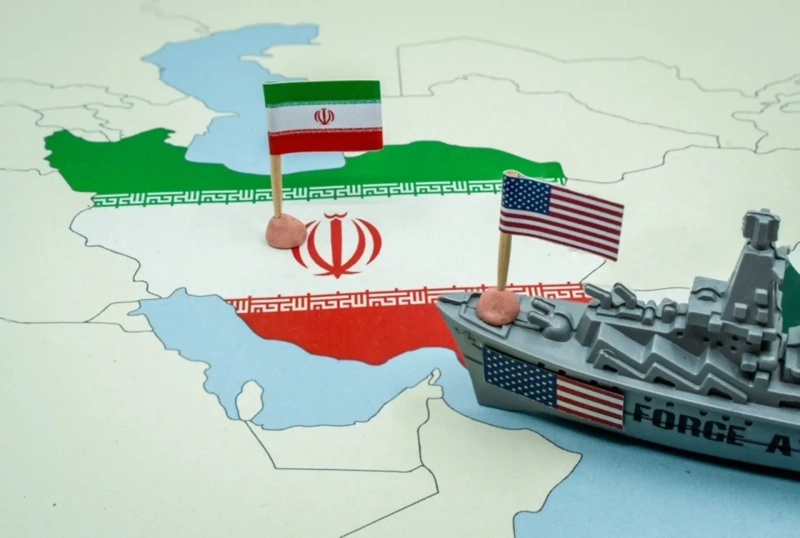
Foreign ministers from Gulf countries including the United Arab Emirates (UAE), Qatar and Bahrain—targets of Iran’s concentrated attacks—held an emergency meeting, strongly denounced Iran and warned they could pursue a military response.
According to AFP, the foreign ministers of the six Gulf Cooperation Council (GCC) member states—the UAE, Bahrain, Saudi Arabia, Oman, Qatar and Kuwait—met via videoconference on the 1st (local time) and condemned Iran’s “treacherous attack,” saying it was causing widespread damage.
In a statement released after the meeting, the ministers said they would take “all necessary measures” to safeguard national security and stability and defend their territory, warning that this “includes options to respond to (Iran’s) attacks.”
Urging Iran to halt its attacks immediately, the ministers stressed that “stability in the Gulf region is not merely a regional concern but a fundamental pillar of global economic stability.”
Major cities in Gulf countries hosting U.S. military bases—such as Dubai, Doha and Manama—have been subjected to concentrated Iranian ballistic missile and drone attacks since the outbreak of war on the 28th of last month.
In particular, Iranian missile and drone strikes have extended beyond U.S. facilities in these countries to airports, hotels and apartments—hitting transport infrastructure and large numbers of civilian residential and commercial facilities—resulting in many local civilian casualties.
Iran maintains that it is officially carrying out attacks targeting U.S. military facilities and is not deliberately aiming at civilian sites.
Iranian Foreign Minister Abbas Araghchi said in an interview with Al Jazeera that he hopes it will be understood that “what is happening in the region is neither our fault nor our choice,” explaining that he had asked the military to exercise caution and target only U.S.-related facilities.
Dubai in the UAE—one of the Middle East’s most prosperous cities and a transport and financial hub in the region, often dubbed the “New York of the Middle East”—is in particular facing concentrated Iranian attacks.
Dubai International Airport, a global hub, sustained partial damage to a terminal building in a drone attack, and four employees were injured.
The UAE Ministry of Defense said that through the 1st, a total of 165 ballistic missiles and 541 unmanned aerial vehicles (drones) had arrived from Iran, and that 35 drones penetrated air defenses and fell inside its territory, killing three people.
In protest, the UAE announced on the 1st that it would close its embassy in Iran and withdraw all diplomatic missions.
Iran’s attacks also extended to Qatar, which has served as a mediator between Iran and Israel.
Majed Al-Ansari, spokesperson for Qatar’s Ministry of Foreign Affairs, told CNN that Qatari fighter jets intercepted Iranian drones and projectiles targeting civilian infrastructure, including the international airport.
Al-Ansari said Qatar’s offshore and onshore energy facilities were defended and workers are safe, but warned, “We cannot stand by and watch such attacks. Iran must pay a price for its blatant attack on our people.”
Iran’s large-scale attack targeting civilian facilities in neighboring Gulf countries is being viewed as an unusual move.
Shin Min-kyung, Hankyung.com reporter radio@hankyung.com

Korea Economic Daily
hankyung@bloomingbit.ioThe Korea Economic Daily Global is a digital media where latest news on Korean companies, industries, and financial markets.