Qatar halts output at world’s largest LNG facility after Iranian drone attack
Summary
- QatarEnergy said it has suspended operations at the world’s largest LNG production facility following an Iranian drone attack.
- Europe’s benchmark gas price jumped more than 45%, posting the biggest rise in about four years, it said.
- Supply disruptions are spreading as Saudi Arabia shut Ras Tanura refining facilities, while Iraq’s oil facilities and Israel’s gas fields also moved to halt operations, it said.
Forecast Trend Report by Period


European benchmark gas price posts biggest jump in four years
Iran steps up airstrikes on US allies in the Middle East
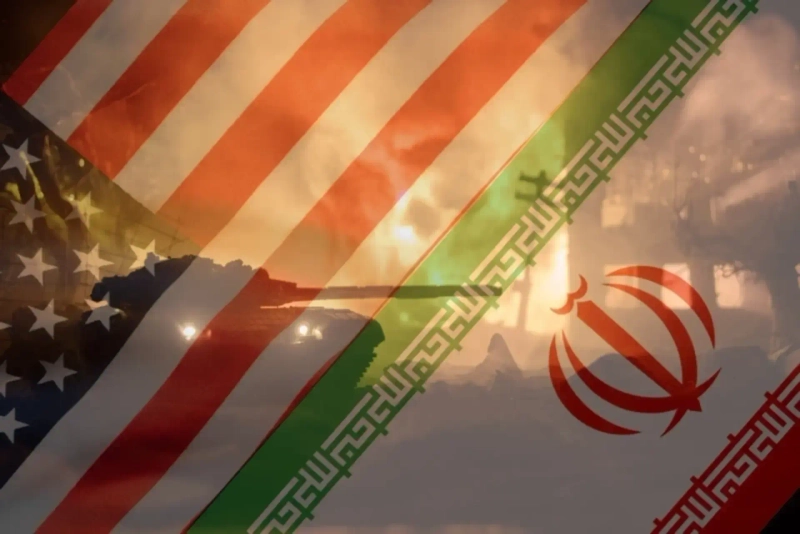
Qatar, a major producer of liquefied natural gas (LNG), has halted operations at the world’s largest LNG production facility following an Iranian drone attack.
According to CNBC, Bloomberg and Reuters on the 2nd (local time), QatarEnergy, a key LNG producer in the Middle East, said it suspended LNG production after Iranian drones struck facilities at the Ras Laffan complex—the world’s largest LNG production site—and the Mesaieed Industrial City.
European gas prices surged more than 45% on the day, marking the biggest jump in roughly four years. Dutch front-month futures, Europe’s benchmark gas price, rose 45% to 46.19 euros per megawatt-hour as of 2:17 p.m. Amsterdam time.
Qatar’s Ministry of Defence said earlier that two drones launched from Iran attacked facilities inside Qatar. QatarEnergy said its facilities in the Ras Laffan Industrial City and Mesaieed Industrial City were damaged in the attack. The ministry added there were no casualties.
Iran launched missile and drone attacks against US allies in the Gulf in retaliation for the death of Supreme Leader Ayatollah Ali Khamenei in large-scale US and Israeli airstrikes.
Data from energy consultancy Kpler show about 20% of global LNG exports are produced in the Gulf—particularly in Qatar—and shipped via the Strait of Hormuz.
Earlier, Saudi Arabia said it shut refining facilities after a fire broke out during the interception of an Iranian drone targeting a refinery in Ras Tanura, adding that the situation was currently under control. The Ras Tanura refining facilities are part of an energy complex on Saudi Arabia’s Gulf coast that also serves as an export terminal, producing 550,000 barrels a day of transport fuels such as diesel and small volumes of gasoline.
Iraq also halted production at most oil facilities in Kurdistan.
Israel has also moved to suspend operations at several major gas fields, including the Leviathan and Tamar fields, which had been exported mainly to Egypt, as part of a $35 billion export deal.
In Iran, two days earlier on the 28th, an explosion was heard on Kharg Island, which handles 90% of Iran’s crude exports, though it is not known what damage, if any, was caused to the facilities.
Iran is OPEC’s third-largest oil producer, accounting for about 4.5% of global oil supply. Iran’s crude output is about 3.3 million barrels a day, with an additional 1.3 million barrels of condensate and other liquid fuels.
Bloomberg tanker-tracking data indicate crude exports from the Ras Tanura offshore island and the nearby Juaymah single-point mooring are proceeding smoothly. All six berths are operating, with two very large crude carriers (VLCCs) and one Aframax tanker loading crude at the offshore island.
Kim Jeong-a, contributing reporter kja@hankyung.com

Korea Economic Daily
hankyung@bloomingbit.ioThe Korea Economic Daily Global is a digital media where latest news on Korean companies, industries, and financial markets.