PiCK
[Analysis] “Markets vulnerable after Iran strikes… Bitcoin likely to be rattled further by oil and Fed variables”
Summary
- Wintermute said that following U.S. and Israeli strikes on Iran, risk assets, especially Bitcoin, are in a structurally vulnerable position.
- It said that rising energy prices and the resulting possibility of delayed Fed rate cuts are weighing on growth assets and the broader crypto market.
- Citing ETF flows, a surge in DVOL, and a bear-market pattern in altcoins, it said caution is warranted and that the Strait of Hormuz and whether tensions ease will drive near-term direction.
Forecast Trend Report by Period


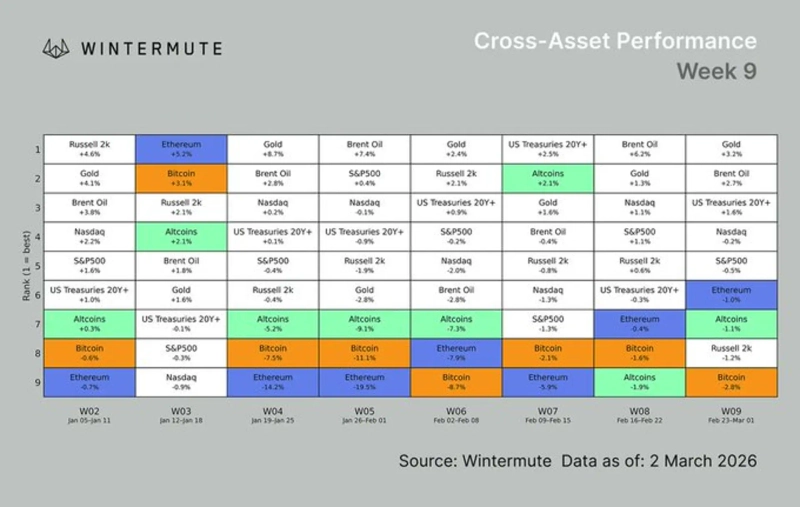
Global crypto market maker Wintermute said markets are structurally vulnerable in the wake of U.S. and Israeli strikes on Iran.
In a market update posted on X (formerly Twitter) on the 2nd (local time), Wintermute said that “geopolitics has taken the wheel,” adding that “following the U.S. and Israeli attacks on Iran, risk-off moves emerged across risk assets.”
According to the report, Bitcoin (BTC) fell over the weekend to as low as $63,000 before rebounding to around $67,000. It added that with the conflict now in its third day and the Strait of Hormuz effectively sealed off, there have been no clear signals of de-escalation.
The macro backdrop is also weighing on markets. International oil prices jumped about 9% in a single day to top $80 a barrel, and the Brent outlook was revised up to $100. Gold also climbed to around $5,400 an ounce, lifting its market capitalization by roughly $1 trillion in a short period. U.S. equities plunged early in the session, and the volatility index (VIX) hit its highest level of the year.
Wintermute said that “if elevated energy prices persist, core inflation could become sticky again,” and that “this increases the likelihood of delayed Fed rate cuts and weighs on growth assets.”
It also assessed that the crypto market is being heavily influenced by macro variables. The report said, “Bitcoin has seen some rebound while still down 45% from its all-time high, but the spillover effects of the energy shock have not yet been fully priced in.”
That said, ETF flow data showed some positive signals. Net inflows of more than about $1 billion late last week briefly halted a five-week streak of outflows. However, cumulative outflows since the start of the year total roughly $4.5 billion. Institutional participation in the over-the-counter (OTC) market was reported to be markedly lower than in the prior $85,000–$95,000 range.
Volatility gauges also surged. The crypto volatility index (DVOL) rose from the 30s–40s to around 55, while the options market is pricing in daily moves of 2.5–3%. Some market participants argue that if Bitcoin falls into the mid-to-high $50,000s, it could create an attractive risk-reward zone on a 12–18 month horizon.
On altcoins, it said they are “showing a classic bear-market pattern,” adding that “while short-term bounces occur, the lack of chase buying suggests limited sustainability.”
Wintermute said that “for now, caution comes first,” adding that “whether the Strait of Hormuz is reopened and signs of de-escalation will determine short-term direction.” It added that “if energy prices remain elevated and the Fed’s policy response is constrained, risk assets broadly could face further pressure.”

Minseung Kang
minriver@bloomingbit.ioBlockchain journalist | Writer of Trade Now & Altcoin Now, must-read content for investors.