KDAC CEO Cho Sung-il: “With corporate digital-asset investment set to expand… specialized custody infrastructure must be strengthened”
Summary
- KDAC CEO Cho Sung-il said that, in preparation for expanded corporate participation in the digital-asset market, it is necessary to overhaul specialized custody infrastructure and internal control systems.
- He said that roughly around 10 listed Korean companies hold about 3,000 Bitcoin (BTC), and that some companies are acquiring Bitcoin as part of their treasury strategy.
- Cho emphasized that to vitalize corporate investment, it is necessary to strengthen security frameworks through third-party custody and separate exchange and custody functions, which would help prevent overseas outflows of assets and boost industry competitiveness.
Forecast Trend Report by Period


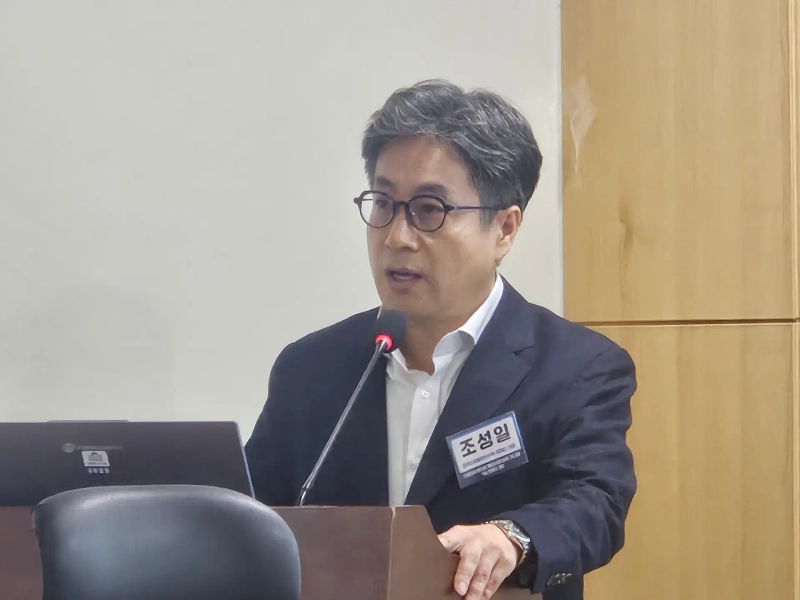
Cho Sung-il, CEO of Korea Digital Asset Custody (KDAC), stressed that if corporate participation in the digital-asset market expands, building specialized custody infrastructure and strengthening internal controls will be key tasks.
On the 4th, Cho said in a presentation at the “Academic Conference on Opening the Corporate Digital-Asset Market and Building Trust Infrastructure: Tasks” held at the National Assembly Members’ Office Building in Yeouido, Seoul, that “the global digital-asset market is rapidly shifting from a retail-centered structure to one centered on institutions and corporations,” adding that “it is necessary to overhaul custody infrastructure and internal control systems in preparation for expanded corporate participation.”
Discussing recent global market trends, he explained: “Looking at the Bitcoin (BTC) holding structure, retail investors account for about 65–69%, but institutions and corporations already make up a significant share as well. In the case of U.S. Bitcoin exchange-traded funds (ETFs), the share held by institutional investors reaches about 28%.”
He also analyzed that signs of corporate digital-asset investment are emerging in Korea. Cho said, “At present, roughly around 10 listed Korean companies are estimated to hold about 3,000 Bitcoin,” adding, “Recently, there have also been cases of some companies acquiring Bitcoin as part of their treasury strategy.”
However, due to institutional constraints, the environment for corporate investment remains limited. He pointed out, “Currently, on-exchange trading is difficult due to restrictions such as real-name accounts at exchanges, so transactions are being conducted via over-the-counter bilateral trades. In this process, securing counterparties or sufficient size is not easy.”
Cho emphasized that, alongside expanded corporate participation, the method of safeguarding digital assets will become a key issue. He explained, “Given the nature of digital assets, risk management is required across areas such as private-key management, approval controls, and regulatory compliance,” adding, “In particular, cases of asset theft or loss due to inadequate internal controls continue to occur.”
As an alternative to address these issues, he highlighted the role of specialized custody services. Cho said, “Specialized custodians can securely protect corporate assets through a range of security frameworks, including key management, access controls, segregation of duties, monitoring, and incident response,” adding, “In global markets, using third-party custody has effectively become the standard for listed companies and institutional investors.”
He also proposed that Korea’s market should adopt a structure that separates trading functions from asset safekeeping. He explained, “A structure that combines exchange and custody functions can create conflicts of interest or security risks,” adding, “It is necessary to separate functions so that exchanges handle trading while specialized custodians are responsible for safekeeping.”
Finally, Cho stressed, “Corporate participation in Korea’s digital-asset market is somewhat late compared with global trends, but it is a necessary change,” adding that “specialized custody infrastructure must take root quickly to enhance the competitiveness of Korea’s digital-asset industry and prevent the outflow of assets overseas.”

Suehyeon Lee
shlee@bloomingbit.ioI'm reporter Suehyeon Lee, your Web3 Moderator.