Iran carpet-bombs neighboring states…even destroying desalination facilities, the Gulf’s ‘lifeline’
Summary
- Iran has struck Gulf states’ civilian buildings and even seawater desalination facilities with drones and missiles, raising fears that the Middle East’s survival infrastructure is becoming a target of war.
- With Iran’s air campaign expanding to airports, hotels and energy facilities—broader civilian infrastructure—it is seeking to shift the burden of war onto US allies in the Middle East and press for a halt to US operations.
- Concerns are rising that if Iran’s blockade of the Strait of Hormuz is prolonged, threats from drones, small boats and missiles could restrict transiting vessels and cut crude-oil volumes to the 10–20% level.
Forecast Trend Report by Period


US allies targeted…Iran launches ‘indirect attacks’
As striking the US mainland is not realistic
Repeated attacks on civilian infrastructure in Saudi Arabia, etc.
Airstrikes even at the cost of blowback at home
Tightening blockade of the Strait of Hormuz, an ‘energy corridor’
Aims to weaken US will to fight by hitting allies
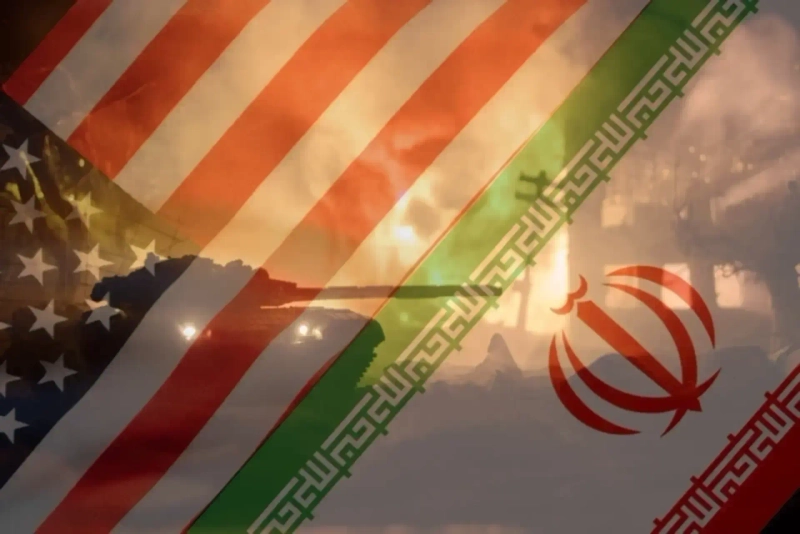
As the war between the United States and Israel on one side and Iran on the other enters its 10th day, Iran is expanding the scope of its attacks on Gulf states. Using drones, it struck not only civilian buildings but also seawater desalination facilities—lifelines for Middle Eastern countries. Analysts say the calculation is to impose the burden of war on the United States by inflicting damage on its allies instead of the US mainland, which is beyond Iran’s reach. Another view is that the countries hit are so determined to confront the United States that they are willing to bear the risk of being shunned even after the war ends.
◇ Iran widens attacks on civilian targets
According to AP and other foreign media, Iran on the 8th continued drone and ballistic-missile attacks on nearby countries including Saudi Arabia, Kuwait, the United Arab Emirates (UAE) and Bahrain. A key feature of the latest strikes is that they have expanded to civilians and civilian facilities. In Saudi Arabia, a civilian residential area near Prince Sultan Air Base was hit, leaving two residents dead and 12 injured. This is the first time fatalities have been reported in Saudi Arabia since the outbreak of the war. In Kuwait, a government building was engulfed in flames and two border guards were killed.
In Bahrain in particular, an Iranian drone for the first time attacked a seawater desalination facility, damaging some equipment. Bahrain, where groundwater sources have been depleted, depends on seawater desalination for household water. More than 90% of drinking water is produced at about 100 desalination plants. That is why a strike on desalination facilities is a matter directly tied to the country’s survival.
Other Middle Eastern countries are also gripped by fear. According to Reuters and others, Qatar relies on desalination facilities for 99% of its drinking and household water. Kuwait relies on them for 90%, Oman 86%, the UAE and Israel 80% each, and Saudi Arabia 70%. The Wall Street Journal warned that “Bahrain’s desalination facilities being hit has increased the risk that survival infrastructure in the Middle East will become a target of war.”
After coming under US and Israeli airstrikes on the 28th of last month, Iran launched retaliatory strikes targeting US military bases in neighboring countries. The strike scope is increasingly expanding to civilian infrastructure such as airports, hotels and energy facilities. Analysts say it is an attempt to force a halt to US operations by shifting the burden of war onto US allies in the Middle East.
In a recent report, the Carnegie Endowment for International Peace (CEIP) said, “Leaders in the Middle East are moving toward creating an exit from the war through diplomatic coordination centered on the Gulf Cooperation Council (GCC).”
◇ An indirect pressure strategy on the United States
Iran’s strategy could also fail. By inflaming public opinion in neighboring countries, it could instead trigger backlash within the Middle East. On the day, the Saudi government warned Iran that “if attacks targeting the homeland and energy facilities continue, we may respond.”
Another interpretation is that Iran’s leadership entered into confrontation with the United States despite factoring in such costs. A diplomatic source said, “Attacking desalination facilities could impose a considerable political burden on Iran even after the war ends,” adding, “Even so, it showed a will to inflict pain on the relevant countries to indirectly damage the United States.”
There are also reports that the Islamic hardline Revolutionary Guard retains strong influence inside Iran even though the United States has eliminated much of the leadership. The Financial Times reported, “Even though the top-tier command has disappeared, the Revolutionary Guard is strengthening its economic and political power inside Iran,” adding, “Its grip across Iranian society remains substantial, so the regime’s survival is not severely threatened even with the removal of some leaders.”
This has fueled concerns that Iran’s blockade of the Strait of Hormuz will be prolonged. The scenario is that Iran would not completely shut the strait, but intermittently sustain threats using drones, small boats and missiles, continuing to stoke tensions in neighboring countries. Lloyd’s List, a shipping-industry outlet, projected that “rather than allowing (the Strait of Hormuz) to be transited, Iran could let in only vessels it has authorized, reducing crude-oil volumes to the 10–20% level.”
Reporter Kim Dong-hyun 3code@hankyung.com

Korea Economic Daily
hankyung@bloomingbit.ioThe Korea Economic Daily Global is a digital media where latest news on Korean companies, industries, and financial markets.