Koo Yun-cheol: “Oil price cap to be implemented in two-week increments… lifted if it reaches 1,800 won”
Summary
- Deputy Prime Minister Koo Yun-cheol said the oil price cap will be operated in two-week increments while monitoring market conditions.
- He said the government is preparing a comprehensive package, including adjusting the cap if international oil prices rise, cutting fuel taxes, and a supplementary budget for vulnerable groups if necessary.
- He said the cap could be withdrawn if prices stabilize around 1,800 won, and that the benchmark will be adjusted based on refinery supply prices.
Forecast Trend Report by Period


Full Meeting of the National Assembly’s Finance and Economy Committee
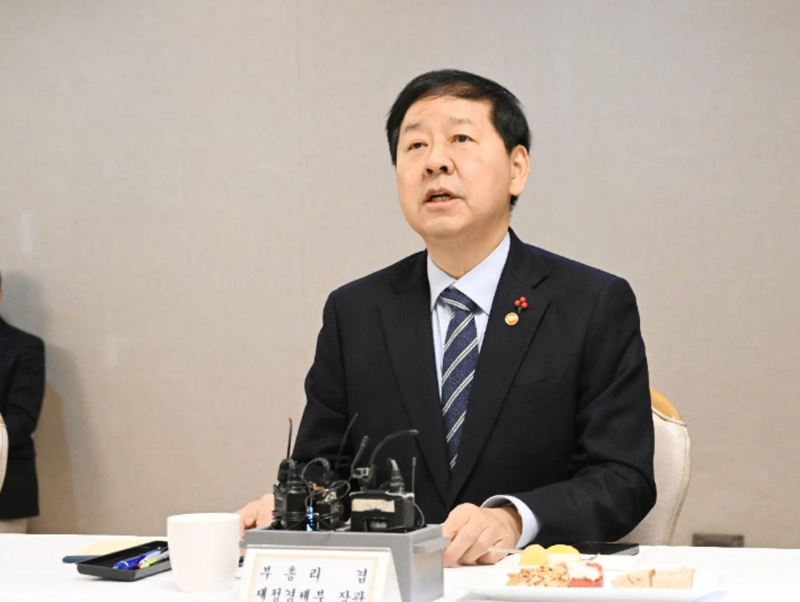
Deputy Prime Minister and Minister of Finance and Economy Koo Yun-cheol said on the 11th that, regarding the oil price cap, the government will operate it in two-week increments while monitoring market conditions.
Speaking at a full meeting of the National Assembly’s Finance and Economy Planning Committee that day, Koo said, “If we set the maximum price by taking into account an appropriate level based on oil prices before the war situation and the current rise, the subsidy itself will not increase,” and made the remarks in that context. He added, “If oil prices continue to rise, we will adjust the price cap again.”
The oil price cap is a system under which the government designates a maximum price when domestic petroleum product prices (gasoline, diesel, etc.) spike abnormally, preventing them from rising above a certain level. With international oil prices surpassing $100 in the aftermath of the U.S.–Iran war and pump prices hovering in the 2,000-won range, the government has decided to take action.
Koo said, “The government is preparing a comprehensive set of measures, including implementing the price cap within an appropriate range and, if necessary, cutting fuel taxes and, if needed, pursuing a supplementary budget limited to vulnerable groups that are adversely affected.”
Asked what level of oil prices would allow the government to withdraw the price cap, he said, “If prices stabilize and come down below the level we set,” adding that it would be “an average price level—such as fuel prices before the war and the typical average increase in the international oil market.”
When asked again about the “exact level,” he replied, “I think it would be around 1,800 won.”
In response to a question about how a benchmark would be set given that prices differ by gas station nationwide, he said, “We plan to adjust it based on refinery supply prices.”
Jin Young-gi, Hankyung.com reporter young71@hankyung.com

Korea Economic Daily
hankyung@bloomingbit.ioThe Korea Economic Daily Global is a digital media where latest news on Korean companies, industries, and financial markets.