US: "Civilians must evacuate immediately"… Airstrikes foreshadowed on civilian ports in Hormuz
Summary
- It reported that Iran has effectively moved to blockade the Strait of Hormuz, through which about 20% of the world’s crude oil passes.
- The US military said that if Iran’s civilian ports are used for military purposes, they become lawful military targets under international law.
- The US military said it is carrying out precision strikes on more than 5,500 targets, including Iran’s missiles, drones and defense industrial base.
Forecast Trend Report by Period


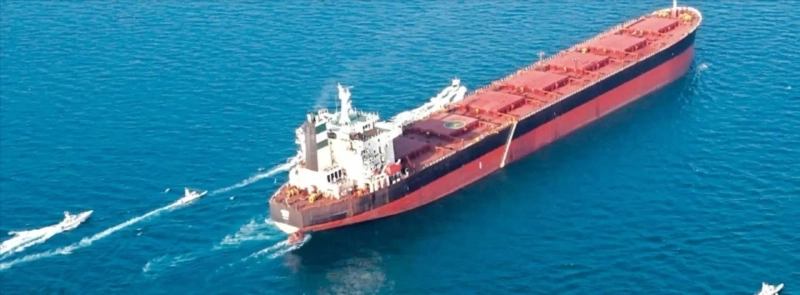
US forces at war with Iran signaled they may attack civilian ports around the Strait of Hormuz, a key chokepoint for global energy shipments.
US Central Command on the 11th (local time) issued a statement urging civilians in Iran to "immediately avoid all port facilities where Iranian naval units are operating," effectively issuing an evacuation order. It strongly urged civilians—including dockworkers, administrative staff and sailors—to move away from Iranian military assets at once.
The command added that "the Iranian regime is using civilian ports located along the Strait of Hormuz to conduct military operations that threaten international shipping," warning that "such dangerous behavior endangers innocent lives. Civilian ports used for military purposes lose their protected status and become lawful military targets under international law." It also took issue with the claim that "the Iranian navy has positioned warships and equipment at civilian ports used for commercial maritime traffic."
Since the outbreak of the war, Iran has effectively blockaded the Strait of Hormuz, through which about 20% of the world’s crude oil passes. On that day alone, three vessels from countries including Thailand and Japan were hit in succession by unidentified projectiles. The number of civilian ships attacked in the area is said to be at least 14 so far.
The US military said it has struck more than 5,500 targets in total, including 60 Iranian navy vessels. Gen. Brad Cooper, commander of US Central Command overseeing the operation, said in a video posted on X (formerly Twitter) that "to date, we have used a range of precision weapons systems to strike more than 5,500 targets in Iran, including more than 60 vessels."
He also posted before-and-after photos of warships that had been moored at ports or naval bases across Iran, saying, "We are systematically dismantling them by striking Iran’s missiles and drones while also attacking their defense industrial base," adding, "Just last night our bomber force struck a large ballistic-missile manufacturing facility."
Cooper further emphasized that advanced artificial intelligence (AI) systems are being used in the operation. "These systems sift vast amounts of data in seconds, helping our commanders filter out noise faster than the enemy can respond and make better decisions," he said. "Humans make the final decision on what to fire at and when, but advanced AI tools cut processes that used to take hours—sometimes days—down to seconds," he added, underscoring the efficiency of the system.
Kim So-yeon, Hankyung.com reporter sue123@hankyung.com

Korea Economic Daily
hankyung@bloomingbit.ioThe Korea Economic Daily Global is a digital media where latest news on Korean companies, industries, and financial markets.