[Analysis] “Stablecoins are emerging as core infrastructure for on-chain finance”
Summary
- It said stablecoins have become the most practical and widely adopted use case in the digital-asset ecosystem, with the number of active addresses for ERC-20 stablecoins rising rapidly.
- It noted that total stablecoin market capitalization has reached about $300 billion, with Tether (USDT) and USDC leading the market and being widely used across DeFi services.
- It analyzed that following regulatory changes in Japan, yen-based stablecoins such as JPYC have emerged, raising the possibility of developing into new digital payment instruments linking traditional finance with blockchain networks.
Forecast Trend Report by Period


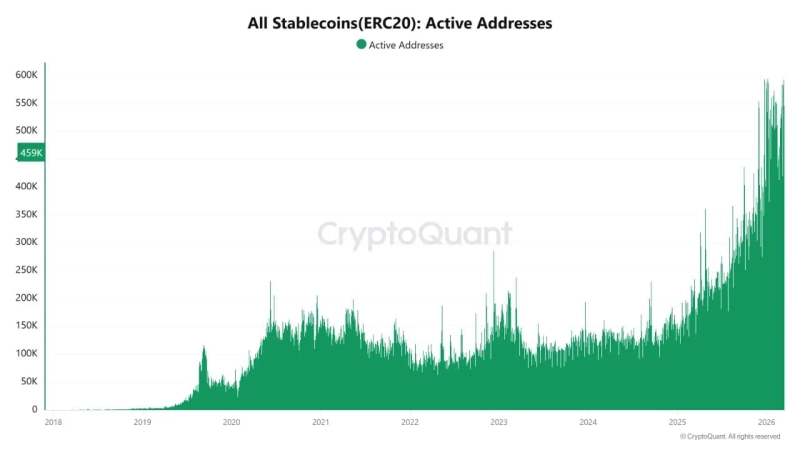
An analysis suggests that stablecoins have become the most practical and widely adopted use case in the digital asset (cryptocurrency) ecosystem.
According to XWIN Research Japan, a CryptoQuant contributor, the number of active addresses using ERC-20 stablecoins based on on-chain data has been rising rapidly in recent years. This is described as an indicator that stablecoin usage is expanding across a range of areas including trading, payments, and DeFi.
The total stablecoin market capitalization has now reached roughly $300 billion, with Tether (USDT) and USDC leading the market. These assets serve as a key liquidity backbone for digital-asset trading and are also widely used across DeFi services such as lending, liquidity provision, and on-chain payments.
XWIN Research Japan highlighted in particular that the way stablecoins are used differs by country. In countries with high inflation or unstable currency values, stablecoins are effectively functioning as a “digital dollar,” the analysis said.
For example, Nigeria is one of the countries with the highest stablecoin holding ratios globally, with users actively using Tether and USDC as an inflation hedge and for peer-to-peer remittances. In India and the Philippines, stablecoin use is spreading as a means for overseas remittances and cross-border payments.
In the U.S., by contrast, stablecoins tend to be used more heavily in financial markets. Their role in providing trading liquidity and facilitating institutional fund flows stands out, the report said.
XWIN Research Japan concluded that these differences show stablecoins have moved beyond being a simple medium of exchange and are becoming financial infrastructure used in ways tailored to each country’s economic environment.
Japan has also begun entering the market. Following regulatory changes, yen-pegged stablecoins such as JPYC have emerged, raising the possibility that they could develop into new digital payment instruments linking traditional finance with blockchain networks.
“On-chain data shows stablecoins are evolving beyond simple trading pairs into a core foundation of the global digital financial system,” XWIN Research Japan said.

Suehyeon Lee
shlee@bloomingbit.ioI'm reporter Suehyeon Lee, your Web3 Moderator.