Banks step up review of introducing 'tokenized deposits'… set to compete with stablecoins and CBDCs
Summary
- Global banks said they are seriously reviewing the introduction of tokenized deposits, moving to respond to blockchain-based payment and settlement infrastructure.
- Tokenized deposits operate within existing regulatory frameworks such as deposit insurance and capital rules, and are emerging as a “middle-ground solution” between stablecoins and CBDCs.
- As competition in digital currencies intensifies, banks are being assessed as accelerating the adoption of tokenized deposits as a strategy to preserve payment and deposit functions.
Forecast Trend Report by Period


Global banks are increasingly moving to seriously examine the introduction of 'tokenized deposits' as they respond to blockchain-based payment and settlement infrastructure.
According to Cointelegraph on the 22nd (local time), RWA data platform RWA.io said in a recent report that “banks are actively experimenting with tokenized-deposit models that enable existing deposits to be used on blockchains.” Major financial institutions including Citi, BNY, JPMorgan (Kinexys), Standard Chartered and ABN AMRO participated in the report.
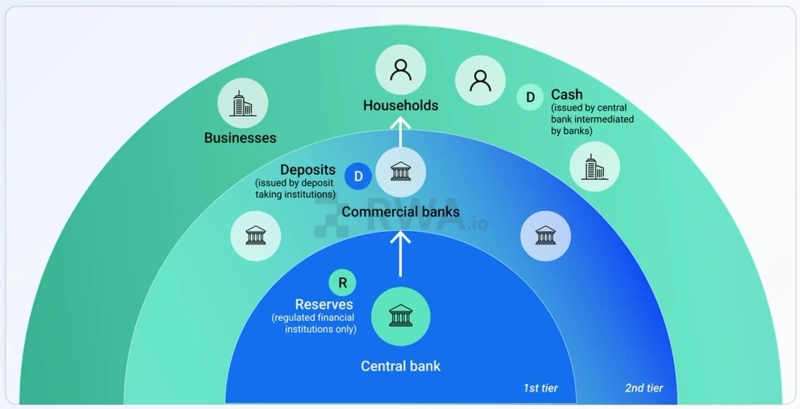
Tokenized deposits convert bank deposits into digital tokens. Unlike stablecoins, they are recognized as the issuing bank’s direct liabilities and are operated within existing financial regulatory frameworks such as deposit insurance, capital regulation, anti-money laundering (AML) and know-your-customer (KYC) requirements.
In Europe, related experiments are progressing rapidly. UK-based Lloyds Banking Group and digital asset platform Archax successfully executed tokenized-deposit transactions on a public blockchain, and the UK financial industry is running pilot projects applying them to peer-to-peer payments and lending as well as digital-asset settlement.
The industry is focusing on the possibility that tokenized deposits could emerge as a “middle-ground solution” between stablecoins and central bank digital currencies (CBDCs). The view is that, in a “multi-money” environment where various forms of digital money coexist, migrating bank deposits onto blockchains could become core infrastructure.
Meanwhile, the European Central Bank (ECB) is also moving in parallel to build tokenized financial infrastructure alongside the launch of a digital euro. The ECB is pushing a digital-euro pilot program for 2027, while also developing settlement structures that connect existing payment systems with blockchains.
Market participants say that, as competition in digital currencies heats up, banks are accelerating the adoption of tokenized deposits as a strategy to maintain their payment and deposit functions.

Suehyeon Lee
shlee@bloomingbit.ioI'm reporter Suehyeon Lee, your Web3 Moderator.