PiCK
Tokenised securities take first step… FSC: “Caution needed in adopting public blockchains”
Summary
- The tokenised securities (STO) regime will take effect in January next year, and regulatory easing and greater policy flexibility were cited as necessary to revitalise the market.
- Experts said institutional upgrades—such as focusing on investor rights, expanding underlying assets, and addressing issues related to distributed ledgers—are important to create new investment opportunities while minimising confusion.
- The Financial Services Commission said it would be cautious about adopting public blockchains, but agreed on the need to expand the scope of underlying assets and to make some institutional improvements.
Forecast Trend Report by Period


Seminar on “Institutional challenges for tokenised securities”
Tokenised Securities Act to take effect in January next year
Industry: “Regulations must be eased to expand the market”
FSC: “Be cautious about adopting public blockchains”
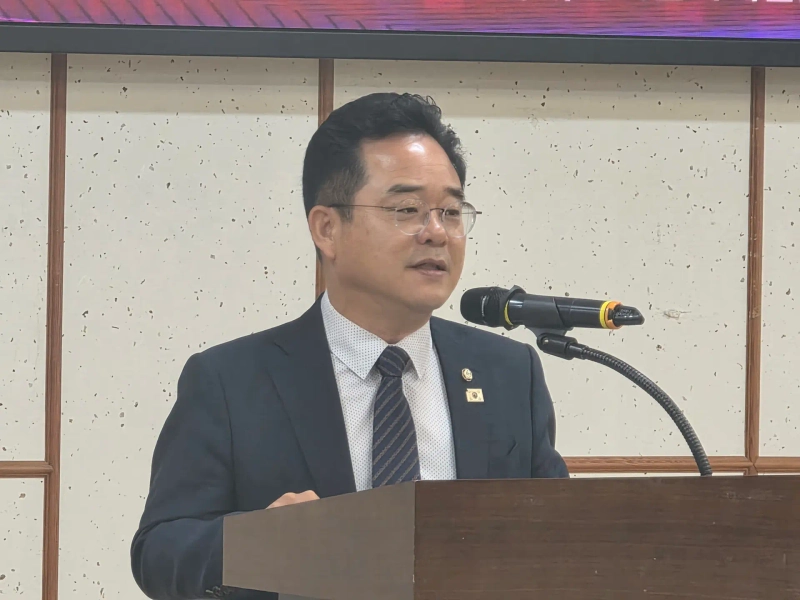
Calls have emerged for institutional fine-tuning ahead of the full rollout of the tokenised securities (STO) regime. The argument is that regulatory easing and greater policy flexibility are needed to broaden the market.
On the 26th, a seminar titled “Structural changes in capital markets and institutional challenges after the legalisation of tokenised securities” was held at Seminar Room 3 of the National Assembly Members’ Office Building in Yeouido, Seoul. The event was co-hosted by Min Byung-deok, a member of the National Assembly’s Political Affairs Committee from the Democratic Party of Korea, and the Korea Blockchain Industry Promotion Association (KBIPA).
The seminar was organised to review follow-up tasks to revitalise the market ahead of the system’s implementation, after amendments to the Financial Investment Services and Capital Markets Act and the Act on Electronic Registration of Stocks and Bonds—aimed at bringing tokenised securities (STOs) into the regulated financial system—passed the National Assembly plenary session. The Tokenised Securities Act was approved at the plenary session on January 15 and will take effect in January next year after a one-year preparation period.
In his opening remarks, Rep. Min said, “Tokenised securities can break down the boundary between real assets and financial assets and dramatically improve access to investment,” adding, “Assets such as real estate, which have been difficult to securitise, will also offer new investment opportunities through digitalisation.”
Experts: “Institutional improvements needed to invigorate tokenised securities”
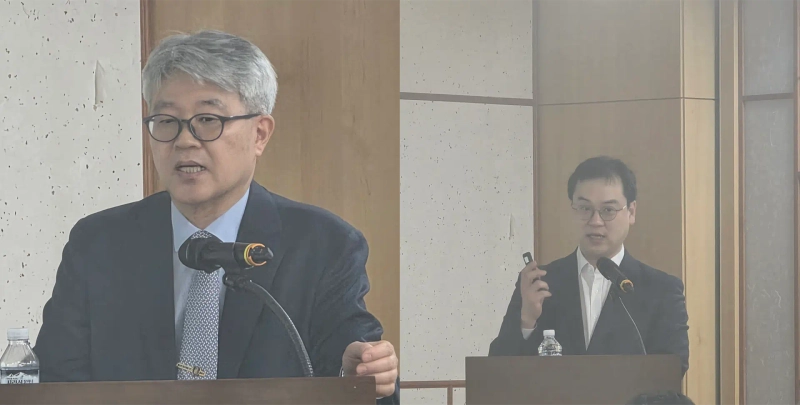
Four industry experts who presented that day underscored the need for regulatory easing and institutional upgrades to expand the market.
Kim Byung-yeon, a professor at Konkuk University Law School and president of the Korean Securities Law Association, said criteria for determining tokenised securities should be based on “investor rights”. For flexible policy design, he argued, products should be viewed according to their true substance rather than being classified by name or form.
“Rather than tightening regulation simply because it’s called a token, what matters is what rights investors actually have,” Kim said. “If the structure is the same, policy design should be the same even if the name differs.”
He also urged financial authorities to improve Korea’s regulatory culture. “The current regulatory framework focuses on accident prevention,” he said, adding that “to expand the market, policy needs to shift toward strengthening ex-post supervision.” He continued, “If ex-ante screening is too strong, innovation can be missed,” and said regulators should “promote freer private-sector participation while monitoring the overall market, rather than intensifying reviews of individual cases.”
Cha Sang-jin, managing partner at law firm Becom, argued that gaps should be addressed before tokenised securities trading scales up in earnest. In particular, he predicted practical issues could arise in distributed-ledger (consensus technology for distributed, synchronised digital data) based transactions.
“Tokenised securities are not a single product but a structure that can contain securities in various forms,” Cha said. “Among them, investment contract securities could create confusion because regulation is not as clearly defined as it is for existing stocks or bonds.”
He added, “As transactions proceed on a distributed ledger, the same transaction records are stored in multiple places. If discrepancies arise, questions emerge such as which ledger should be treated as authoritative,” and noted that “practical issues such as how to handle trading and settlement also need to be discussed.”
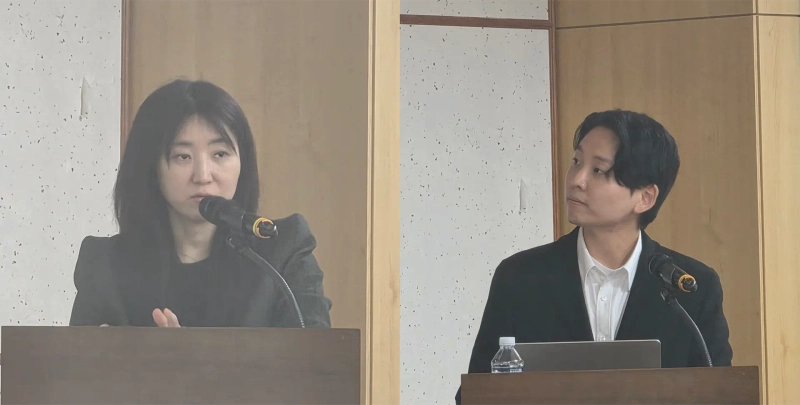
Han Seo-hee, an attorney at law firm Lee & Ko, said domestic制度 should be refined by referencing the growing global tokenised securities market. “The global tokenised securities market has already grown to about $10 billion,” she said, adding that “tokenised securities are no longer in an experimental stage—they have become one pillar of financial markets.”
She continued, “The US is actively adopting blockchain technology to introduce a structure that enables 24-hour trading, and Japan is drawing in overseas investors by leveraging public chains,” adding, “By contrast, Korea still lacks clarity on detailed standards such as chains, security benchmarks, and custody requirements. These should be specified at the enforcement-decree stage.”
There was also criticism of the electronic securities system. Lee Seung-jun, a senior research fellow at the Venture Market Research Institute, said, “Korea’s electronic securities regime adopts a ‘two-tier structure’ in which the Korea Securities Depository and securities firms split roles,” adding, “In preparation for the full-scale adoption of tokenised securities, there is a need to consider a ‘one-tier structure’ similar to blockchain.”
FSC: “Be cautious about adopting public blockchains… but we agree some improvements are needed”
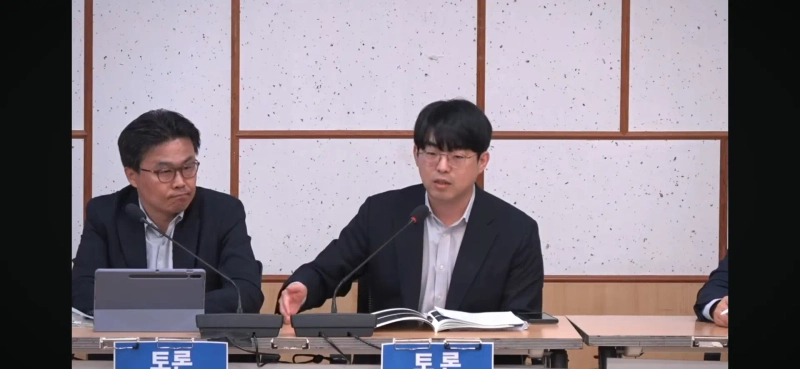
In response to the presentations, the Financial Services Commission (FSC) conveyed largely conservative views on adopting public blockchains. However, it said it is positively reviewing suggestions that improvements are needed.
Lee Yong-jun, an official at the FSC’s Capital Markets Division who participated in the discussion session following the presentations, said, “There are still many issues to think through before introducing a public blockchain for tokenised securities,” adding that “additional review is needed from a governance perspective, such as who will bear gas fees and whether the blockchain can be controlled as a matter of policy.”
The FSC broadly agreed on the need to expand underlying assets. “Expanding the scope of underlying assets to invigorate the tokenised securities market is also something the authorities are considering,” Lee said. “In the past, the scope was constrained in part by restrictions under the Trust Act, but there is now room for expansion as investment contract securities are brought into the regulated system.”
He added, “However, for market soundness, investor protection measures such as filing securities registration statements and disclosure requirements for underlying assets will be maintained.”

Uk Jin
wook9629@bloomingbit.ioH3LLO, World! I am Uk Jin.