Tiger Research: In Asia crypto, inflows of ‘crypto-curious’ are a key growth variable
Summary
- Tiger Research said that despite institutional inflows following the approval of U.S. spot Bitcoin ETFs in 2024, retail investors are declining.
- The report said the crypto-curious—those only interested in cryptoassets—are a key growth variable in Asia, and that regulation, security, taxes, accessibility, and social perception are major barriers to entry.
- The report said differences across South Korea, Japan, Hong Kong, and Southeast Asian countries in taxation, accessibility, and regulation are significant, and that addressing country-specific entry barriers is crucial for Asia to become crypto’s next growth engine.
Forecast Trend Report by Period



Web3-focused research firm Tiger Research on the 1st released a report analyzing the retail investment environment for virtual assets (cryptoassets) across nine Asian countries.
The report said that since the approval of U.S. spot Bitcoin (BTC) exchange-traded funds (ETFs) in 2024, institutional inflows have expanded the market’s size, but retail investors are declining. Citing Bitcoin dominance rising to around 60%, it assessed that the momentum for new inflows has weakened as expectations of outsized returns centered on altcoins have faded.
The report identified the “crypto-curious”—those interested in cryptoassets but not investing—as a key growth variable. It pointed to five barriers to entry for this group: regulatory uncertainty, security risks, tax burdens, accessibility, and social perception, noting that the intensity differs by country.
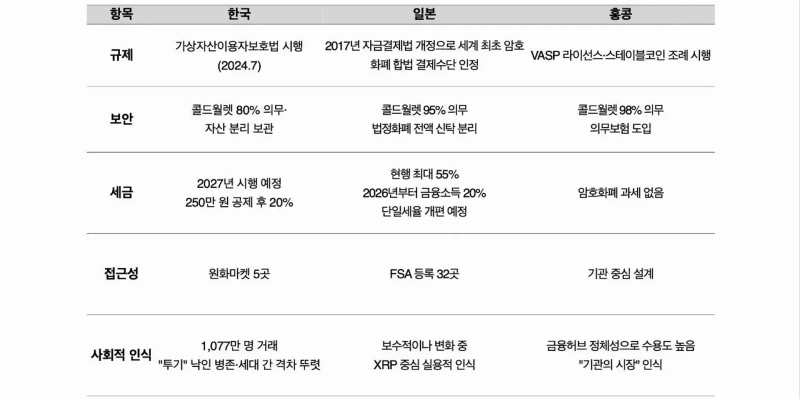
In Northeast Asia, regulatory frameworks are being put in place quickly, but differences by country were pronounced. South Korea recorded $663 billion in won-denominated trading volume in the second half of 2025, ranking second globally, but current average daily trading volume and won deposits are trending lower. The report warned that if cryptoasset taxation is implemented in earnest, trading demand could shrink further, and stressed that ensuring tax fairness is a key task. Japan has high market stability, but cryptoasset gains are subject to a tax rate of up to 55%; a planned overhaul to a 20% tax rate in April 2026 was projected to be a major turning point. Hong Kong is relatively well-prepared on regulation, security, and taxation, but expanding access for general investors was cited as a challenge because SFC-licensed platforms are operated mainly for professional investors with assets of at least HK$8 million.
Southeast Asia features diverse adoption pathways, but institutionalization remains at an early stage. Thailand exempted personal income tax for five years on trades conducted via licensed exchanges starting in January 2025, but use as a means of payment remains limited. Vietnam recognized digital assets as property under civil law in June 2025 and introduced a five-year pilot program from September, but needs to refine detailed rules and ensure the system takes hold. In the Philippines, real-world usage has expanded, but security risk was highlighted as a key challenge after the central bank (BSP) halted the issuance of new virtual asset service provider (VASP) licenses from September 2022.
Against this backdrop, exchanges are responding through securing licenses, disclosing proof of reserves, and localization strategies. Binance has secured licenses in more than 20 jurisdictions, while OKX has chosen an expansion strategy covering 30 EU countries. HTX is pursuing a hub-based strategy centered on Australia, Lithuania, Dubai, and other locations. Regulation is also tightening: Thailand blocked five unlicensed overseas platforms in 2025, and Singapore is requiring local licenses even for offshore operators.
Ahn Kwang-ho, a Tiger Research analyst and the report’s author, said, “Asia has the potential to become crypto’s next growth engine, and the ignition will be the next bull market,” adding, “To turn it into growth rather than just another cycle, the key is to put in place in advance responses tailored to each country’s barriers to entry.”

Suehyeon Lee
shlee@bloomingbit.ioI'm reporter Suehyeon Lee, your Web3 Moderator.