Fears of a 'third oil shock'… crude oil alert raised to 'Warning'
Summary
- The government said it raised the crude oil crisis alert to “Warning (Level 3)” and natural gas to “Caution (Level 2)” as the Middle East conflict persists.
- It said the closure of the Strait of Hormuz has led to a 20%+ decline in private-sector crude inventories and a surge in LNG spot prices, potentially increasing the burden of electricity and heating bills.
- The government said it will roll out stringent measures including a two-day (odd-even) driving scheme for public institutions, a five-day rotation for public parking lots, higher nuclear utilization, extended operations at aging coal plants, and the possibility of mandatory participation in demand response (DR).
Forecast Trend Report by Period


Gas alert also raised one notch to 'Caution'
Two-day vehicle restriction for public agencies; five-day rotation at public parking lots nationwide
Private sector participation encouraged on a voluntary basis
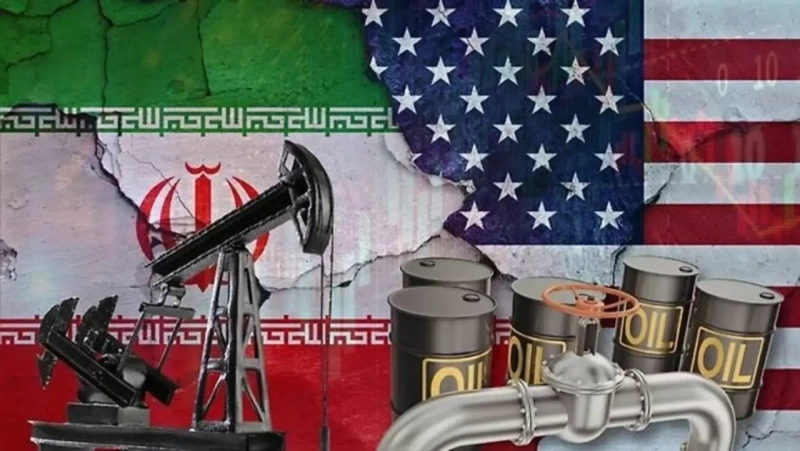
As the Middle East conflict drags on, the government is raising the crude oil resource security crisis alert by one level to “Warning (Level 3)” and the natural gas (LNG) alert by one level to “Caution (Level 2).” The move reflects the assessment that a potential closure of the Strait of Hormuz is spilling over into an energy supply-and-demand crisis on a scale comparable to the oil shocks of the 1970s. Starting on the 8th, stringent demand-management measures will begin, including an odd-even driving scheme for passenger cars at roughly 11,000 public institutions nationwide.
The Ministry of Trade, Industry and Energy said on the 1st that it convened an interagency Resource Security Council and resolved to raise the crude oil crisis alert from “Caution” to “Warning” and the natural gas alert from “Attention” to “Caution,” effective 12:00 a.m. on the 2nd.
The ministry said the upgrade for crude oil was prompted by the fact that, after the last tanker transited Hormuz and arrived in port on the 20th of last month, crude imports have effectively been halted for more than 10 days, with disruptions now materializing in earnest. Under the relevant notice, a Level 3 crude alert is issued when supply indicators deteriorate—for example, when part of transport routes are blocked and private-sector crude inventories in Korea fall by 20% or more from the average of the previous week.
For natural gas, the government judged an upgrade unavoidable, noting that while supply can be secured through year-end via spot purchases following Qatar’s declaration of supply inability (force majeure) on the 5th of last month, a surge in international prices could affect electricity and heating bills.
The government will implement stringent measures to forcibly curb energy consumption. The Ministry of Climate, Energy and Environment will, from the 8th, upgrade the existing five-day vehicle rotation for passenger cars at roughly 11,000 public institutions nationwide to a two-day (odd-even) scheme. The measure applies not only to commuting vehicles but also to official vehicles.
At about 30,000 public parking lots nationwide, a “five-day rotation (day-of-week scheme)” will apply to private vehicles without exception. Compact cars and hybrid vehicles are included in the scope of the two-day restriction and the five-day parking-lot rotation, while electric and hydrogen vehicles, vehicles for people with disabilities and pregnant women, emergency vehicles and the like are excluded. The government decided not to implement a blanket five-day rotation for private passenger cars at this time.
To accelerate imports of crude oil that can substitute for Hormuz routes, the government also prepared high-intensity measures such as bringing in overseas production volumes from the Korea National Oil Corporation and ramping up private-sector alternative crude swaps. Trade, Industry and Energy Minister Kim Jeong-gwan said, “In line with the upgraded crisis alert, the government will shift to a higher-level response system,” adding, “We ask the public to join in overcoming this grave crisis.”
Mandatory two-day vehicle restriction for the public sector
The government’s decision to raise the crude oil crisis alert to “Warning (Level 3)” and lift natural gas (LNG) to “Caution (Level 2)” reflects its assessment that an energy supply-chain breakdown triggered by the Middle East conflict is no longer a hypothetical scenario but a real threat. With arrivals of Middle East crude effectively cut off for more than 10 days after the Strait of Hormuz closure and private inventories running thin, the government decided to implement an odd-even scheme for roughly 1 million vehicles at public institutions. It decided not to introduce, for now, a full five-day rotation for private vehicles.
Disrupted crude transport routes and private inventories also considered
The key trigger for issuing a “Warning” crude alert is private crude inventories. Under the Ministry of Trade, Industry and Energy’s national resource security notice, Level 3 is issued when, along with a partial blockade of transport routes, private inventories in Korea fall by 20% or more from the average of the previous week. The government believes supply conditions crossed the threshold as follow-on volumes have been cut off for 12 days since the last tanker arrival on the 20th of last month.
A government official said, “At the ‘Caution’ stage we relied on market monitoring and voluntary savings, but this is the stage where the government directly intervenes in supply and demand.” For natural gas, the official added, Qatar—the largest supplier—declared force majeure last month, sending spot prices soaring and intensifying pressure to raise fuel costs and electricity rates.
However, the ministry said that 24 million barrels of Hormuz-alternative crude additionally secured from the United Arab Emirates (UAE) by Kang Hoon-sik, the presidential chief of staff, are being brought into Korea smoothly. It said 2 million barrels had already been delivered to domestic refiners from UAE international joint stockpiles stored in Korea, and another 2 million barrels began unloading at an undisclosed domestic location on the 30th of last month.
To stabilize natural gas supply and demand, the government plans to recalibrate the energy mix. The Ministry of Climate and Energy will raise nuclear power utilization to reduce gas consumption for power generation and temporarily extend operations at aging coal-fired power plants that had been slated for closure. LNG secured by Korea Gas Corp. will be allocated first to essential industrial facilities. The ministry and Korea Gas Corp. are also exploring “swaps (exchanges)” with neighboring countries such as Japan and Taiwan as East Asian LNG spot prices surge.
Odd-even scheme for public institutions from the 8th… compact cars and hybrids included
With the upgrade to Level 3, demand-cut measures will be implemented. The government will significantly tighten the five-day rotation for passenger cars at public institutions that had been in place since the 25th of last month, upgrading it to a two-day (odd-even) scheme. About 11,000 institutions—including central government ministries, local governments, and public elementary, middle and high schools—covering roughly 1 million public vehicles will be subject to the measure. On odd-numbered days, vehicles with license plates ending in an odd number (1·3·5·7·9) will be restricted; on even-numbered days, those ending in an even number (2·4·6·8·0) will be restricted.
Vehicles carrying people with disabilities or pregnant women, electric and hydrogen vehicles, and vehicles used by employees who have difficulty commuting by public transport are excluded. Vehicles deemed necessary to operate by the head of a public institution may also operate regardless of the two-day rule. Unlike electric and hydrogen vehicles, hybrids are subject to the restrictions.
A five-day rotation will apply to public parking lots operated by public institutions and to vehicles of citizens visiting public institutions for civil services. About 30,000 on-street and off-street paid parking facilities operated by local governments and other public entities are covered. The government decided to keep the private-sector passenger-car five-day rotation as a “voluntary implementation,” rather than introducing it across the board. It said it would continue to review the matter carefully, taking into account not only energy supply-and-demand conditions but also public inconvenience and economic impacts.
The ministry estimates that implementing the two-day scheme for public-institution passenger cars could save 17,000 to 87,000 barrels of gasoline per month.
With the issuance of the “Warning” stage, there is also analysis that the government may issue orders to private companies and others to “restrict energy use” under the Energy Use Rationalization Act. Given that the ministry at Level 2 had asked the top 50 companies with heavy petroleum-product usage to draw up energy-saving plans, if it requires mandatory participation in demand response (DR), the impact could spread across industry. The DR system is one in which the government requests reductions in usage and compensates for the margin.
Measures could also include banning neon signs and nighttime façade lighting at large buildings such as department stores and hotels, or introducing flexible working arrangements during commuting hours. Oh Il-young, director-general for Climate and Energy Policy at the ministry, said, “Options recommended by the International Energy Agency (IEA) for cutting energy use, such as expanding remote work and reducing highway speeds, could also be considered depending on the situation.”
Reported by Kim Dae-hoon / Park Jong-gwan daepun@hankyung.com

Korea Economic Daily
hankyung@bloomingbit.ioThe Korea Economic Daily Global is a digital media where latest news on Korean companies, industries, and financial markets.