Overnight, Chinese government bonds became a 'safe haven'…Outpacing the U.S. and Japan as their 'price' jumps [China Watch]
Summary
- It reported that while global government bond yields have surged since the Iran war, Chinese government bond yields have edged down, pushing prices higher.
- It said China’s diversified energy mix, strategic petroleum reserves, and access to Russian crude oil and natural gas are limiting the shock from higher energy prices, highlighting the bonds’ defensive qualities.
- It reported that low inflation, capital controls, monetary easing, and domestic investors’ preference for government bonds are combining to increase global investment interest in Chinese government bonds.
Forecast Trend Report by Period


Chinese government bond prices edge up despite the Iran war
Resilience to the energy shock draws favorable assessments
Low inflation and capital controls are instead fueling 'investment interest'
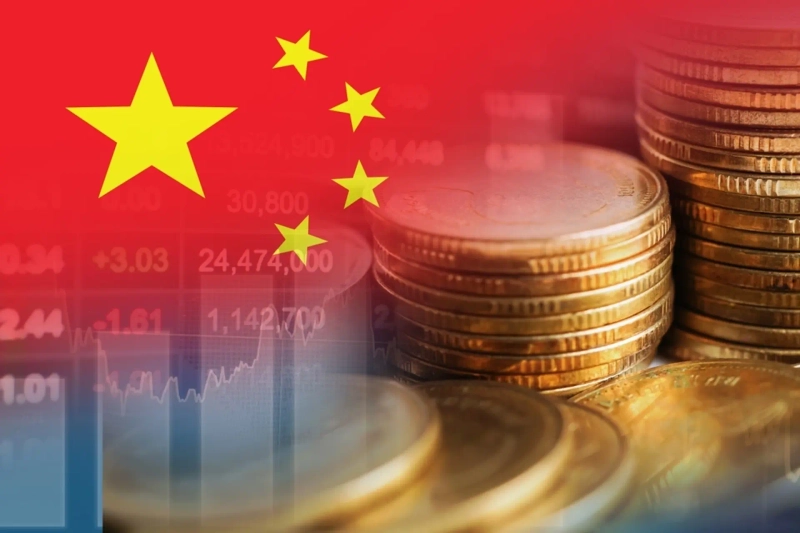
Even amid the Iran war, yields on Chinese government bonds are continuing to trend lower (meaning prices are rising). This stands in contrast to the surge in global government bond yields—including in the U.S.—driven by economic anxiety stemming from a spike in energy prices.
Although a global selloff in government bonds is spreading on an uncertain outlook for financial markets, global investors appear to be piling into Chinese government bonds, which have been less affected by the fallout from the Iran war.
According to Bloomberg on the 2nd, the yield on China’s 10-year government bond has fallen by 0.02 percentage points from Feb. 28, when the Iran war began, through that day. This is the opposite of moves in the U.S. and U.K., where 10-year government bond yields have jumped by 0.38 to 0.7 percentage points. Even this month, China’s government bond yield has been holding steady in the low 1.8% range.
Experts said that since the outbreak of the Iran war, the appeal of Chinese government bonds has instead come into sharper focus.
Central banks in major economies such as the U.S. and Europe are likely to keep interest rates higher for longer than expected to curb inflation sparked by rising international oil and gas prices. Many Asian countries are also vulnerable to Iran-war-driven inflation, given their heavy reliance on imported energy.
China, however, has a diversified energy mix with relatively larger shares of coal and renewables. That means it has strong defenses against the impact of the Iran war.
In addition, with sizeable strategic petroleum reserves and the ability to import Russian crude oil and natural gas at low prices, China is facing less of a shock from rising energy prices than other countries in Asia.
Investors are also paying attention to the People’s Bank of China’s emphasis since last year on easing monetary policy to support domestic demand. A person in Beijing’s financial sector said, “The U.S. central bank and others can shift the direction of rate policy depending on financial markets or the economy, but the PBOC is predictable and consistent.” Given that most government bond investors dislike uncertainty, the comment suggested that Chinese government bonds have a competitive edge.
The Financial Times (FT) also said that China’s low inflation and capital controls are currently helping to lift the value of Chinese government bonds.
China has been grappling with chronic price declines stemming from overproduction, intensifying cutthroat competition, and weakening demand. China’s consumer inflation is stuck in the low 1% range, far below the authorities’ 2% target. But such low inflation, in the context of the Iran war, is effectively easing concerns about inflationary pressure compared with other countries.
Domestic investors in China are also underpinning demand for Chinese government bonds. With official capital controls, it is not easy for Chinese investors to find alternative overseas investment destinations. With a prolonged slowdown in the property market and memories of a sharp stock-market slump, many domestic investors prefer government bonds.
FT said, “Chinese government bond prices show a very low correlation with the Iran war,” adding that “in other major bond markets such as Japan, Germany and the U.K., investors have suffered large real losses over the past decade or so, and some have seen nominal yields remain in negative territory—boosting interest in investing in Chinese government bonds.”
Beijing=Correspondent Kim Eun-jung kej@hankyung.com

Korea Economic Daily
hankyung@bloomingbit.ioThe Korea Economic Daily Global is a digital media where latest news on Korean companies, industries, and financial markets.