PiCK
Trump: "The destruction of Iran hasn't even begun"… warns of further strikes on bridges and power plants
Summary
- President Trump said he is warning of a powerful military attack, naming Iran’s bridges and power plants as the next targets.
- With geopolitical tensions rising, New York stocks fell early, but pared losses and turned higher after reports of talks on joint monitoring of the Strait of Hormuz.
- Brent and WTI surged, while BlackRock’s Larry Fink warned oil could stay at $100–$150 and raise the risk of a global recession; the IEA said the situation could amount to the largest crude supply disruption on record.
Forecast Trend Report by Period


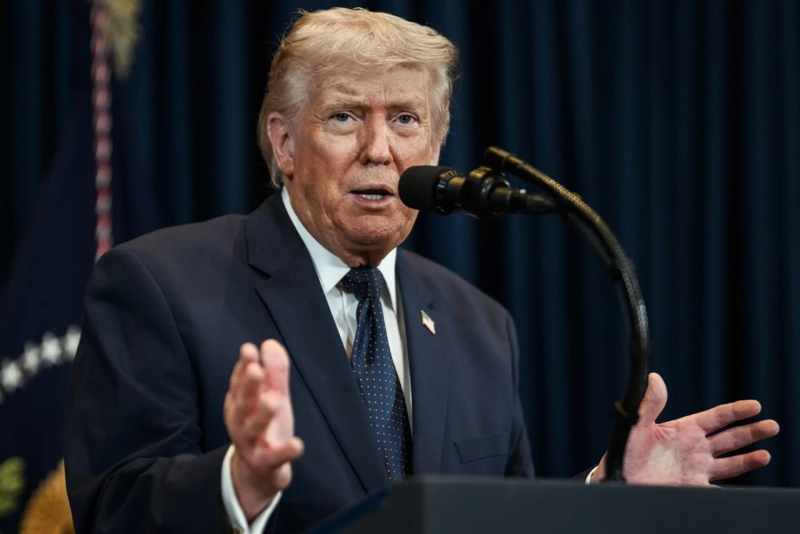
U.S. President Donald Trump stepped up military pressure on Iran, warning of additional destruction of key national infrastructure.
On the 3rd, via his social media platform Truth Social, President Trump warned, "Our military, the strongest in the world, hasn't even started destroying what remains of Iran," adding, "The next targets will be bridges and power plants." He went on to urge swift decisions from Iran’s new regime leadership, saying, "They will know what they need to do."
On the 2nd as well, President Trump delivered similarly hardline remarks in a televised address from the White House. At the time, he warned, "Over the next 2–3 weeks, we will strike Iran very forcefully," adding, "We will send them back to the Stone Age."
U.S. stocks in New York opened lower early in the session. Geopolitical tensions rose, dampening investor sentiment. However, the tone partially reversed intraday. After Iran’s state news agency IRNA reported that "Iran and Oman are discussing a protocol for joint monitoring of the Strait of Hormuz," the rise in oil prices eased somewhat, and equities pared losses and turned higher.
The Nasdaq closed up 0.18% from the previous session at 21,879.18. Still, oil-market jitters persisted. Brent crude futures settled at $109.03 a barrel, up 7.8%. West Texas Intermediate (WTI) also surged 11.4% to $111.54.
Meanwhile, unease in energy markets continues. In a BBC podcast interview, BlackRock CEO Larry Fink said, "Even if the war ends, if Iran threatens stability in the Strait of Hormuz and the GCC region, oil prices could remain at $100–$150 a barrel for years." He added, warning, "If oil stays at $150, it could lead to a global recession."
Concerns over supply disruptions are also growing. In the wake of the U.S.-Iran clash, transport through the Strait of Hormuz—through which roughly 20% of global crude oil and liquefied natural gas (LNG) volumes pass—has effectively been disrupted. The International Energy Agency (IEA) assessed this as the potential for the largest crude supply disruption on record.

Doohyun Hwang
cow5361@bloomingbit.ioKEEP CALM AND HODL🍀