PiCK
South Korea’s Digital Asset Bill Stalls as Industry Warns on Stablecoin ‘Golden Time’
Summary
- Delays to the Digital Asset Basic Act are slowing the institutionalization of won-denominated stablecoins, raising concern that South Korea could lose competitiveness in the global stablecoin market.
- Industry and academic speakers said South Korea needs to move quickly on a strategy for won-based tokens and the on-chain economy as dollar-linked stablecoins dominate the market.
- They said regulatory uncertainty around security token offerings, or STOs, and tokenized assets is keeping institutions on the sidelines, underscoring the need for early workable standards and leadership in infrastructure.
Forecast Trend Report by Period


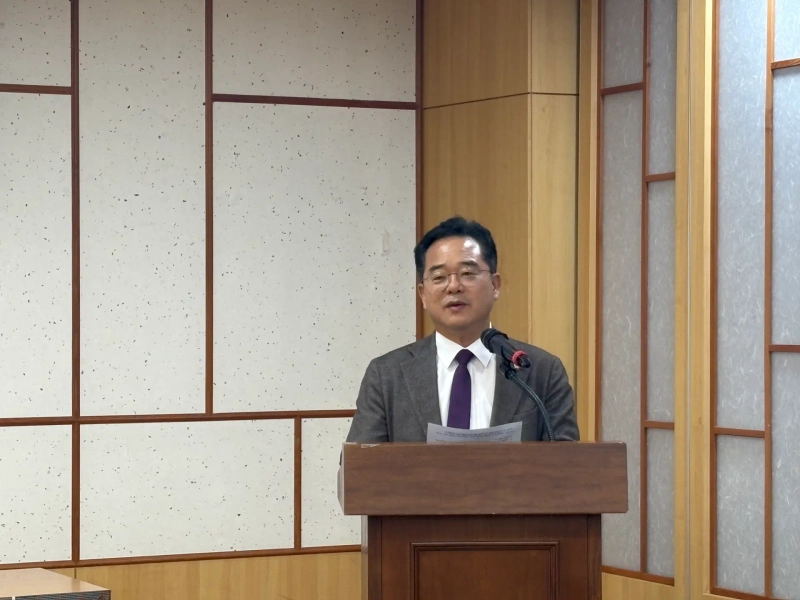
Debate over South Korea’s Digital Asset Basic Act remains deadlocked in the National Assembly, as Min Byung-deok, a lawmaker from the Democratic Party, called won-denominated stablecoins a national strategic priority and urged swift legislation. Industry calls for faster action on stablecoins are also growing.
Speaking at a June 7 seminar in Seoul titled "Tasks for Designing a Stablecoin Framework: Analysis of Overseas Cases and Response Strategies," Min said stablecoins are already reshaping the financial order. The question is no longer whether to adopt them, but how to use them and build competitiveness, he said.
Once consumers use stablecoins naturally in daily life and industries expand their use into global markets, they become financial infrastructure rather than just another asset, he said. South Korea needs to understand that shift and consider what role it should play.
The Digital Asset Basic Act, intended to institutionalize stablecoins, still has not cleared the National Assembly. The Democratic Party had initially planned to finalize the bill in the first quarter, but disagreements between regulators and the industry over some provisions, along with fallout from the Middle East conflict, repeatedly delayed discussions. With local elections coming in June, some market participants say the odds are low that debate over the bill will conclude in the first half.
"Stablecoins Are a Geopolitical Competition"
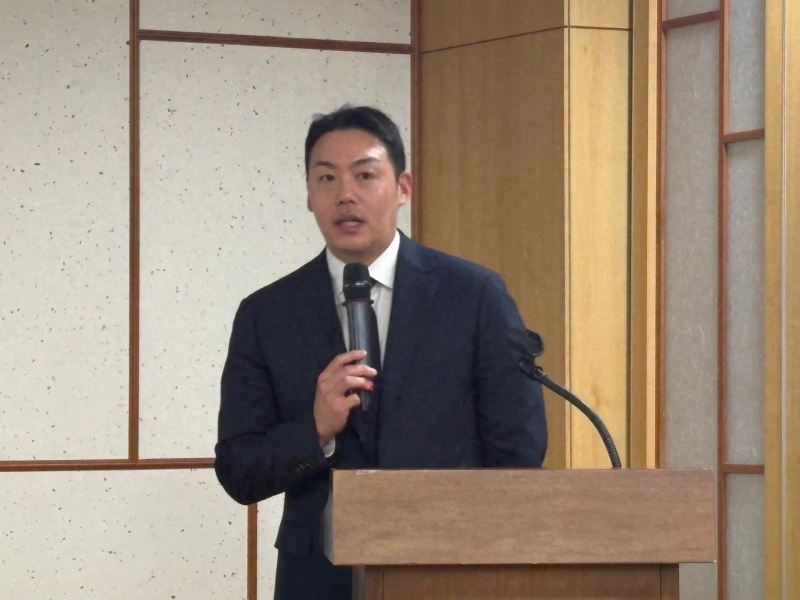
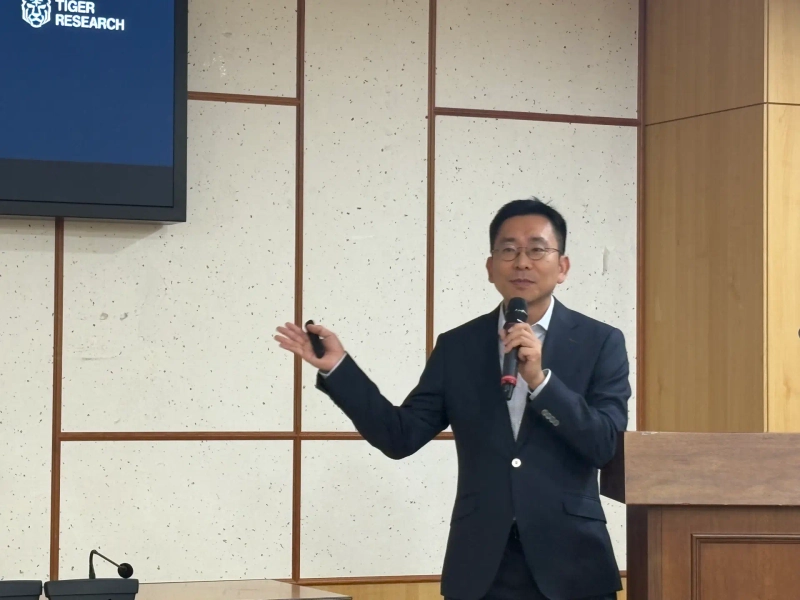
Industry participants say South Korea risks missing its window. Kim Gyu-jin, chief executive of local Web3 research firm Tiger Research, said in a keynote presentation that about 99% of the stablecoin market, which had grown to $320 billion as of last month, is pegged to the dollar. Caution in building a regulatory framework could leave little room for a domestic digital currency to gain traction, he said.
As companies and consumers use more dollar-based stablecoins, more capital is funneled toward preserving dollar dominance rather than supporting South Korea’s financial system, Kim said. What matters is entering the market first, rather than waiting to build a perfect system.
Others said the focus of the stablecoin debate should now shift from introduction to use. Seo Sang-min, chairman of the KAIA Foundation, said discussion over the past year has largely centered on issuers, supervisory authority and risk warnings, while the question of how a won stablecoin should actually work has never formally been put on the agenda.
Even if adoption moves ahead, preparations for rapid execution remain insufficient, Seo said. A clearer understanding of how stablecoins should be designed and operated would sharpen policymaking. If workable standards are set early and upgraded through pilot testing, South Korea could secure leadership in future stablecoin standards and infrastructure, he added.
Academic views were similar. Lee Jong-seop, a professor at Seoul National University’s business school, said in a keynote speech that stablecoins are not simply a fintech issue but part of geopolitical competition across currencies, payments and capital markets.
Because the dollar remains the unit of account in international transactions, South Korea could be shut out at the entry point of the global tokenized value chain if it lacks won-based tokens, Lee said. The country has strengths in digital consumption and export supply chains, but lacks a strategy for the payment and settlement rails needed to connect them. South Korea needs a plan that links those strengths to the on-chain economy, including stablecoins, he said.
"Stablecoins Can Coexist With CBDCs"
Speakers also called for improvements to the framework governing tokenized assets such as security token offerings, or STOs. Kim Su-min, South Korea head at Plume Network, said the legal status of tokenized securities has been established, but detailed implementation rules have yet to be completed. That makes it effectively impossible to design institutional-grade tokenized asset products at this stage, Kim said.
Even after the security token law passed earlier this year, access channels for foreign investors have not been codified, he added. That regulatory uncertainty is blocking institutional participation.
A panel discussion that followed examined whether stablecoins and central bank digital currencies, or CBDCs, can coexist. Lee Hwan, lead of the won stablecoin task force at the KAIA Foundation, said the Bank of Japan views the two as complementary, with CBDCs serving as a state-backed trust anchor and stablecoins providing usability and scalability.
He added that recent comments by Shin Hyun-song, the nominee for Bank of Korea governor, supporting the introduction of won stablecoins are broadly in line with the Japanese central bank’s view.
Participants also offered suggestions on how to expand adoption of won stablecoins. Because the won is not used globally in the same way as the dollar, South Korea cannot pursue the same strategy as dollar stablecoins, Seo said. The key is to identify use cases unique to won stablecoins.
The area where users could feel the benefits most quickly at home is business-to-business transactions requiring fast settlement, he said. Overseas remittances and payments could also generate sufficient demand for won stablecoins.

JOON HYOUNG LEE
gilson@bloomingbit.ioCrypto Journalist based in Seoul