Trump Pessimistic on Iran Deal as Strait of Hormuz Dispute Clouds Talks
Summary
- Iran proposed terms to end the war that included lifting sanctions and collecting transit fees in the Strait of Hormuz, but Trump said the offer represented meaningful progress while still falling short.
- Trump said of the Strait of Hormuz, "Why don't we charge the toll instead?" while demanding free passage for oil and other goods and signaling his desire to control Iranian oil.
- The Wall Street Journal reported that Trump sees little chance of a deal with Iran and is expected to give the final order on the evening of April 7 for airstrikes to proceed.
Forecast Trend Report by Period


Cease-Fire Talks Remain Murky
April 8 Seen as a Decisive Date
Iran Drops Some Hard-Line Demands
Trump Says Proposal Still Falls Short
Strait of Hormuz Access May Decide Outcome
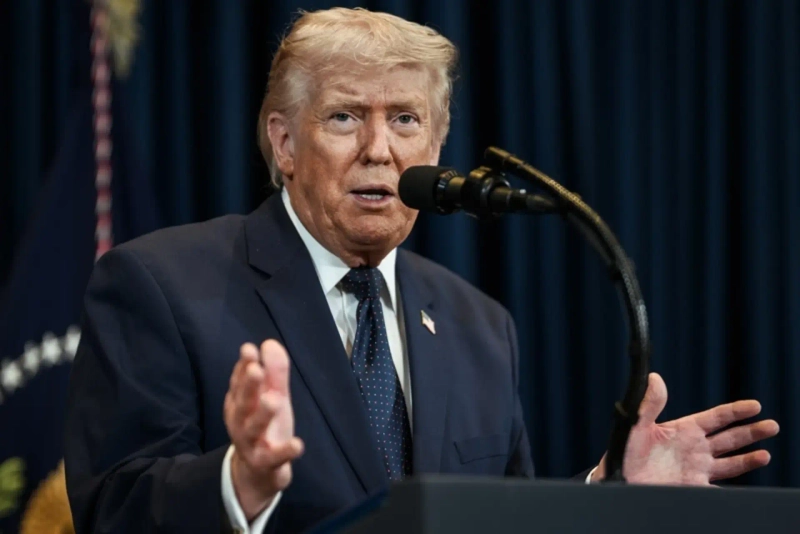
Iran delivered a 10-point set of conditions to the US through Pakistan on April 6, laying out terms to end the war. The proposal rejected a 45-day cease-fire floated by mediators and instead called for a permanent end to the conflict. President Donald Trump called the offer meaningful progress but said it was still not enough, while keeping the door open to further talks. Whether the two sides can reach a deal remains unclear because they are sharply divided over full access through the Strait of Hormuz.
Iran Keeps Strait of Hormuz Fees in Proposal
According to Iran's state-run IRNA news agency, Tehran's proposal included guarantees against renewed attacks on Iran, an end to Israeli strikes on Hezbollah in Lebanon, the removal of all sanctions imposed on Iran and the right to collect transit fees in the Strait of Hormuz.
Iran said it would charge ships $2 million per vessel to pass through the strait and split the revenue with Oman, which also borders the waterway. The proposal said Tehran would forgo war reparations and instead use the fees to cover reconstruction costs. That marked a retreat from its earlier demand that the US and Israel pay compensation for the war. The plan to share revenue with Oman also appeared designed to give the proposal greater international legitimacy. The demands were also more flexible than before because they did not include maintaining Iran's nuclear development program or requiring the withdrawal of all US forces from the Middle East.
The proposal is believed to have been put forward by Iranian President Masoud Pezeshkian and Foreign Minister Abbas Araghchi. Even if an agreement is reached, it remains unclear whether they can contain opposition from hard-liners at home, including the Islamic Revolutionary Guard Corps. The Times of London reported the same day that Mojtaba Khamenei, identified by the article as Iran's supreme leader, had been seriously injured and was in no condition to govern. If so, that could strengthen the hand of officials pushing for negotiations.
Trump Says US Should Charge the Toll
Speaking at an Easter event at the White House, Trump rejected Iran's idea of collecting fees in the Strait of Hormuz. "Why don't we charge the toll instead?" he said. He also said the US would demand free passage for oil and all other goods as part of any agreement, underscoring his opposition to Iran's fee plan. The remarks were contradictory, but they also suggested the US could seek to charge ships for securing the waterway.
Trump also signaled a desire to control Iranian oil. At a news conference, he said the US had not taken the spoils of war for more than 100 years, but added that he was a businessman and that "the spoils belong to the victor." He boasted that the US had already recovered several times the cost of war by taking oil from Venezuela and suggested applying that model to Iran. Tehran appears unlikely to accept such terms.
Although Iran did not include the issue in its negotiating conditions, the article said Tehran continues to maintain its position on nuclear weapons and missile development, which Washington is unlikely to accept. The Wall Street Journal, citing officials, reported that Trump was privately pessimistic about the chances of an agreement and was expected to issue a final order on the evening of April 7 for airstrikes to proceed.
Israel Prepares Strikes on Railways and Infrastructure
Traffic through the Strait of Hormuz has risen to its highest level since the Iran war began. Citrini Research said observations from a vessel it dispatched showed traffic had increased to about 15 ships a day. That is a little over 10% of the roughly 130 vessels a day that used the strait before the war.
Allied forces on both sides are preparing to intensify attacks if negotiations collapse. Israel's Defense Ministry told rail passengers across Iran on the morning of April 7 to stay off trains and away from railway lines, warning that a large-scale air assault could follow. It also said it had reset targets for strikes on energy and infrastructure facilities. The Iran-backed Houthi rebels may also try to block the Bab el-Mandeb Strait in the Red Sea.
Lee Sang-eun in Washington, Korea Economic Daily reporter selee@hankyung.com

Korea Economic Daily
hankyung@bloomingbit.ioThe Korea Economic Daily Global is a digital media where latest news on Korean companies, industries, and financial markets.