Trump ‘TACO Trade’ Catches On as Wall Street Buys Tension-Driven Dips
Summary
- Wall Street has embraced the ‘TACO (Trump Always Chickens Out) trade,’ a strategy of buying market dips after tensions escalate and stocks fall.
- The S&P 500 index posted a weekly gain of 3.4%, its first in six weeks, and risk assets have developed a pattern of rebounding quickly as policy eases after periods of heightened tension.
- As market declines tied to geopolitical risk continue to shrink, some analysts caution that excessive market confidence could encourage even more aggressive escalation tactics.
Forecast Trend Report by Period


Trump repeatedly shifts from hard-line rhetoric to de-escalation
Investors buy market dips on bets Trump will eventually pull back
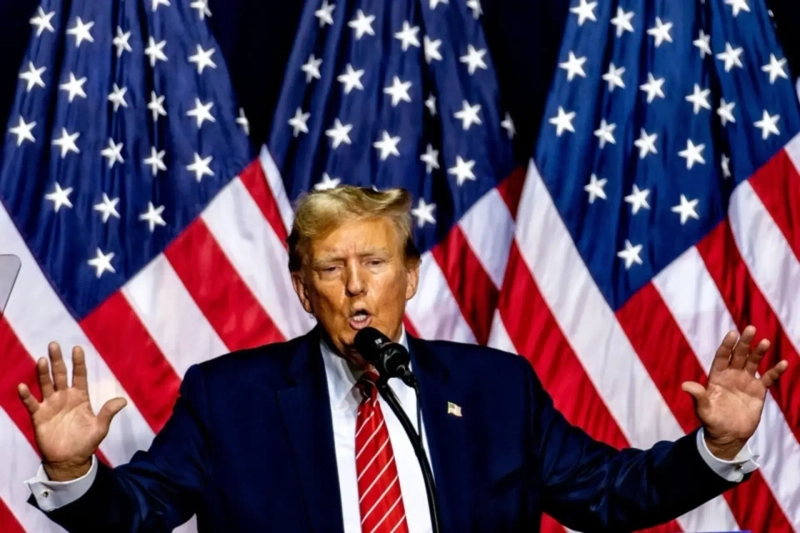
Wall Street is increasingly treating President Donald Trump’s brinkmanship as a recognizable pattern and building trading strategies around it.
Investors have embraced the so-called TACO trade, short for “Trump Always Chickens Out,” CNBC reported on Aug. 8. On Wall Street, the term refers to buying market selloffs on the bet that Trump will eventually pivot to de-escalation after ratcheting up tensions with hard-line remarks.
Trump had signaled possible military action against Iran before pulling back just ahead of the deadline. After five weeks of conflict came to a halt, stocks rose and oil prices fell. Markets appeared to have anticipated that outcome, with positioning showing few signs of major stress beforehand.
The S&P 500 posted its first weekly gain in six weeks, rising 3.4%. Risk premiums in the options market remained limited. Even after Trump warned that “entire civilizations could disappear,” stocks edged higher, suggesting investors are becoming increasingly desensitized to his aggressive rhetoric.
On Wall Street, the pattern is increasingly being viewed as repeatable. Tensions flare and shake markets, then policy eases, allowing risk assets to rebound quickly.
“The current environment may be the most profitable market in history for systematic investors,” Adam Kobeissi, founder of The Kobeissi Letter, said. Since April 2025, declines driven by geopolitical risk have gradually narrowed, while investors have increasingly built positions on the assumption of a swift rebound.
Some investors see parallels with the earlier U.S.-China trade conflict. Tariffs and restrictions expanded sharply then as well, but markets ultimately judged them unlikely to prove durable and continued to rebound.
Still, some analysts caution that the market may be growing too confident. If markets no longer serve as a constraint on policy, that could open the door to even more aggressive escalation tactics.
“The weaker the market reaction becomes, the less effective that check on policy may be,” Raymond James analyst Ed Mills said. “That could become a very dangerous game.”
Park Shin-young, New York correspondent, Hankyung.com, nyusos@hankyung.com

Korea Economic Daily
hankyung@bloomingbit.ioThe Korea Economic Daily Global is a digital media where latest news on Korean companies, industries, and financial markets.