PiCK
Trump Iran Strike Backfires as Tehran Tightens Grip on Strait Carrying 20% of Global Oil
Summary
- Iran has tightened control over the Strait of Hormuz, bringing about 20% of global oil supply under its influence.
- Iran plans to limit vessel traffic through the strait to about 12 ships a day and impose passage fees, with some payments required in yuan or cryptocurrency.
- If restrictions in the Strait of Hormuz persist, structural risks to supply chains for key resources including crude oil, LNG, fertilizer and helium could increase.
Forecast Trend Report by Period


Iran limits Strait of Hormuz traffic to about 12 vessels a day
Passage-fee plan relayed through mediators
Some payments demanded in yuan or cryptocurrency
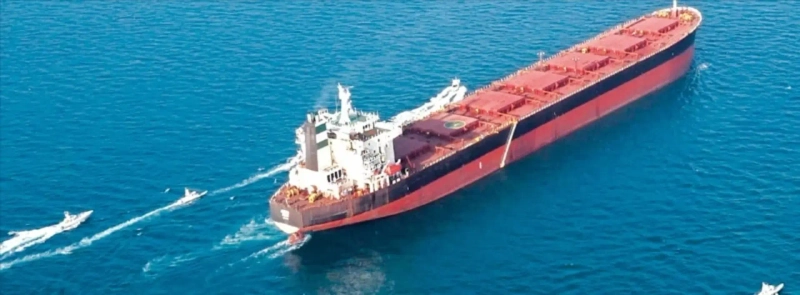
Iran is tightening control over the Strait of Hormuz despite a ceasefire, raising tensions in global energy markets. About 20 million barrels a day, or roughly 20% of global oil supply, passes through the waterway, effectively placing a critical share of world crude flows under Tehran’s influence.
The Wall Street Journal reported on July 8 that Iran had relayed a plan to mediators between Tehran and Washington, including Oman and Qatar, to limit vessel traffic through the strait to about 12 ships a day during the ceasefire and impose passage fees. Ships seeking to transit must coordinate in advance with Iran’s Islamic Revolutionary Guard Corps, or IRGC. Iran is also demanding that some of the fees be paid in yuan or cryptocurrency.
Traffic has already plunged. More than 100 ships a day used the route before the war, but that number has recently fallen to about four. Iran effectively took control of the strait during the fighting by attacking vessels that tried to pass without authorization, and it now appears intent on maintaining that system after the ceasefire.
The move suggests Iran is trying to turn the war into new negotiating leverage and a fresh source of revenue. Shipping industry participants say Tehran is also building a system that applies different passage terms depending on a vessel’s country of origin. Tankers carrying Iranian crude would be allowed to pass freely, while ships from friendly countries would pay fees and vessels linked to the US or Israel would be blocked.
The measures could directly hit Middle Eastern oil producers and major energy-consuming countries. Gulf states are strongly resisting any structure that would require them to pay Iran for passage, and the issue is set to become a central point in any talks on a permanent ceasefire.
The plan is also drawing scrutiny under international law. Transit fees are not permitted in natural straits, but Iran has already won parliamentary approval for a management plan that includes passage permits and fee collection.
The US continues to demand freedom of navigation, but Iran has shown no sign of loosening its controls. Tehran has kept up the pressure by broadcasting warnings that unauthorized ships could be attacked.
Markets increasingly view the crisis as more than a temporary geopolitical confrontation. If restrictions in the Strait of Hormuz persist, supply chains for crude oil as well as LNG, fertilizer and helium could face structural disruption.
Analysts say a return to normal shipping will require a clear Iranian guarantee that attacks will stop, along with a stable management framework. Shipping companies and energy firms are also hesitating to resume operations because of the uncertainty.
Park Shin-young, New York correspondent, Korea Economic Daily, nyusos@hankyung.com

Korea Economic Daily
hankyung@bloomingbit.ioThe Korea Economic Daily Global is a digital media where latest news on Korean companies, industries, and financial markets.