PiCK
Fed Minutes Show Rate Hike or Cut Both Possible as Iran War Muddies Outlook
Summary
- The March FOMC minutes showed that the war’s impact left both rate hikes and rate cuts on the table.
- Most participants said a prolonged war could weaken the labor market and increase the need for rate cuts, while others said rate hikes may be needed if rising energy prices intensify inflation pressure.
- The Fed kept its benchmark rate unchanged at 3.5% to 3.75% and maintained a projection for one rate cut in 2026, though markets remain skeptical about the chances of a rate cut this year.
Forecast Trend Report by Period


March FOMC minutes show officials split over whether the next move could be a rate hike or cut
Most participants said a prolonged war could weaken the labor market and strengthen the case for rate cuts
Others said rising energy prices could add to inflation pressure and keep rate hikes in play
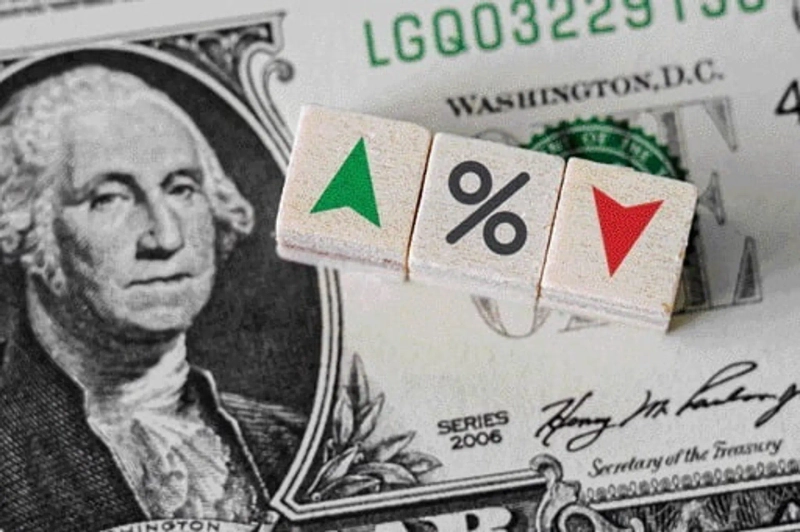
Uncertainty around the US economic outlook has increased in the wake of the Iran war, with Federal Reserve officials discussing scenarios that could warrant either an interest-rate increase or a cut.
Minutes of the March Federal Open Market Committee meeting, released April 9, showed policymakers weighing opposing scenarios for how the war could affect inflation and employment.
Most participants said a prolonged conflict could weaken the labor market and increase the need for rate cuts. At the same time, a substantial number said higher energy prices could intensify inflation pressures and make a rate hike necessary.
Some officials also argued that the post-meeting statement should explicitly mention the possibility of a rate increase. They said markets should be clearly told that the Fed could raise its policy rate if inflation continues to run above target.
Fed officials are also increasingly concerned that inflation could take longer than expected to return to target. Most participants judged it would take more time for inflation to move back to the central bank’s 2% goal.
The Fed left its benchmark rate unchanged at 3.5% to 3.75% at the meeting.
The meeting was held about three weeks after the Middle East war sent global energy prices sharply higher. Rising energy costs are adding to price pressures while also acting as a drag on economic growth.
President Donald Trump recently announced a ceasefire agreement with Iran, raising hopes that tensions would ease. But sporadic clashes and disputes over violations of the truce have kept uncertainty high. It also remains unclear whether traffic through the Strait of Hormuz will fully normalize, with many ships still unable to resume operations.
In its economic projections, the Fed maintained its outlook for one rate cut in 2026. Even so, markets have grown skeptical about the chances of policy easing this year.
Risks to the labor market are also rising. Participants said the unemployment rate was not likely to change significantly, but judged the job market vulnerable to shocks because hiring growth has slowed.
At the same time, officials voiced concern that a prolonged rise in energy prices could lift inflation expectations. Some participants said that because inflation has exceeded target for several years, expected price growth may become more sensitive to swings in energy costs.
Markets viewed the minutes as highlighting the Fed’s wait-and-see approach while also underscoring that the future path of rates remains open in either direction.
Park Shin-young, New York correspondent, Korea Economic Daily, nyusos@hankyung.com

Korea Economic Daily
hankyung@bloomingbit.ioThe Korea Economic Daily Global is a digital media where latest news on Korean companies, industries, and financial markets.