Iran Tightens Control of Strait of Hormuz, Plans to Cap Daily Transit at About 10 Ships
Summary
- Iran plans to limit ship traffic through the Strait of Hormuz to about 10 vessels a day and impose transit fees.
- Ships passing through must pay fees in cryptocurrency or Chinese yuan, adding to concern over weakening Western influence in the oil market.
- Tighter control over the Strait of Hormuz could deliver a direct shock to global oil and LNG supply and prices.
Forecast Trend Report by Period


Transit fees to be paid in cryptocurrency or Chinese yuan
Fears grow over pressure on oil supply chains and prices
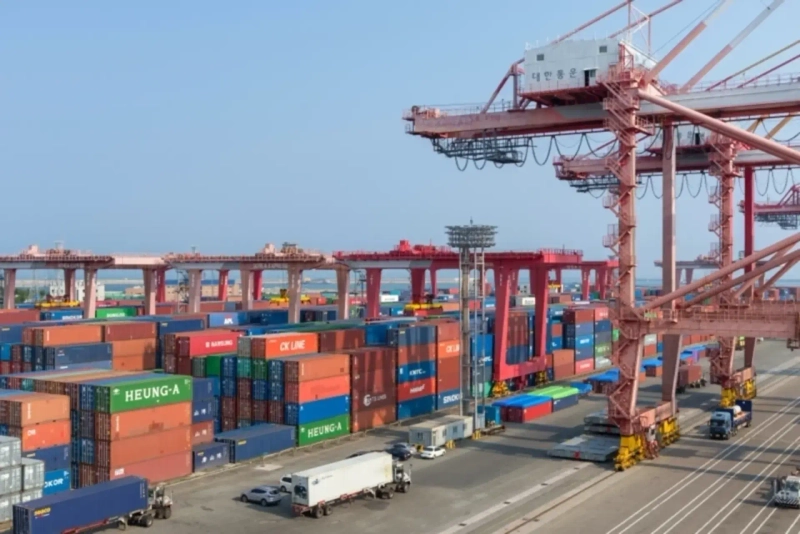
Iran continues to control the Strait of Hormuz, one of the world’s most important energy shipping lanes, even after a ceasefire agreement. Tehran is moving to limit the number of vessels passing through the strait to about 10 a day.
The Wall Street Journal reported on July 8, citing Arab mediators, that Iran plans to keep tight restrictions on ship traffic and impose transit fees during a recently agreed two-week ceasefire.
Ships passing through the Strait of Hormuz are being required to coordinate in advance with the Islamic Revolutionary Guard Corps, or IRGC, Iran’s elite military force, the report said. Vessels must also pay transit fees in cryptocurrency or Chinese yuan.
Traffic through the strait remained severely restricted immediately after the ceasefire was declared. Only four vessels passed through the Strait of Hormuz that day, according to S&P Global Market Intelligence. Before the war, about 135 ships a day used the waterway.
Local media reported that traffic has since halted again after news that Israel was continuing airstrikes in Lebanon and that Iran was considering retaliation despite the ceasefire agreement. Iran established de facto control over the strait during the war by attacking vessels that tried to pass without permission.
Iran is now seeking to formalize that control during the ceasefire. It has allowed Iranian and friendly-country vessels to pass or charged them lower fees. Ships linked to the US or Israel, by contrast, are reportedly being blocked under a differentiated system now being put in place.
Iran has also restricted shipping routes. Even vessels permitted to transit the Strait of Hormuz can no longer use the previous route. Instead, they must pass through a narrow corridor between Iran’s Qeshm Island and Larak Island and enter the Gulf of Oman along the Iranian coast.
Fees vary by vessel size. For very large crude carriers, charges could reach as much as $2 million, according to the shipping industry.
Iran’s parliament has also approved a new plan for managing the strait, including transit approvals and fees, the Journal reported. Iran has proposed sharing fee revenue with Oman, but Oman has not agreed.
Iran’s tighter grip on the Strait of Hormuz is reverberating through the market. The waterway carries about 20% of global oil and LNG supply. That has fueled concern that Iranian control could directly shock global energy markets and consumer prices.
The US has demanded freedom of navigation, but Iran has shown no sign of backing down. Tehran has reportedly warned by radio that ships passing through the strait without IRGC approval could be targeted.
Iran says ships need IRGC approval to avoid mines it has laid in the waterway. Its position is that vessels must coordinate with Iranian forces and receive guidance to pass safely.
Critics say Iran’s control of the strait violates international law. Because the Strait of Hormuz is a natural strait rather than a canal, transit fees are not permitted, making Iran’s measures inconsistent with the United Nations Convention on the Law of the Sea, or UNCLOS.
Middle Eastern oil producers and major energy-importing countries are pushing back strongly. The Journal said the use of yuan for some transit payments is deepening concern that Western influence over the global oil market could weaken.
Experts say it may take considerable time for shipping to return to normal even if the ceasefire holds, unless Iran provides clear safety guarantees.
Park Su-bin, Hankyung.com reporter waterbean@hankyung.com

Korea Economic Daily
hankyung@bloomingbit.ioThe Korea Economic Daily Global is a digital media where latest news on Korean companies, industries, and financial markets.