Wall Street Keeps Buying Trump’s Bluster as ‘TACO Trade’ Pays Off
Summary
- Markets say Trump’s hard-line rhetoric has repeatedly been followed by easing tensions, helping the TACO trade take hold as an investment strategy.
- Investors have responded by buying the dip in the S&P 500 and capturing roughly 3% returns as the index rebounded 2.51%.
- Some experts say a weaker market response could reduce constraints on Trump’s extreme actions, while raising concerns over increased Bitcoin buying and growing short crude futures positions.
Forecast Trend Report by Period


Trump threats fail to shake stocks as Wall Street reads his ‘madman strategy’
Investors adapt to the TACO pattern
US stocks rise despite hard-line rhetoric
Some warn market discipline on policy is weakening
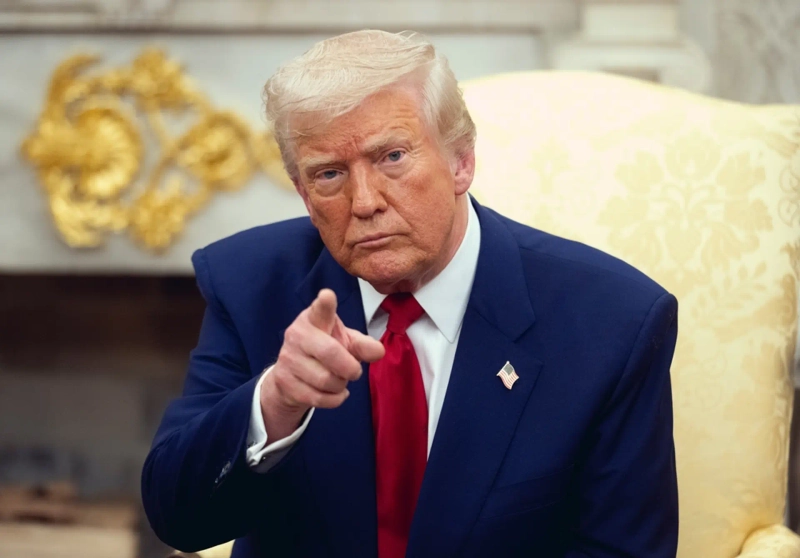
At 8 a.m. on June 7, President Donald Trump posted on social media that “an entire civilization could disappear tonight and never return,” issuing a threat aimed at Iran. The comment came 12 hours before full-scale war with Iran began, yet the stock market held firm. The S&P 500 fell as much as 1.2% during the session before ending up 0.08%. The Nasdaq also closed slightly higher.
Investors have grown used to Trump’s pattern of making extreme threats before moving toward compromise, according to market participants. That has helped cement the so-called TACO trade — short for “Trump Always Chickens Out” — as an investment strategy. The premise is to buy stocks when markets wobble on Trump’s hard-line remarks and profit when tensions later ease.
Since the war with Iran began on Feb. 28, Trump has repeatedly escalated tensions and then shifted toward de-escalation through behind-the-scenes negotiations. The Guardian and other outlets have described that approach through the “madman theory.” The theory holds that extreme threats during wartime can improve a leader’s leverage in negotiations. It traces back to former President Richard Nixon, who during the Vietnam War sought to convince adversaries that he was unpredictable and dangerous enough to risk nuclear war.
Investors who adapted to Trump’s madman strategy have profited from the TACO trade. After the close on June 7, the US and Iran officially announced a two-week ceasefire agreement. The next day, the S&P 500 jumped 2.51%. An investor who bought at the June 7 intraday low, when the index was down 1.2%, could have earned roughly 3% in two days.
Ed Mills, a Washington policy analyst at Raymond James, said Trump tends to take extreme positions or threaten his counterpart. Markets have already learned that the more extreme the stance, the greater the odds of a compromise, he added.
Some on Wall Street have pointed to the risks of the TACO trade. One concern is that the market moves that once helped push Trump to retreat — including sharp stock declines — are no longer appearing. That could increase the risk that more extreme actions go unchecked. “It could become very dangerous if the market’s reaction no longer serves as a check on policy,” Mills said.
Since the two-week ceasefire agreement between the US and Iran, more investors in New York have been betting on a quick end to the war. Hanson Birringer, a managing director at crypto market maker Flowdesk, told The Wall Street Journal on June 8 that long Bitcoin positions and short crude futures positions were increasing. That reflects expectations the conflict will ultimately come to an end.
▶ Madman theory
A theory that extreme threats can bring an opponent to the negotiating table. It treats unpredictability as a weapon in negotiations.
Hwang Jung-soo, reporter / New York = Park Shin-young, correspondent hjs@hankyung.com

Korea Economic Daily
hankyung@bloomingbit.ioThe Korea Economic Daily Global is a digital media where latest news on Korean companies, industries, and financial markets.