PiCK
Trump Says Iran Faces Immediate Military Action if Deal Fails; Bitcoin Wavers Near $70,000
Summary
- Bitcoin remains under short-term pressure as uncertainty over the ceasefire agreement between the U.S. and Iran, broader Middle East risks and a stronger rate-hold outlook keep uncertainty elevated.
- Spot Bitcoin ETF net inflows and on-chain indicators point to a prolonged low-conviction phase driven by a lack of spot demand and weaker participation, which may limit further gains.
- Bitcoin's trend outlook hinges on resistance at $71,650 and whether it can break above $75,000, while traders should stay cautious given the potential retest of support in the $58,000-$59,000 range.
Forecast Trend Report by Period


Bitcoin is showing short-term weakness as uncertainty around negotiations persists despite a ceasefire agreement between the U.S. and Iran. Traders may want to stay cautious as long as the token remains below resistance at $71,650 and short of a break above $75,000, a level seen as critical for a stronger uptrend.
As of 6:31 p.m. on April 9, Bitcoin was trading at $71,233 on Binance's USDT market, down about 0.62% from a day earlier. On Upbit, it changed hands at 106.23 million won. The kimchi premium, which tracks the price gap between South Korean and offshore exchanges, stood at 0.71%.
Trump Says Deal Breakdown Would Trigger Immediate Strike as Middle East Risks Reinforce Rate-Hold Bets
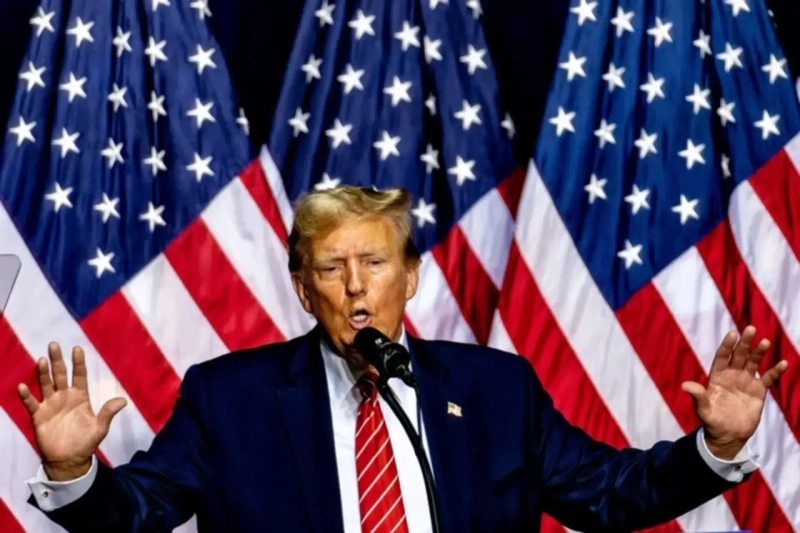
Global stocks and digital assets remained under a cloud after President Donald Trump said the U.S. would keep up military pressure on Iran despite a ceasefire agreement.
Trump wrote on Truth Social on April 9 that all U.S. military forces would remain stationed around Iran until the agreement is fully implemented. He added that if the deal falls apart, the U.S. would launch immediate and much stronger military action. The comments signaled that military tensions could flare again depending on whether the ceasefire terms are carried out.
Earlier that day, the U.S. and Iran struck a two-week ceasefire deal about 88 minutes before an ultimatum deadline. Even so, the agreement is only a temporary measure to keep negotiations alive rather than a final end to hostilities, leaving markets focused on lingering uncertainty instead of de-escalation. After the truce was announced, the Strait of Hormuz, a vital route for global crude shipments, was effectively shut again. That followed Iran's response to Israeli airstrikes across Lebanon, underscoring renewed military tensions in the Middle East.
The fallout is feeding into global financial markets. Higher oil prices and worries over shipping disruptions are adding to cost pressures. A renewed escalation in Middle East risks could also amplify war-driven inflation, Binance Research wrote. The firm said the two-week ceasefire is only a temporary measure rather than a resolution to the conflict, adding that oil prices could surge past pre-ceasefire levels if negotiations collapse.
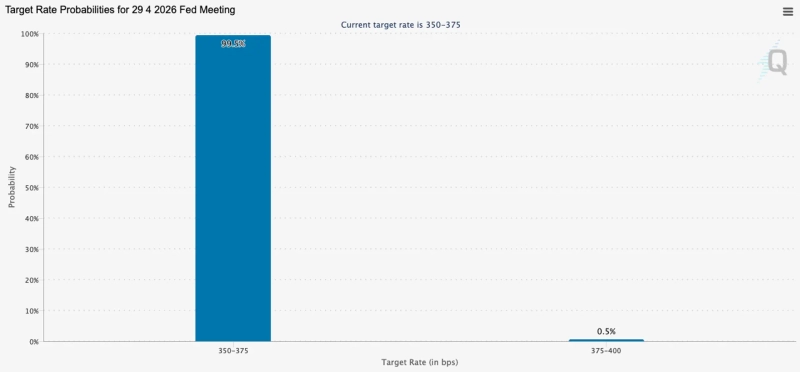
On monetary policy, expectations for steady interest rates strengthened further. CME FedWatch data as of 6 p.m. on April 9 showed markets pricing a 99.5% probability that the Federal Open Market Committee will leave rates unchanged at its April meeting. The implied odds of a hold were also 99.3% for June and 97.2% for July, suggesting policymakers may stay sidelined for some time. Markets were also assigning about a 75% chance of no rate cuts by year-end, reflecting expectations that restrictive policy could last longer.
ETF Inflows Do Little to Lift Conviction as Spot Demand Stays Weak
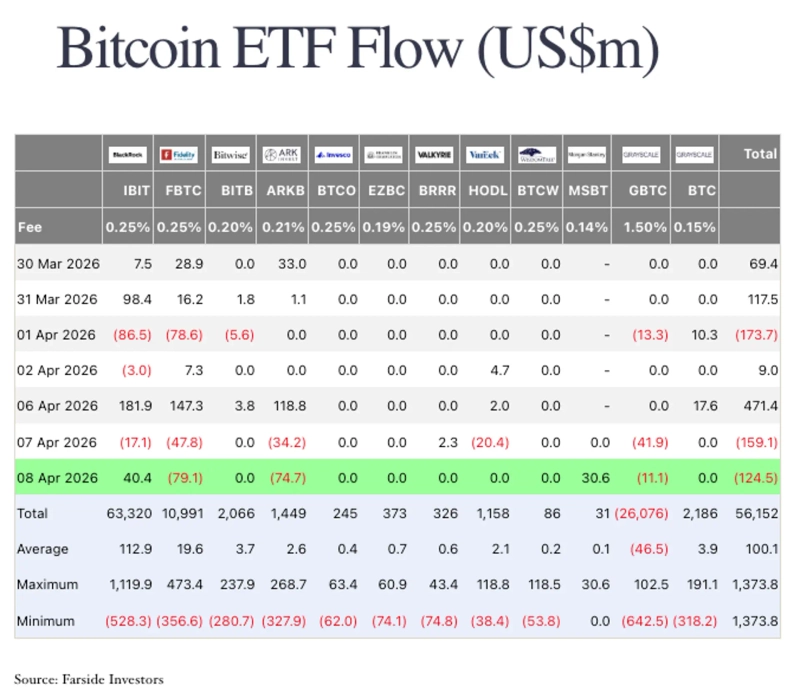
Fund flows have yet to establish a clear direction despite some inflows. U.S.-listed spot Bitcoin exchange-traded funds posted net inflows of $22.2 million last week, marking a modest rebound. Still, institutional demand remains limited amid uncertainty over progress on the CLARITY Act, legislation tied to crypto market structure.
On-chain data suggest the market remains stuck in a low-conviction phase marked by weak spot demand and fading participation. In its weekly research report, Glassnode said Bitcoin spot trading volume has yet to stage a meaningful recovery. Participation in derivatives markets has also declined, leaving market depth thin. Organic demand remains lacking even as prices stabilize.
Glassnode added that ETF flows are showing early signs of improvement, but only at an initial stage. Upside may remain limited unless both spot demand and broader market participation recover.
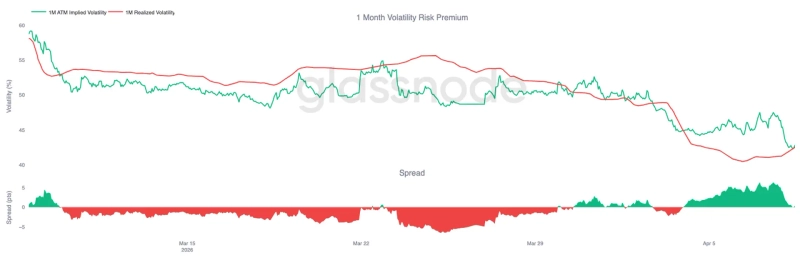
Short-term holders are still selling, adding to supply pressure. In a research report, Bitfinex said short-term Bitcoin holders, defined as those holding for 155 days or less, are going through a capitulation phase in which they are selling at a loss. That alone does not confirm a bottom. The exchange added that the pattern may reflect a transfer of coins from newer investors to long-term holders.
Some analysts also view Bitcoin as relatively resilient compared with other major assets. Binance Research said total crypto market capitalization rose slightly last month despite Middle East-related risks, while Bitcoin and Ether were relatively stable against other risk assets. Still, the firm said April's market direction will depend heavily on whether geopolitical tensions ease and on global liquidity conditions. The durability of the current rebound will hinge on macro factors.
Bitcoin Faces Resistance at $71,650; Break Above $75,000 Seen as Trend Turning Point
Bitcoin's next directional move may hinge on whether it can clear resistance at $71,650 and break above $75,000, analysts said. Over a longer horizon, volatility may persist until a clearer bottom forms.
Ayush Jindal, an analyst at NewsBTC, said Bitcoin briefly rose above $71,500 and extended gains before forming a short-term peak near $72,728 and entering a correction. The current price is still holding above $70,200, keeping the short-term bullish structure intact.
He said a break above $71,650 could open the way to the $72,000-$72,800 range and then to $73,500-$74,000. If Bitcoin fails to clear that barrier, the $70,300-$70,000 zone may serve as first support. A break below that area could expose the token to further losses toward the $69,000 range.
In the medium term, a move above $75,000 is being watched as a possible turning point for a broader uptrend. Alex Kuptsikevich, chief market analyst at FxPro, said Bitcoin retreated to around $71,000 after meeting selling pressure following an attempt to break above $73,000. Still, the token remains above its 50-day moving average, preserving the short-term upward structure. Whether a full-fledged rally has begun can only be judged after a break above $75,000.
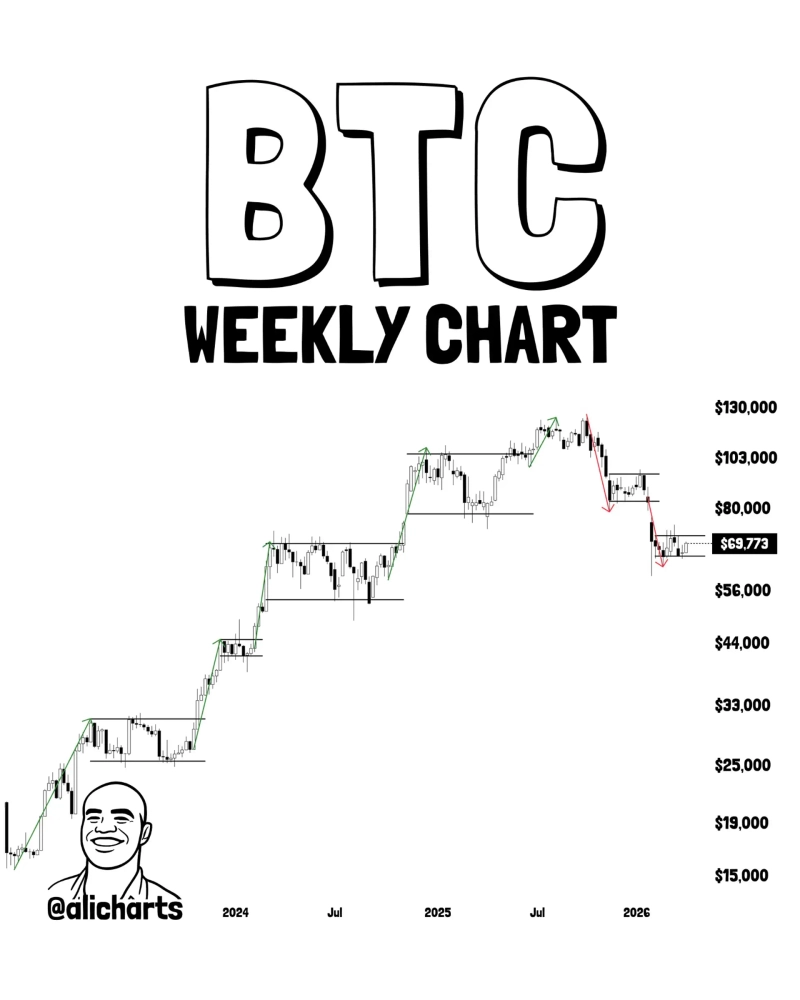
From a longer-term perspective, some analysts say there is still no clear sign that a bottom has formed. Katie Stockton, founder of Fairlead Strategies, said Bitcoin is in a bottoming phase with support around $58,000 to $59,000. She added that the market is likely to retest that zone several times in the near term.
Stockton said the dominant chart pattern remains a cyclical downtrend, with no clear bottoming signals yet such as an oversold rebound or a broader recovery in risk appetite. She said investors should stay cautious rather than chase short-term rebounds until stronger confirmation emerges.
Bitcoin has also been moving in line with equities, meaning a stock-market correction could weigh on risk assets more broadly, Stockton said. She added that reopening the Strait of Hormuz alone would not be enough to reverse market sentiment and that additional measures would likely be needed.
Kang Min-seung, Bloomingbit reporter minriver@bloomingbit.io

Minseung Kang
minriver@bloomingbit.ioBlockchain journalist | Writer of Trade Now & Altcoin Now, must-read content for investors.