PiCK
Trump Threatens to Block All Shipping Through Hormuz After Iran Talks Collapse
Summary
- President Trump said he would impose a naval blockade of the Strait of Hormuz and signaled the possibility of additional military action against Iran.
- The U.S. demanded that Iran ship out all highly enriched uranium and immediately reopen the Strait of Hormuz, but the talks ended without an agreement.
- Trump's hard-line message reduced the chances of a deal during the two-week ceasefire period and added to instability in the Middle East.
Forecast Trend Report by Period


Nuclear dispute and Hormuz remain deadlocked as Vance and full U.S. team depart
Trump calls it extortion, threatens blockade and further military action
Iran says it made 168 proposals and blames Washington
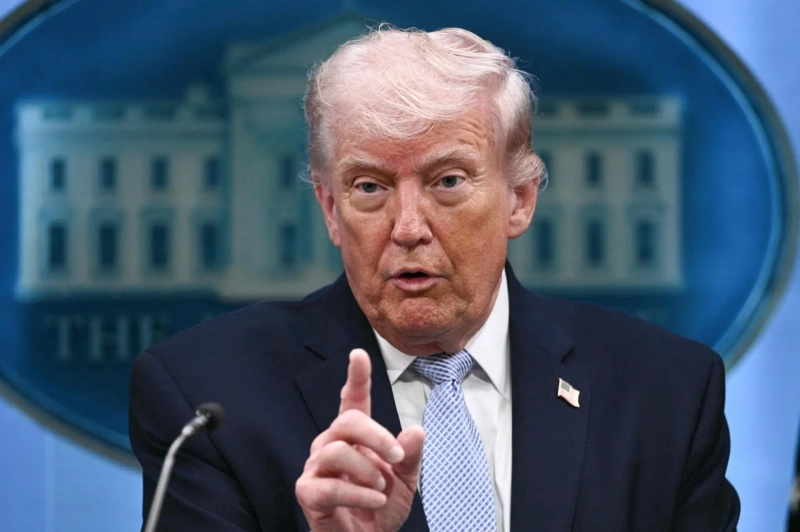
President Donald Trump threatened to block all ships transiting the Strait of Hormuz after ceasefire talks with Iran collapsed, and signaled the possibility of further military action against Tehran. The move pushes tensions back toward a peak after a two-week ceasefire had briefly eased the crisis.
In a lengthy Truth Social post on June 12, Trump said "the only fact that matters is that Iran will not give up its nuclear ambitions." He added that the U.S. Navy would "immediately begin procedures to block all vessels entering and leaving the Strait of Hormuz."
Trump described Iran's refusal to reopen the waterway, while claiming it was laying naval mines, as "global extortion." No national leader, especially the United States, would submit to extortion, he wrote. He also threatened that any vessel paying what he called an illegal transit fee to Iran would not be guaranteed safe passage on the high seas.
He also raised the prospect of additional military action. Trump said Iran's navy was gone, its air force was gone and its air defenses had been neutralized. The U.S. was prepared to "fully finish" Iran's remaining military capability at an appropriate time, he wrote, adding that any Iranian who fires at the U.S. would be sent to hell.
The talks ran for about 21 hours in Islamabad, Pakistan, from the afternoon of June 11 through early June 12 and ended without an agreement. Trump said the two sides had reached common ground on many issues but made no progress on the nuclear question. Iran would never have a nuclear weapon, he said. Vice President JD Vance returned without a deal, saying he had yet to see a fundamental commitment from Iran not to pursue nuclear weapons over the long term.
The entire U.S. negotiating team also left Islamabad. A U.S. official said that when Air Force Two, carrying Vance, stopped at Ramstein Air Base in Germany for refueling, none of the U.S. delegation remained in Pakistan, including Jared Kushner, Trump's son-in-law, Middle East envoy Steve Witkoff and the working-level negotiating team. The U.S. delegation numbered about 300 people, including security and protocol staff. CNN said the withdrawal showed direct talks with Iran would not resume immediately, even at the working level.
Iranian Foreign Ministry spokesman Esmaeil Baghaei said the two sides remained divided on two or three major issues. Reaching an agreement in a single round had never been a realistic expectation, he said. Iran's semi-official Tasnim News Agency, citing a person involved in the talks, reported that excessive U.S. demands prevented a deal and that Iran was in no rush.
The nuclear issue and the Strait of Hormuz were the central sticking points. The U.S. demanded that Iran ship out all of its highly enriched uranium, curb its uranium enrichment program and immediately reopen the Strait of Hormuz. Iran, by contrast, held to its position that it would not give up enrichment, citing what it called its right to peaceful nuclear energy. On Hormuz, Iran said the waterway could only be reopened after a final agreement was reached, the New York Times reported.
Trump's hard-line message on June 12 dimmed the chances of reaching a deal during the two-week ceasefire period, which runs through June 21. There are also concerns that if Israel uses the collapse in talks as a pretext to intensify attacks on Lebanon, it could further complicate negotiations.
Hong Min-seong, Hankyung.com reporter mshong@hankyung.com

Korea Economic Daily
hankyung@bloomingbit.ioThe Korea Economic Daily Global is a digital media where latest news on Korean companies, industries, and financial markets.