Trump, Xi Jostle Over Iran War Ahead of Delayed US-China Summit
Summary
- President Trump said he raised suspicions about China's possible weapons support for Iran and mentioned the possibility of an additional 50% tariff.
- Trump said that by keeping the Strait of Hormuz permanently open while blocking exports of Iranian crude, he had also cut off China's access to cheap oil.
- If the Iran war does not end smoothly, conflict and a power struggle between the US and China could continue over control of Iran’s oil resources, management of the Strait of Hormuz, and the nature of the next government.
Forecast Trend Report by Period


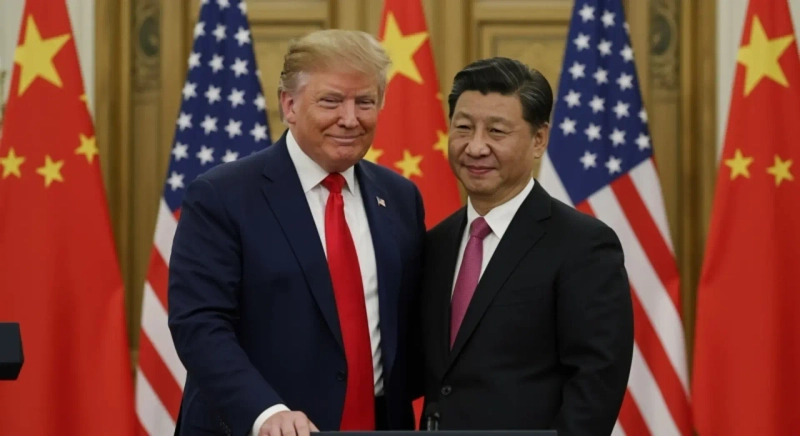
A summit between the US and China, delayed until mid-May, had initially been expected to take place in a relatively friendly atmosphere. The war in Iran changed that, sharpening tensions between President Donald Trump and Chinese President Xi Jinping.
In an interview with Sky News on May 15, Trump said he had sent Xi a letter after hearing that China was supplying weapons to Iran and that Xi had replied. Trump said he asked Xi not to do that, and Xi responded in writing that China was not doing so. The comments followed reports by CNN and other outlets that China was considering providing Iran with weapons such as man-portable surface-to-air missiles.
After the interview, Trump wrote on Truth Social that China had agreed not to send weapons to Iran. He had previously threatened an additional 50% tariff if weapons were supplied to Iran, a warning interpreted as targeting China and Russia.
Trump also addressed a maritime blockade, writing that China was very pleased he was keeping the Strait of Hormuz permanently open and that Xi would "give me a big hug" when he arrived in Beijing in a few weeks. The line appeared to be sarcastic, as blocking exports of Iranian crude would also deny China access to discounted oil.
Beijing has so far responded quietly while emphasizing a diplomatic solution. On May 13, Chinese Premier Li Qiang told the crown prince of Abu Dhabi that China would play a "more constructive role." China's Foreign Ministry also said it would work to restore peace and stability in the Middle East and the Gulf region. Those steps signal that Beijing is increasingly indicating it wants the Iran war brought to an end.
A Trump-Xi summit is on the schedule, and Treasury Secretary Scott Bessent said a day earlier that ties between the two leaders were good. Still, if the Iran war does not end smoothly, it could spill into broader conflict between Washington and Beijing. The two sides are set to keep competing over control of Iran's oil resources, management of the Strait of Hormuz and the nature of the next government.
Lee Sang-eun, Washington correspondent, Hankyung.com selee@hankyung.com

Korea Economic Daily
hankyung@bloomingbit.ioThe Korea Economic Daily Global is a digital media where latest news on Korean companies, industries, and financial markets.