Bitcoin Demand Cools as Tight Supply Offsets Geopolitical Risks
Summary
- An analysis said the Bitcoin market is showing an asymmetric structure in which slowing buying and constrained supply are colliding amid geopolitical risks.
- It said on-chain indicators including SSR, MVRV, Exchange Inflow CDD, and Exchange Inflow Mean point to weaker buying while also signaling an absence of long-term holder selling.
- Gaon said the market is at a turning point between retesting $70,000 support and challenging $80,000 resistance again, with the continuation of extended negotiations acting as the key variable.
Forecast Trend Report by Period


Bitcoin is showing an asymmetric market structure in which slowing demand and constrained supply are offsetting each other despite heightened geopolitical risks, according to an analysis.
On April 21, the US said it would extend its ceasefire with Iran indefinitely. Iran stopped short of giving clear consent, leaving markets focused on whether negotiations will continue. Against that backdrop, CryptoQuant contributor Gaon said Bitcoin is in a state of balance, with demand cooling even as supply pressure remains limited.
On-chain indicators point to weaker demand in the near term. Bitcoin’s Stablecoin Supply Ratio, or SSR, stood at 11.15, above its seven-day moving average of 11.10, suggesting a temporary slowdown in sidelined capital entering the market. That indicates fresh buying has become more cautious as inflation concerns combine with geopolitical risks.
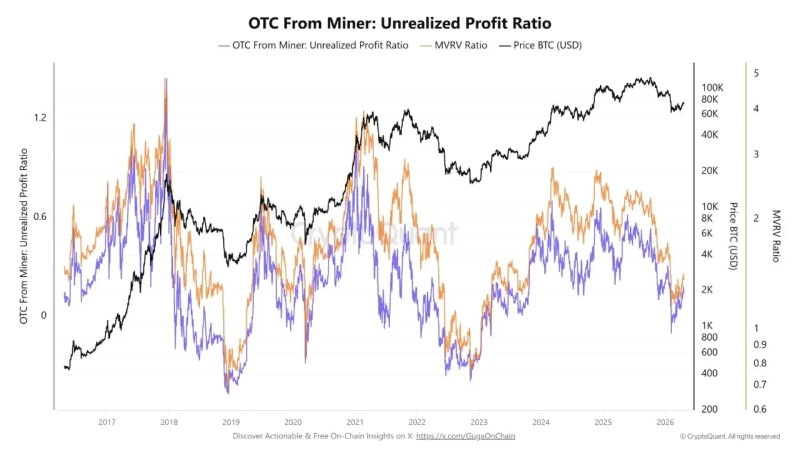
Supply-side pressure, however, remains limited. The unrealized profit ratio for miner OTC holdings was 0.1383, below the broader network MVRV of 1.40. That suggests miners and large holders have little incentive to sell aggressively. Gaon described it as a structure in which muted profit premiums for institutional and large investors are restraining heavy selling.
Exchange inflow data also supports the view that long-term holders are not selling. On Binance, Exchange Inflow CDD was 569, far below its seven-day average of about 370,000. Exchange Inflow Mean was 25.83, also below the average of 28.81. Spent Output Age Bands data showed the share of coins aged one to three months remained at about 0.72, indicating large-scale transfers were limited.
Taken together, the market is close to equilibrium. War-related risks have curbed buying, but supply pressure has remained subdued. That leaves Bitcoin’s next move heavily dependent on the outcome of diplomatic negotiations.
Gaon said the market is at a turning point between retesting support at $70,000 and challenging resistance at $80,000 again. The continuation of extended negotiations has become a more important variable than the original ceasefire deadline, he added.

Suehyeon Lee
shlee@bloomingbit.ioI'm reporter Suehyeon Lee, your Web3 Moderator.