PiCK
Bitcoin Pauses Below $80,000; Ether Supply Shrinks and XRP Demand Cools
Forecast Trend Report by Period


**
<Lee Su-hyun’s Coin Radar> is a weekly column that tracks moves in the cryptocurrency market and explains the forces behind them. It goes beyond price action to analyze global economic developments and investor behavior, offering insight into where the market may be headed.
Major Coins
1. Bitcoin (BTC)
Bitcoin extended this week’s gains and briefly climbed to the $79,000 level before losing momentum as traders locked in short-term profits. As of April 24, it was trading around $77,600 on Binance’s USDT market.
The latest rebound was driven mainly by hopes that Middle East risks were easing. On April 21, a ceasefire between the US and Iran was effectively extended indefinitely, shifting market sentiment. The truce had been due to end on April 22, but was extended a day earlier. While a maritime blockade remained in place, further military clashes were put on hold for now.
Tensions have not disappeared entirely. But the lower risk of a broader conflict helped stabilize investor sentiment.
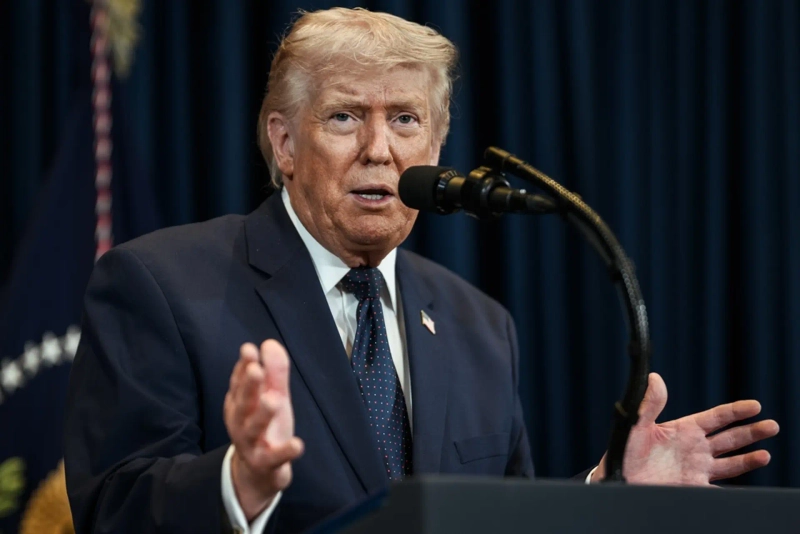
Uncertainty still hangs over the market. President Donald Trump said in an interview on April 22 that there was no fixed deadline for ending the war, signaling he was in no rush to negotiate. Internal power struggles in Iran and differences over its nuclear program also remain unresolved. That leaves markets highly sensitive to related headlines for the time being.
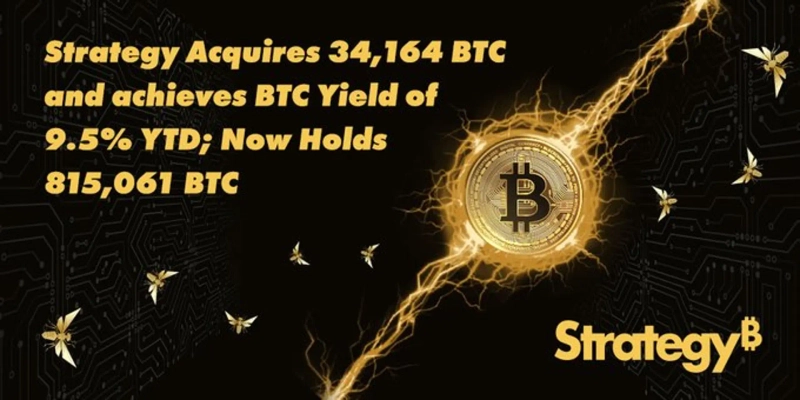
Flows have remained supportive. Strategy, the publicly traded company with the world’s largest Bitcoin holdings, bought another 34,164 BTC between April 12 and April 19, worth about $2.65 billion. That marked its biggest weekly purchase of the year. Spot Bitcoin ETFs also recorded about $223.16 million of net inflows as of April 23. Those institutional purchases have helped support prices and sustain the uptrend.

Regulation is emerging as another key variable for the crypto market. On April 23, the industry sent a letter to the US Senate urging it to take up the Clarity Act, a bill aimed at establishing market-structure rules for digital assets. Signatories included Coinbase, Circle, Kraken, Ripple, Andreessen Horowitz, developer groups and the Blockchain Association. More than 100 companies and institutions joined the effort, suggesting the letter reflected a broad industry position. The group argued that piecemeal regulatory action would not be enough to build a stable framework and called for a clear legal regime.
The letter also warned that delayed legislation could push investment, talent and development overseas. It pointed to the European Union and other major jurisdictions that have already put regulatory frameworks in place.
Some lawmakers, however, say the bill could move by the end of May. Senator Bernie Moreno said it could be handled by late May and added that market concerns over stablecoin rewards may be overstated. Recent talks have also narrowed differences over interest payments. Still, key issues remain, including illicit-finance controls and political conflicts of interest. The Senate Banking Committee has yet to set a markup schedule, suggesting a final agreement will take more time.
For prices, $80,000 is the key near-term threshold. Glassnode said the area overlaps with the average cost basis of investors who bought over the past roughly 155 days. That means break-even selling could emerge in size as Bitcoin approaches that level. If the token clears $80,000 and extends its rally, the next leg higher could follow. Michaël van de Poppe, founder of MN Trading Capital, said Bitcoin could reach $86,000 if the advance continues.
2. Ethereum (ETH)

Ethereum has held relatively steady this week around the $2,300 level. As of April 24, it was trading near $2,300 on Binance’s USDT market.
The main theme has been simultaneous accumulation and shrinking supply. BitMine, for example, has been aggressively buying Ether. On April 22, it added about 100,000 ETH. Its total Ether holdings are projected to exceed 5 million ETH, or about 4% of circulating supply.
Whale activity has also picked up. Lookonchain said newly created wallets were seen moving tens of thousands of Ether from Binance to custody firms on April 21. One whale transferred 35,000 ETH and another moved 18,000 ETH to a custodian. Spot Ether ETFs also extended their streak of net inflows to 10 straight trading days as of April 22. About $96.4 million flowed into those products that day, showing institutional demand remained steady.
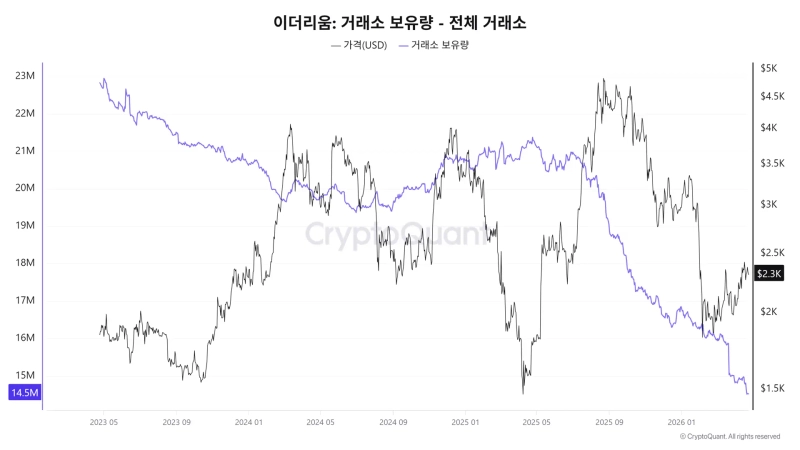
Supply is tightening as well. CryptoQuant data showed Ether balances on global crypto exchanges fell to about 14.54 million ETH as of April 22, the lowest on record. That was down about 32% from a year earlier. The drop suggests investors are pulling coins off exchanges for long-term storage or staking. With less supply available to trade, selling pressure could ease and support prices.
The next key test is whether Ether can break through major resistance. Akash Girimath, an analyst at FXStreet, said a decisive move above $2,388, the 100-day exponential moving average, could extend the rally to $2,746. He added that a break below support at $2,320 could trigger a pullback toward $2,260. If the uptrend line at $2,308 gives way, downside pressure could deepen and, in a worst-case scenario, push Ether back into the $1,700 range.
3. XRP
XRP rose to $1.46 this week before surrendering most of the gain. As of April 24, it was trading around $1.42 on Binance’s USDT market.
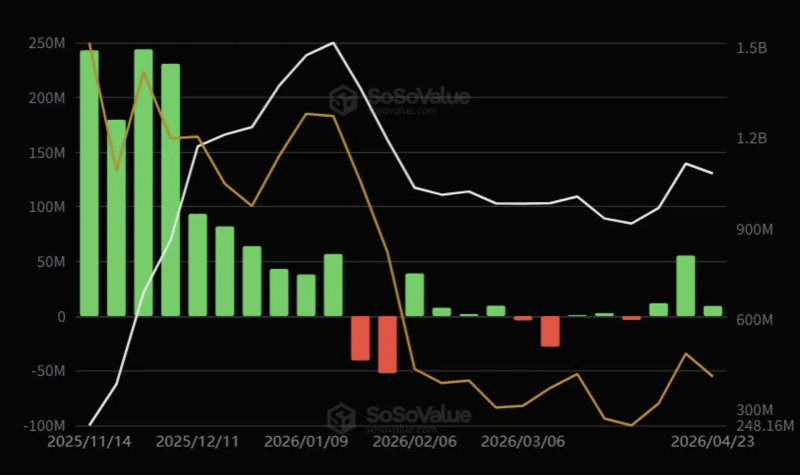
The biggest factor has been slowing demand. SoSoValue data showed spot XRP ETF inflows totaled about $9.43 million as of April 23, down sharply from $55.39 million a week earlier. Daily inflows were also limited to about $3.89 million, leaving little fuel for further gains.
Retail participation has remained muted as well. CoinGlass data showed open interest in XRP futures was stuck at about $2.58 billion. That compares with more than $10 billion in July last year, when XRP hit a peak of $3.66, indicating speculative demand remains far below prior highs.
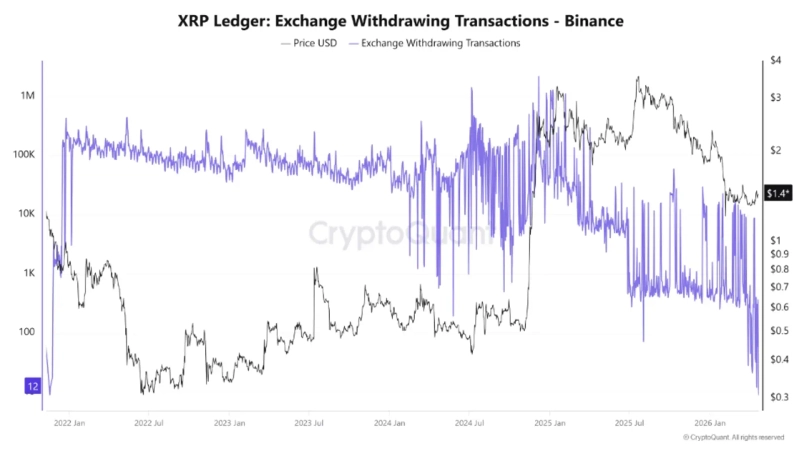
On-chain data tells a similar story. CryptoQuant said XRP withdrawal transactions on Binance fell to their lowest level since 2021. Daily withdrawal transactions, which topped 8,000 in mid-April, have recently dropped to about 12. That suggests investors have shifted into wait-and-see mode.
For the near term, the $1.40 to $1.44 range is the key battleground. CoinDesk identified $1.44 as the main resistance level and said a clear break above it is needed for a structural bullish reversal. It also flagged $1.40 as immediate support, with a break below that level likely to widen downside risk quickly. FXStreet took a similar view. It said XRP needs to close firmly above $1.43 in the near term to shake off downward pressure. From there, it would need to clear $1.54, $1.67 and then $1.78 to restore the broader uptrend. On the downside, breaks below support at $1.40 and $1.39 remain a major risk that could reinforce the bearish structure and deepen losses.
Coin in Focus
1. USDAI (CHIP)
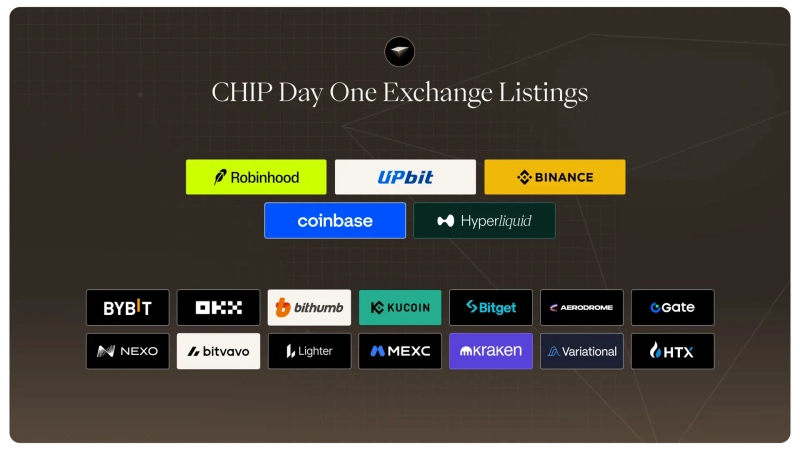
USDAI drew the most attention this week. On April 23, it surged 132% in a single day on Binance’s USDT market, showing strong short-term momentum. As of April 24, however, it had given back most of those gains and was trading at $0.09556 on Binance’s USDT market.
The main driver was its simultaneous listing on major domestic and overseas exchanges. On April 21, USDAI began trading on Upbit, Bithumb, Binance, Coinbase and Bybit at the same time. Liquidity and investor attention rushed in immediately after the listings, helping drive the sharp short-term jump.
Some of the move also appears to reflect expectations for the project itself. USDAI is a lending protocol designed to finance artificial intelligence infrastructure. GPU owners can tokenize their graphics processing units through USDAI and use them as collateral to borrow stablecoins. The USDAI token serves as the governance token within that ecosystem. That combination of AI infrastructure and decentralized finance also appears to have attracted thematic demand.
Newly listed tokens, however, can see extreme volatility based on exchange listings and concentrated investor attention alone. If momentum fades, prices can reverse quickly.

Suehyeon Lee
shlee@bloomingbit.ioI'm reporter Suehyeon Lee, your Web3 Moderator.