Trump Rejects Iran’s 14-Point Ceasefire Proposal, Starts Hormuz ‘Project Freedom’
Summary
- President Donald Trump said he had rejected Iran’s 14-point ceasefire proposal and would begin Project Freedom, an operation to rescue ships in the Strait of Hormuz.
- The US is maintaining a hard line on Iran’s demand for sanctions relief while pressing for the abandonment of its nuclear program and the reopening of the Strait of Hormuz as core conditions.
- Iran is seeking war reparations, the lifting of the maritime blockade, the removal of sanctions on Iran, and the creation of a new mechanism for the Strait of Hormuz, while proposing further talks after a ceasefire is reached.
Forecast Trend Report by Period


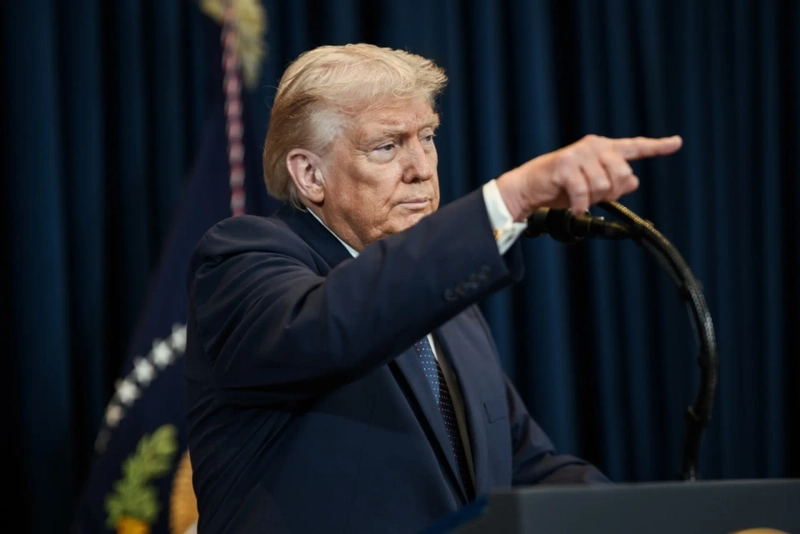
President Donald Trump rejected Iran’s 14-point ceasefire proposal and said the US would begin an operation to rescue third-country vessels stranded in the Strait of Hormuz.
In an interview cited by Israel’s public broadcaster Kan on May 3, Trump called Iran’s proposal “unacceptable.” “I looked at it. I looked at everything, but it’s unacceptable,” he said. The remarks came after the US first presented a nine-point ceasefire proposal and Iran responded with a revised 14-point version.
Trump later wrote on Truth Social that the vessel rescue operation would begin on the morning of May 4, Middle East time. Countries around the world had asked the US for help freeing ships trapped in the Strait of Hormuz, he wrote, and the US had informed them through its delegation that it would do its best to safely evacuate the vessels and their crews.
Trump said the operation would be called “Project Freedom.” He added that the US delegation was holding “very positive discussions” with Iran. If the humanitarian process is obstructed in any way, the US would have no choice but to respond forcefully, he said.
Earlier on May 3, Iran’s Foreign Ministry said the US had delivered its response to the 14-point ceasefire proposal to Pakistan, which is mediating the talks. Iranian outlets including IRIB and Tasnim quoted Foreign Ministry spokesman Esmaeil Baghaei as saying Tehran was reviewing the US position conveyed through Pakistan and would announce its response once that review is complete.
Baghaei said Iran’s 14-point proposal was focused on ending the war and did not include the nuclear issue. He also dismissed as media fabrication claims related to mine-clearing in the Strait of Hormuz.
The 14-point proposal reportedly includes war reparations, guarantees against renewed military aggression, the withdrawal of forces from areas around Iran, the lifting of the maritime blockade, the removal of sanctions on Iran, an end to fighting across all fronts including Lebanon, and the creation of a new mechanism for the Strait of Hormuz.
The US is demanding that Iran abandon its nuclear program and reopen the Strait of Hormuz. Iran’s position is that a ceasefire should come first, followed by additional negotiations on its nuclear program. The two sides held direct ceasefire talks in Islamabad, Pakistan, on April 11, but failed to reach a deal. Discussions have been deadlocked since then.
Hong Min-seong, Hankyung.com reporter, mshong@hankyung.com

Korea Economic Daily
hankyung@bloomingbit.ioThe Korea Economic Daily Global is a digital media where latest news on Korean companies, industries, and financial markets.