

Post-Resignation Turmoil... Global Investors "Distance from Korean Market"
Summary
- Global investors are wary of the volatility increase and trust decline in the Korean market.
- Locally, the possibility of adjustment towards credit rating is being discussed, and strategic investment adjustments are expected.
- Investors have pointed out that Korea's political instability could significantly impact the asset market.
"Korean market volatility rising and trust declining"
"Possibility of adjustment towards credit rating"
Some see it as an opportunity for low-cost purchases like anti-government protests
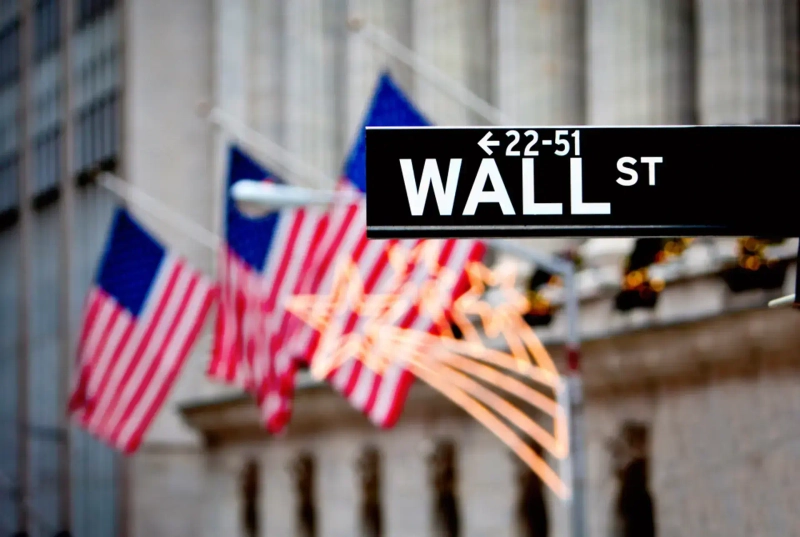
Global investors are distancing themselves from Korean assets following the resignation turmoil.
Trust in the Korean financial market is low, and volatility is increasing, with some speculating on the possibility of adjustments towards credit rating. The government's efforts to avoid a Corea Discount are at a critical juncture.
Some experts say that it was a difficult presidency anyway, and if there were issues in the Korean national system or financial system, today's cost would have plummeted by 10%" they said, viewing it comparatively pessimistically.
On the 4th (local time), according to foreign media such as Bloomberg, Reuters, and Wall Street Journal, global strategists have received a significant impact on trust in the Korean market due to the resignation turmoil, and some expect it to affect the national credit rating. Already in the second half of this year, minor growth has been avoided, and next year's Trump administration's tax bomb situation is also expected to be difficult, even if not as severe as feared, analysts say.
The night before, President Yoon Seok-yeol's resignation turmoil immediately reduced the originalization and Korean ETF, etc.
Global investors are distancing themselves from Korean assets following the resignation turmoil.
Trust in the Korean financial market is low, and volatility is increasing, with some speculating on the possibility of adjustments towards credit rating. The government's efforts to avoid a Corea Discount are at a critical juncture.
Some experts say that it was a difficult presidency anyway, and if there were issues in the Korean national system or financial system, today's cost would have plummeted by 10%" they said, viewing it comparatively pessimistically.
On the 4th (local time), according to foreign media such as Bloomberg, Reuters, and Wall Street Journal, global strategists have received a significant impact on trust in the Korean market due to the resignation turmoil, and some expect it to affect the national credit rating. Already in the second half of this year, minor growth has been avoided, and next year's Trump administration's tax bomb situation is also expected to be difficult, even if not as severe as feared, analysts say.
ING Bank's Seoul branch's Korean and Japanese economist Minjoo Kang said in a research note, "This incident could affect Korea's national credit rating," and "there is a possibility that the credit outlook will change."
Moody's said on the same day that if political turmoil continues for a long time, it would be negative for Korea's credit rating.
Analysts expect that the approval rating, which is below 17%, will be a catalyst for a short-term continuation of volatility.
TS Lombard's Asia Research Director Rory Green expected, "The low approval rating of Yoon will eventually be a catalyst, and the election will be held in the second half of next year." In the short term, Korean assets are likely to be pressured until this process ends.
BNY's market strategy and insight director Beth Savidge said in a memo, "The resignation was brief, but the aftermath will continue," adding, "The division between the National Assembly and the president, and the subsequent changes in US policy, will be a test for the Korean market."
Janus Henderson Investors' analyst Jennifer Sanders in Singapore said, "In the uncertainty of political turmoil, it will not be easy to invest in Korea," adding, "There are many investors avoiding Korea due to the Corea Discount, and foreigners will distance themselves from the Korean market due to the resignation turmoil."
Canada's strategy consulting firm 'The Geopolitical Business' founder Abishur Prakash warned, "While political risks continue, Korea's negotiations with foreign partners such as trade with Trump could face obstacles and could directly face a trade war."
Evercore ISI's global policy and central bank strategy team director Krishna Guha said, "Korea's anti-government protests and auto companies, battery companies, etc., are at a disadvantage in the global supply outlook, so special attention is needed."
Guha's strategy has not yet significantly shaken the global market, but he noted that the US, Japan, and Switzerland have become safe asset havens.
Some strategists see it as an opportunity for low-cost purchases if political stability is restored. Cost rose 6% for three months ahead of the impeachment ruling of former President Park Geun-hye in March 2017.
Raymond Global Advisors' founder Jason Huh said, "It will be an opportunity to buy important Korean company stocks at a low price in the anti-government supply outlook." He expected that Korean companies would still see benefits in the AI and China's supply outlook diversification boom, and that it would be unrelated to political attention.
This view is similar to that of Derek Owens, co-founder of the emerging market spring of Allspring. He pointed out that Korea's resignation turmoil is "related to domestic politics, and there is no significant connection with the corporate environment in Korea."
Pivotal Asset Management's CEO Jeong In-yoon said, "Yoon's political career will end, and stocks will be an opportunity for short-term purchases," but he was concerned that it would act as a headwind for economic growth due to the Corea Discount.
Olivier Dassy, an investment decision research analyst at SimCorp, pointed out again, "Anyway, the president's approval rating is extremely low, and the National Assembly is dominated by the opposition party, so it was expected that it would not last long." If there were issues in Korea's national or financial system, today's cost would have plummeted by 10%" is the reaction.
With Trump's election due to China's economic slowdown and tax evasion, Korea's assets were one of the worst-performing assets in the world. This year's originalization fell by about 9%, recording the worst performance among Asian communications. Cost also fell by more than 7%.
Kim Jung-ah, a reporter for Hankyung.com, kja@hankyung.com

Korea Economic Daily
hankyung@bloomingbit.ioThe Korea Economic Daily Global is a digital media where latest news on Korean companies, industries, and financial markets.