

Urgent Power Grid Act and Coin Tax Deferral Act... Economic and Livelihood Bills Discussion 'Halted'
Summary
- If the bills for the abolition of the financial investment income tax and the deferral of virtual asset taxation are not processed due to the National Assembly's deadlock, they are expected to be implemented as originally planned from next year.
- The legislation of the National Backbone Power Grid Special Act and others has been halted as the ruling and opposition parties have been unable to coordinate the bills to be tabled due to extreme conflicts over President Yoon Suk-yeol's impeachment.
- The likelihood of inheritance tax relief being realized has decreased, which could negatively impact investors.
Bills Expected to be Processed Within the Year with Few Disagreements
Pushed Aside Due to Intensifying Ruling and Opposition Party Conflicts
Government's Announced Inheritance Tax Relief Also Uncertain
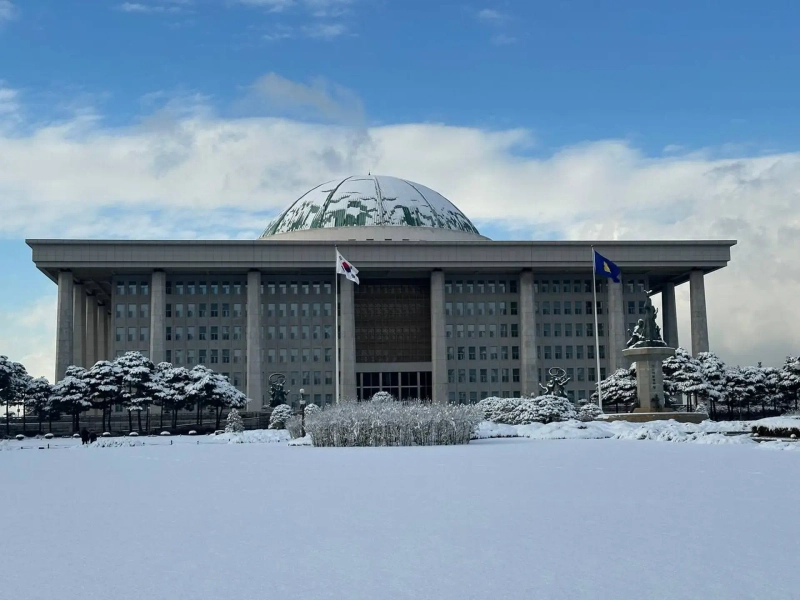
Since the declaration of martial law by President Yoon Suk-yeol on the 3rd, the National Assembly's bill deliberation has effectively been suspended, halting the processing of various economic and livelihood bills. The aftermath of political turmoil is beginning to have a negative impact on policy implementation through legislation.
The National Assembly's Trade, Industry, Energy, SMEs, and Startups Committee is scheduled to hold a bill review subcommittee on the 9th, but the ruling and opposition parties have not even agreed on the agenda to be discussed by the 8th. This is because they have been unable to coordinate the bills to be tabled due to extreme conflicts over the impeachment of President Yoon.
As a result, the legislation of the Semiconductor Special Act, National Backbone Power Grid Special Act, High-Level Radioactive Waste Disposal Facility Act, Offshore Wind Power Special Act, etc., which were scheduled to be discussed in the subcommittee, has also been halted. These were bills that had significantly narrowed differences between the ruling and opposition parties and were expected to be processed in the plenary session within the year.
Bills of high interest to investors, such as the abolition of the financial investment income tax and the deferral of virtual asset taxation, have also reached a consensus in general direction between the ruling and opposition parties but have not been processed in the Planning and Finance Committee's Tax Subcommittee. If the National Assembly's deadlock continues until the end of the year and the related bills are not amended, the financial investment income tax and virtual asset taxation will be implemented as originally planned from next year. The reduction of the highest inheritance tax rate and the expansion of deductions have not progressed in discussions between the ruling and opposition parties. With little room for discussion, it is currently highly likely that the government's announced inheritance tax relief itself will not be realized.
In the Land, Infrastructure and Transport Committee, the ruling and opposition parties have largely agreed on easing reconstruction regulations such as the abolition of safety inspections, but have not proceeded with additional legislative procedures. The same situation applies to the enactment of the Artificial Intelligence (AI) Basic Act and the abolition of the Mobile Device Distribution Act by the Science, ICT, Broadcasting and Communications Committee.
A National Assembly official said, "With the effective collapse of the People Power Party's floor leadership due to Choo Kyung-ho's resignation, and the large gap in positions between the ruling and opposition parties regarding President Yoon's impeachment, dialogue is difficult."
Reporter Park Joo-yeon grumpy_cat@hankyung.com

YM Lee
20min@bloomingbit.ioCrypto Chatterbox_ tlg@Bloomingbit_YMLEE