

[Issue Prism] Ray Dalio's Warning of 'Economic Heart Attack'
Summary
- Ray Dalio warned that if the United States doesn't reduce its fiscal deficit to 3% of GDP, a serious debt crisis could occur within three years.
- Dalio emphasized that this debt crisis could significantly impact the Treasury bond market and lead to interest rate increases.
- Due to aging and low growth, Korea's fiscal deficit may also increase, with political factors potentially influencing this trend.
Concerns over 'Death Spiral' in U.S. Treasury Market
Not a Foreign Matter for Aging, Low-Growth Korea
Yu Chang-jae, Economic Editor
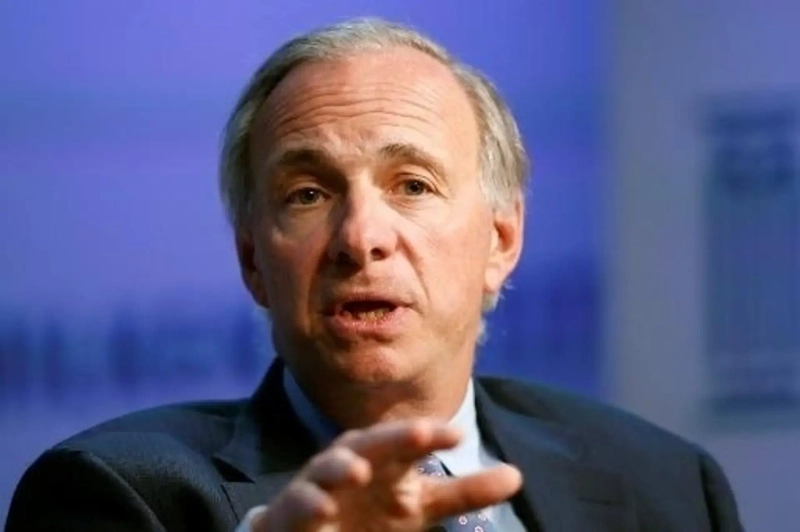
Ray Dalio has become busy again lately. He is the founder of Bridgewater, the world's largest hedge fund managing $126 billion (approximately 180 trillion won). Through various media interviews, he warned that "if the United States doesn't reduce its fiscal deficit to 3% of GDP immediately, a serious debt crisis could occur within three years." He employed terrifying expressions such as 'debt death spiral' and 'economic heart attack.'
Dalio, who founded Bridgewater in 1975, is a legendary 'global macro' (strategy utilizing macroeconomic trends) investor. He has directly experienced large and small debt cycles over the past 50 years. He has also studied the causal relationships between debt cycles and the rise and fall of empires that ruled the world over the past 500 years. Based on his experience and research, he is now pressuring Trump and Congress, saying "the recent speed of U.S. debt increase is seriously concerning." He plans to release a new book titled "How Nations Go Bankrupt" in September.
According to Dalio's calculations, the current U.S. fiscal deficit of around 6% of GDP could rise to 7.5% when Trump's tax cuts are fully implemented. If this trend continues, bond investors will no longer consider U.S. Treasury bonds safe. This would lead to soaring interest rates as investment demand decreases relative to bond supply. The U.S. government would need to spend more on interest payments, and at some point would need to print more bonds to repay existing debt. Dalio declares this 'death spiral' will occur not in the distant future but within three years.
Dalio's warning might sound unfamiliar to Korean readers because they consider it 'someone else's problem.' This is based on the clear difference between the U.S., where national debt is 120% of GDP, and Korea, where it's around 50%. This is an overly optimistic view. Given the rapidly aging population structure and declining growth rate, it's obvious that Korea's fiscal deficit and national debt will snowball.
The Korea Development Institute (KDI) projected that national debt will increase to 144.8% of GDP by 2060 due to expanding welfare demands from aging. Political populism competition will accelerate this trend. The fiscal deficit ratio (managed fiscal balance), which rose to 5.8% of GDP under the Moon Jae-in administration in 2020, has decreased somewhat during the Yoon Suk-yeol administration but exceeded the government's target of 3% for five consecutive years until last year.
A bigger concern is 'whether productivity can handle increasing debt.' Dalio says debt is dual-natured. While borrowed money that creates greater productivity makes creditors, debtors, and citizens all happy, debt that increases faster than productivity growth is disastrous for everyone. This sounds like a warning for Korea, where potential growth rate is entering the 1% range and corporate tax revenue is plummeting due to deteriorating business performance. It's also problematic that inheritance and gift taxes are making up for the corporate tax shortfall. The world's highest inheritance tax rate, which punishes successful entrepreneurs, further suppresses entrepreneurship. This is a vicious cycle of low growth.
Dalio points out that the U.S. cannot reduce its fiscal deficit because politicians spend time arguing about which expenditures to cut and which taxes to increase. He argues that rather than this 'bottom-up' approach, a 'top-down' method setting the principle of 'fiscal deficit at 3% of GDP' is needed to achieve the goal. This aligns with the fiscal rule that failed to be introduced in Korea due to opposition party resistance. Dalio remarked, "It's completely doable, but the real problem is politics." The same applies to Korea. Is it still someone else's problem?

Korea Economic Daily
hankyung@bloomingbit.ioThe Korea Economic Daily Global is a digital media where latest news on Korean companies, industries, and financial markets.