

Gold Rally Approaches $3,000 Amid Trump Tariffs and Geopolitical Concerns
Summary
- Gold spot prices reached a historic high of $2,973 per ounce, indicating increased preference for safe-haven assets.
- Trump's tariff policies and geopolitical concerns are acting as destabilizing factors in global markets, leading to overall weakness.
- The Federal Reserve is expected to maintain a cautious approach to interest rates, with potential rate cuts anticipated.
Gold spot price reaches $2,973 per ounce in US market
Asian and European markets weaken, US futures also show weakness
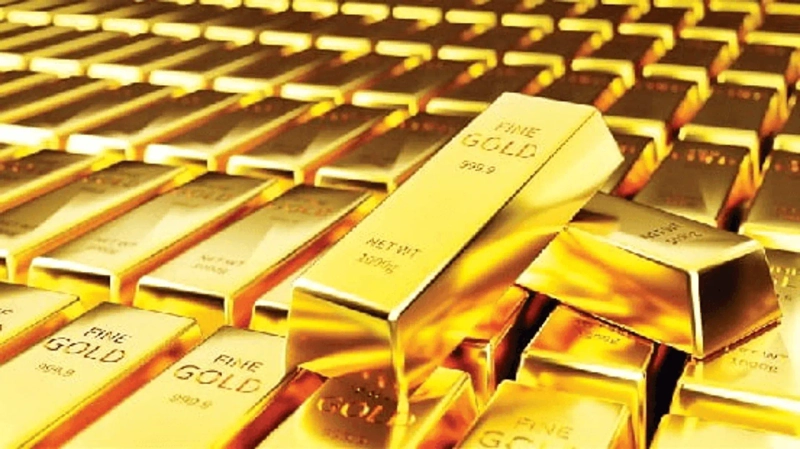
On the 20th (local time), global markets generally weakened due to Trump's tariff plans, heightened geopolitical concerns, and the Federal Reserve's cautious interest rate plans. As risk aversion sentiment increased, gold spot prices broke through $2,970 per ounce in the US market.
In Asia, Japan's Nikkei 225 fell 1.5% due to yen strength. Chinese tech stocks, which had been rallying, took a breather. Hong Kong's Hang Seng Index, which had reached a four-month high driven by broad gains in Chinese tech stocks following Deepseek's breakthrough achievements, fell 1.3%.
European markets saw the pan-European STOXX 600 index fall nearly 1%. S&P 500 futures and Nasdaq 100 futures were down 0.3% in early Eastern time trading compared to the previous day.
Gold spot prices traded at historic highs, reaching $2,973 at 4:30 AM Eastern Time on the New York Mercantile Exchange (NYMEX). Gold has risen 12% this year after gaining 27% last year.
The Japanese yen, another safe-haven asset, strengthened to 150.065 against the dollar, its highest level since early December, after Bank of Japan officials mentioned potential rate hikes this year. The dollar index against a basket of currencies including the yen and euro fell 0.16% to 107.06.
Trump threatened throughout the week to impose tariffs on automobile, semiconductor, and pharmaceutical imports. Lumber was also added to the list.
According to Reuters, while some analysts view Trump's moves as negotiating tactics, concerns about a trade war are growing.
Geopolitical concerns also rose as Trump surprised Europe by calling Ukraine's President Zelenskyy, rather than Putin, a 'dictator' amid US-Russia talks to end the Ukraine war.
According to the Fed's January meeting minutes released the previous afternoon US time, Trump's tariff proposals raised inflation concerns within the Fed. Board members making interest rate policy decisions noted that businesses typically raise prices to pass on import tariff costs.
IG market strategist Yeap Jun Rong noted, "Trump's policies are adding complexity to the Fed's balance between inflation and employment, causing policymakers to take a wait-and-see approach."
According to LSEG data, traders expect the Fed to cut rates by 39 basis points (1bp=0.01%) this year, with the first cut anticipated in September.
Oil prices fell from week-long highs, while wheat continued a five-day rise, approaching its highest closing price since October, reflecting concerns about cold weather in Russia and the US potentially damaging wheat crops.
Vasu Menon, Executive Director of Investment Strategy at OCBC Bank Singapore, said, "Uncertainty about Fed policy and Trump's tariffs will make investors nervous." He emphasized that investors must accept that volatility will increase this year.
Guest Reporter Jeong-ah Kim kja@hankyung.com

Korea Economic Daily
hankyung@bloomingbit.ioThe Korea Economic Daily Global is a digital media where latest news on Korean companies, industries, and financial markets.