

Trump's Federal Employee Layoffs Create Economic Headwinds... Economists Respond
Summary
- Economists warn that Trump administration's massive federal employee layoffs could have a devastating impact on regional economies.
- Economic stability is threatened in areas with high concentrations of federal employees, and regions like Washington D.C. may see impacts on small businesses due to reduced consumption.
- Economic uncertainty combined with the Trump administration's tariff policies will make companies more cautious about hiring and investment.
Recently Hired Employees Also Face Layoffs
Economists: "Impact on Overall Regional Economy"
"Greater Impact in Areas with High Federal Employee Concentration"
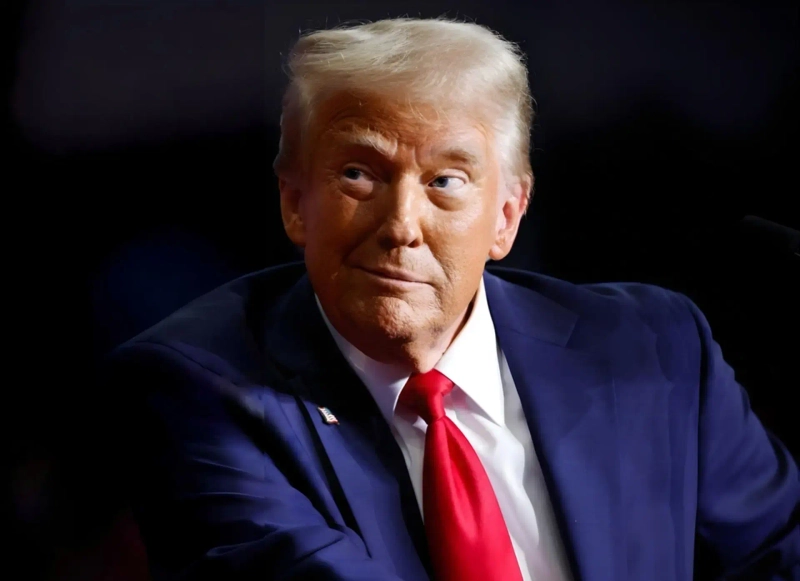
President Donald Trump continues his strong push to reduce federal workforce size throughout his first month in office.
According to foreign media including Fortune magazine on the 22nd (local time), Trump issued an executive order requiring all federal employees to work in office five days a week immediately after taking office. He then implemented a voluntary retirement program accepted by approximately 75,000 federal workers.
Layoff procedures have begun even for employees recently hired or transferred to new positions. According to U.S. government data as of March 2024, about 220,000 federal employees had less than one year of service.
According to the Pew Research Center, before Trump took office, there were approximately 2.4 million federal employees in the United States, representing about 1.87% of the total civilian workforce.
USA Facts' analysis of U.S. Office of Personnel Management data shows that the proportion of federal employees by region is approximately 43.26% in Washington D.C., 4.6% in Maryland, and 3.27% in Virginia.
In interviews with Fortune, economists analyzed that cities and regions with high proportions of federal employees have shown relatively more stability during past economic downturns and labor market contractions. This massive reduction threatens that stability and could have a devastating impact on local economies.
Max Stier, CEO of the Partnership for Public Service, said, "If (Trump) deals a major blow to the U.S. government, the ripple effects will spread throughout the economy."
Trump's massive federal employee layoffs are likely to make job hunting in the private sector even more difficult.
While some laid-off workers will receive unemployment benefits, they will receive less than their previous salaries, and support is only temporary. Long-term job seekers reduce spending, affecting local small businesses. Particularly in areas like Washington D.C., federal employees' spending patterns directly impact local restaurants, food trucks, and other small businesses.
Professor Jesse Rothstein of UC Berkeley's Labor Economics department said, "When people become unemployed, they cut food expenses, default on car payments, and try to save on living expenses," adding, "This will have a chain reaction effect on other businesses."
There's no guarantee that companies will actively hire new employees. While the labor market remains generally robust, job hunting in white-collar sectors is challenging. The Trump administration's tariff policies on major trading partners also contribute to economic uncertainty.
Erika Groshen, economic advisor at Cornell University's School of Industrial and Labor Relations, stated, "As economic uncertainty increases, companies become more cautious about hiring and investment."
It's difficult to predict exactly how local economies will be affected so far. While some layoff measures have been withdrawn, the possibility of additional layoffs remains significant.
Harry Holzer, Professor of Public Policy at Georgetown University, diagnosed in an interview, "In areas with high concentrations of federal employees, negative ripple effects will appear across the economy," adding, "Visible economic slowdowns are expected in some regions."
Pak Su-rim, Hankyung.com Reporter paksr365@hankyung.com

Korea Economic Daily
hankyung@bloomingbit.ioThe Korea Economic Daily Global is a digital media where latest news on Korean companies, industries, and financial markets.