

10% Tariff is Just the Beginning... Trump's 3 Additional Threats Against China
Summary
- The Trump administration has strengthened trade pressure against China through measures including restricting Chinese investment in the US and imposing fees on Chinese ships.
- It was revealed that Mexican officials were asked to impose tariffs on Chinese products.
- These measures led to a decline in Chinese shipping and maritime company stock prices.
"Mexico Must Impose Tariffs on Chinese Products to Avoid 25% Tariff"
Memo Directs Foreign Investment Committee to Restrict Chinese Investment
Proposes Fees on Use of Chinese Ships
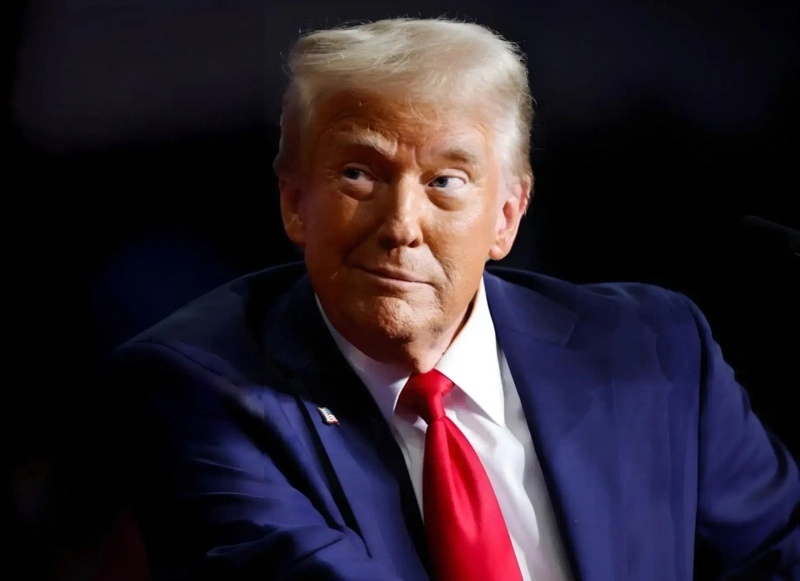
The 10% tariff was just a taste. The Trump administration has substantially escalated trade pressure on China through measures including regulations on Chinese investment in the US, fees on Chinese ships, and demands for Mexico to impose tariffs on China.
According to Bloomberg and other foreign media on the 24th (local time), President Trump recently delivered a memo to the Committee on Foreign Investment in the United States (CFIUS) directing them to restrict Chinese investments in strategic sectors including technology, food supply, farms, minerals, natural resources, ports, and transportation terminals. Following Trump's memo, CFIUS is closely examining foreign capital acquisitions of US companies and real estate.
Chinese investment in North America has decreased more than during the peak pandemic period since just before the US election last year. According to US consulting firm Rhodium Group, Chinese companies announced new investments of $191 million in Canada, Mexico, and the US last quarter, down over 90% from the same period last year.
After the memo restricting Chinese investment was revealed, the Chinese government urged Washington to stop politicizing and weaponizing economic and trade issues.
The Trump administration also demanded Mexican officials impose their own tariffs on Chinese products. Chinese companies had previously moved many production facilities to Mexico to avoid tariffs during Trump's first term.
According to Bloomberg, citing multiple anonymous sources, US Commerce Secretary Howard Lutnik and others met with Mexican Economic Minister Marcelo Ebrard on the 20th and conveyed that Mexico must impose its own tariffs on Chinese products to avoid a 25% tariff.
The US also proposed imposing fees on the use of commercial vessels made in China. Following this news, on the 24th (local time), COSCO Shipping's stock, which had been on the Pentagon's blacklist due to connections with the People's Liberation Army, plunged 8.3% on the Hong Kong stock exchange, while other Chinese shipping and maritime company stocks also fell. The yuan traded at 7.2359 against the dollar as of 12:30 PM in Shanghai, down 0.2%.
The outline for fees on Chinese vessels also includes mandatory provisions requiring some US products to be transported on US ships. This originated from an investigation into China's maritime, logistics, and shipbuilding practices that began under the Biden administration and concluded with a report days before Trump took office.
China's share of global shipbuilding capacity has surged over the past decade, accounting for about half of new ship construction worldwide. According to analytics platform VesselsValue, Chinese ships recorded the highest value globally at $255.2 billion in January. Japan ranked second at $231.4 billion, while the US ranked fourth at $116.4 billion.
According to Bloomberg, these measures are analyzed as the most comprehensive and powerful targeting China during Trump's second term.
Martin Chorzempa, senior fellow at the Peterson Institute for International Economics in Washington, said "This is likely to be disappointing for Beijing, which had hoped to offer large-scale investments as concessions in negotiations with the US."
The Chinese government was known to have considered large-scale investment as one of its cards in negotiations with the US, similar to how the US government prohibited company acquisitions but left room for equity investments in cases like Nippon Steel's US Steel.
UBS Group stated this would impact recent moves by US pension funds to increase investments in Chinese high-tech sectors like AI.
While China's trade surplus with the US reached $295 billion last year, Trump left open the possibility of negotiations with China but threatened 60% tariffs just before taking office.
Kim Jung-ah Guest Reporter kja@hankyung.com

Korea Economic Daily
hankyung@bloomingbit.ioThe Korea Economic Daily Global is a digital media where latest news on Korean companies, industries, and financial markets.