

Wall Street expects S&P to reach 6,500p by year-end due to increased corporate profits
Summary
- Wall Street expects the S&P 500 index to reach 6,500 points by year-end, supported by strong corporate earnings growth.
- Analysts warn that Trump's tariffs could increase market volatility amid economic growth and inflationary pressures.
- Despite the U.S. interest rate cut pause, investors view the tariff announcements as negotiating tactics, suggesting limited market impact.
Corporate profit growth continues despite Trump policy uncertainties
"Corporate performance outlook more important than policies"
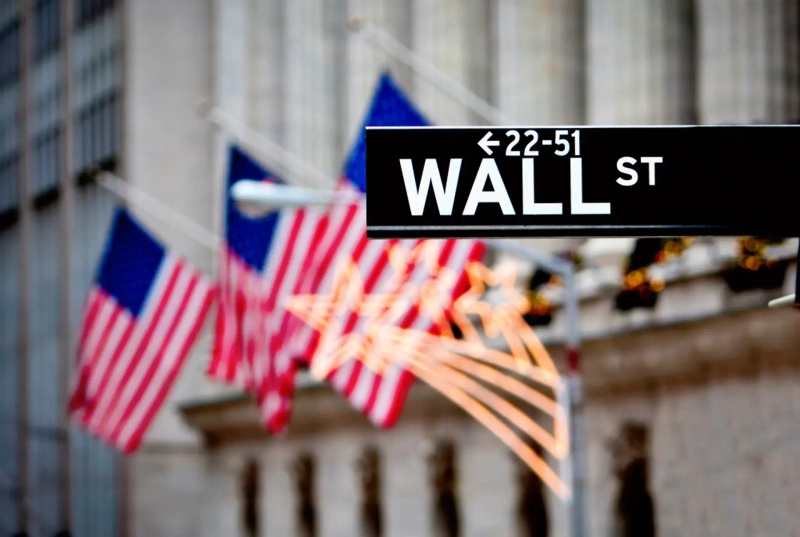
Wall Street expects the S&P 500 to close approximately 9% higher than current levels by year-end. However, analysts also anticipate higher volatility due to uncertainties surrounding Trump's tariff announcements, job cuts, and policy changes.
According to a Reuters survey of U.S. stock strategists, analysts, and fund managers on the 26th (local time), they forecast the S&P 500 index to reach 6,500 points by year-end. This target remains unchanged from the November survey. The survey was conducted between February 13-25.
This target represents a 9% increase from the previous day's closing price of 5,955.25 points.
After posting gains exceeding 20% for two consecutive years, the S&P 500 has risen 1.3% this year.
Strategists expect solid corporate earnings growth to support stock price increases. They also suggest that Trump's growth-oriented policies, including tax cuts and deregulation, could stimulate the economy.
However, they warn that tariffs could increase inflationary pressures while the Federal Reserve has paused its rate-cutting cycle.
Anthony Saglimbene, chief market strategist at Ameriprise Financial, noted that "The economy is growing and inflation is persistent, but corporate profits are increasing." However, he cautioned that "tariffs could derail some of this." He added that U.S. investors might still view the tariff announcements as negotiating tactics, limiting their impact.
President Trump has imposed new 10% tariffs on all Chinese imports and announced 25% tariffs on global steel and aluminum imports. He also mentioned that deferred 25% tariffs on Mexico and Canada would begin next week, and plans for 25% tariffs on automotive, semiconductor, and pharmaceutical imports.
Recent concerns about economic recession have emerged. February's U.S. consumer confidence showed the sharpest decline in three and a half years, while 12-month inflation expectations surged.
Thousands of U.S. government employees have been laid off in recent weeks due to President Trump's federal workforce reduction plan, though these job cuts haven't yet appeared in official data.
When asked about the likelihood of at least a 10% stock market decline over the next three months, 13 out of 19 respondents indicated high or very high probability, while 6 said the probability was low.
Kristina Hooper, chief global market strategist at Invesco, stated, "Short-term volatility is possible." She emphasized that "policies are less important than fundamentals like corporate earnings" and noted "too many unknowns this year." She forecasts the S&P 500 to end the year at 6,360.
According to LSEG, analysts expect S&P 500 companies' earnings growth to reach 11.1% this year. While slightly lower than last year's 11.7%, this would still be the highest since 2021.
LSEG data shows the S&P 500 trading at a price-earnings ratio (PER) of about 22 times this year, compared to the 10-year average PER of 18.
Strategists continue to favor the financial sector as their top pick for the year, citing positive outlook for deregulation under the Trump administration.
Kim Jung-a, Contributing Writer kja@hankyung.com

Korea Economic Daily
hankyung@bloomingbit.ioThe Korea Economic Daily Global is a digital media where latest news on Korean companies, industries, and financial markets.