

PiCK
"Should have sold when Buffett sold"...retail investors sigh as Nasdaq plummets [New York Stock Market Briefing]
Summary
- The New York stock market plunged due to President Trump's remarks, causing losses for U.S. stock investors.
- Goldman Sachs lowered its U.S. GDP growth forecast, warning that tariff increases could cause companies to delay investments.
- Online communities are highlighting Berkshire Hathaway's portfolio adjustments, with active discussions about the U.S. market weakness.
Nasdaq sees biggest drop in two and a half years
Influenced by Trump's "willing to accept recession" remarks
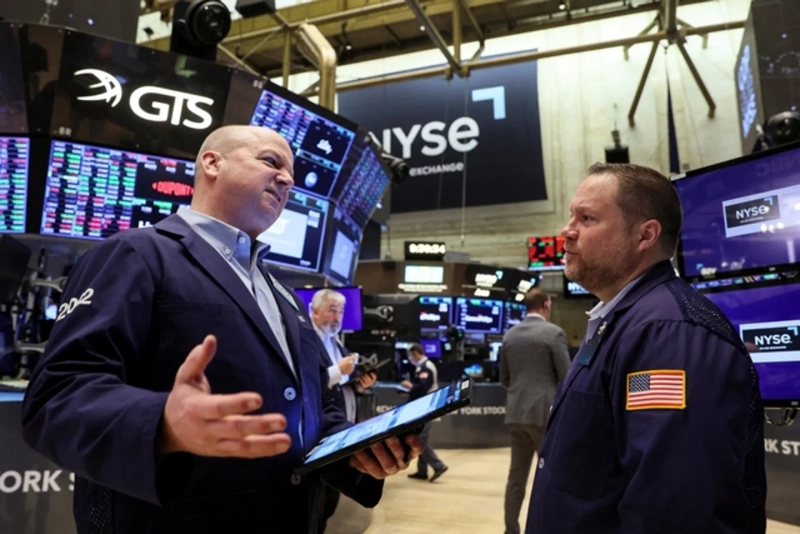
Major indices plunged across the New York stock market. This comes as U.S. President Donald Trump stated he would accept a U.S. recession resulting from tariff impositions.
On the 10th (local time), near the close of trading at the New York Stock Exchange (NYSE), the Dow Jones Industrial Average closed at 41,911.71, down 890.01 points (2.08%) from the previous day. The Standard & Poor's (S&P) 500 index fell 155.64 points (2.70%) to 5,614.56, and the Nasdaq Composite plummeted 727.90 points (4.00%) to close at 17,468.32.
This marks the first time the Nasdaq index has fallen below 18,000 since October last year. The drop was also the largest since September 13, 2022 (-5.16%).
What crashed the market today was President Trump's remarks. In an interview with Fox News on the 9th, he indicated he would push forward with high tariff policies even at the risk of recession. When asked if he anticipated a recession this year, he said, "What we're doing is bringing wealth back to America," adding that "a certain transitional period is needed."
Regarding the recent market correction, President Trump specifically stated, "To be fair, it's not 'much'," emphasizing that "What I'm trying to do is build a strong nation, and we need to do the right thing. It's about building a tremendous foundation for the future."
The market showed convulsions in response to President Trump's hardline stance. A sell-off phenomenon emerged as investors rushed to exit the stock market.
Goldman Sachs significantly lowered its U.S. GDP growth forecast for this year from 2.4% to 1.7%. The firm's chief economist, Jan Hatzius, warned that "our trade policy assumptions have changed quite pessimistically, and the government has predicted a short-term growth slowdown due to tariff impositions," cautioning that tariff increases could raise consumer prices, tighten financial conditions, and cause companies to delay investments.
Some analysts suggest that President Trump is attempting to implement a kind of 'big bath' (removing risk factors at once) early in his administration. This comes as the U.S. stock market has risen sharply over the past two years, with the S&P 500 index climbing 53% during that period.
Technology stocks that led the U.S. market's rise over the past two years led today's decline. All of the 'Magnificent 7 (M7),' referring to seven giant tech companies, plummeted. Apple, Nvidia, Meta Platforms, and Alphabet all fell around 5%, while Microsoft and Amazon.com recorded declines of about 3%.
Tesla, in particular, crashed 15.43%, its largest drop in five years.
Losses appear inevitable for individual investors (known as "Western ants") who have invested in U.S. stocks. According to the Korea Securities Depository, these investors net purchased $824.99 million worth of 'Direxion Daily Tesla Bull 2X,' an exchange-traded fund (ETF) that tracks Tesla's stock price at double the rate, over the past month (February 8-March 7). The second most purchased was Tesla stock itself, with net purchases amounting to $781.89 million.
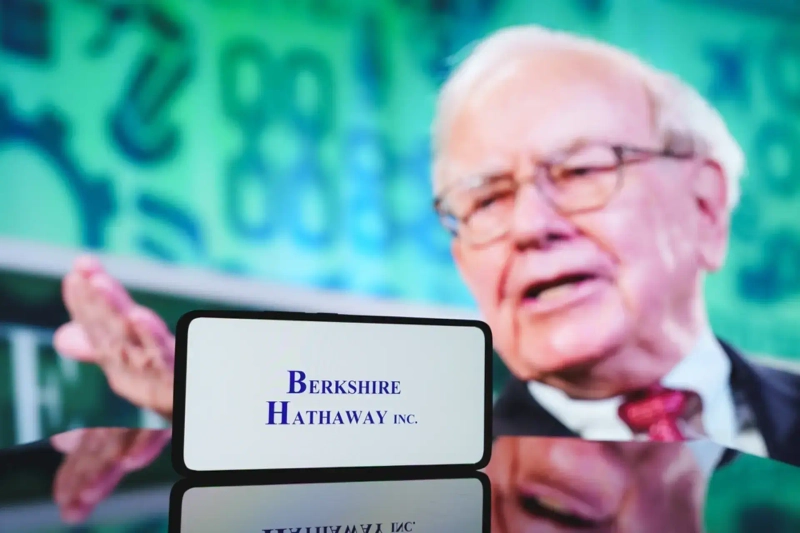
As the U.S. market correction continues, online communities are highlighting Warren Buffett's preemptive cash-raising moves. Berkshire Hathaway, led by the "Oracle of Omaha," has recently been selling stocks from its portfolio and securing cash. One online community posted his photo with the phrase "Who has dementia?" This appears to target netizens who mocked the selling of Berkshire Hathaway shares when the U.S. market was strong.
According to the Chicago Mercantile Exchange (CME) FedWatch Tool, the probability of a 50bp rate cut by the end of June has jumped to 38.1% in the federal funds rate futures market.
This is the highest level in 15 months since November 2023's 28.7%.
The Chicago Board Options Exchange (CBOE) Volatility Index (VIX) recorded 27.86, up 4.49 points (19.22%) from the previous session.
Case Han, Hankyung.com reporter case@hankyung.com

Korea Economic Daily
hankyung@bloomingbit.ioThe Korea Economic Daily Global is a digital media where latest news on Korean companies, industries, and financial markets.