

PiCK
US February CPI Below Expectations... Financial Sector Says "Stagflation Concerns Eased"
Summary
- US February Consumer Price Index (CPI) came in below expectations, easing concerns about stagflation, according to the report.
- The report stated that price increase risks due to the Trump administration's tariffs remain, requiring continued vigilance in monitoring trends.
- The US benchmark interest rate is expected to remain unchanged at the March Federal Open Market Committee (FOMC) meeting, according to the report.
"Tariffs to be fully implemented from March... Need to monitor price trends"
"Interest rates expected to remain unchanged at March FOMC"
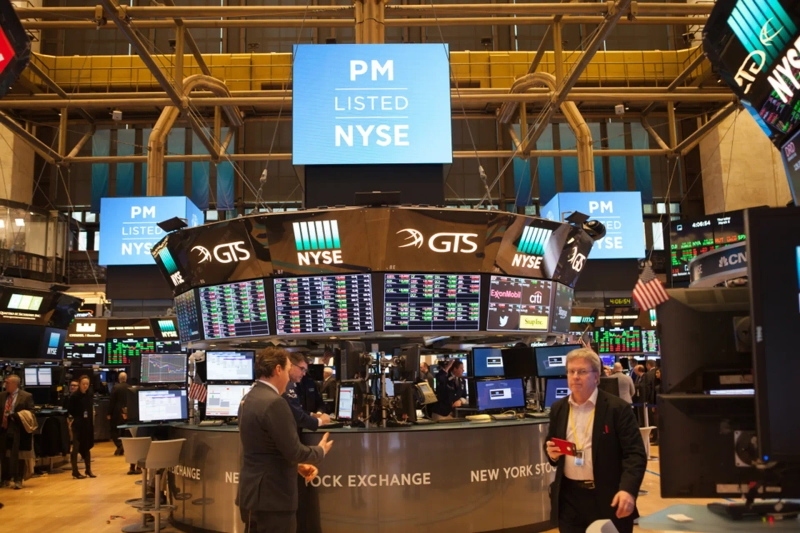
The US Consumer Price Index (CPI) for February came in below expectations. Analysts say concerns about stagflation (price increases amid economic recession) have eased. However, some view that it's too early to be relieved as the Trump administration's tariff risks remain. The Federal Reserve (Fed) is expected to remain cautious about interest rate cuts.
According to the US Department of Labor on the 12th (local time), February CPI rose 2.8% year-on-year. This is slightly below the 2.9% forecast compiled by Dow Jones. The month-on-month increase was also 0.2%, lower than the expected 0.3%. Core CPI, excluding energy and food, rose 3.1% year-on-year and 0.2% month-on-month, both below market expectations (3.2% and 0.3%).
Korea Investment Securities assessed that stagflation concerns have subsided. Research analyst Moon Da-woon said, "The market was exploring the possibility of stagflation due to inflation risks from Trump's tariff policies. Some worried that tariffs on China implemented from February would affect goods prices," but added, "(In February) as forward demand slowed due to price concerns, inflation showed a gradual slowdown."
While February's CPI gave the market some relief, analysts suggest maintaining caution and monitoring trends. This is because Trump's tariff uncertainties remain. Jeon Gyu-yeon, a researcher at Hana Securities, explained, "In February, there were no actual tariffs imposed other than the 10% tariff on Chinese goods. However, in March, steel and aluminum tariffs, an additional 10% tariff on Chinese goods, and tariffs on Canadian and Mexican imports not covered by the United States-Mexico-Canada Agreement (USMCA) have become reality."
He added, "If reciprocal tariffs and item-specific tariffs on automobiles and other products are imposed sequentially in April, concerns about cost increases will inevitably continue. Short-term inflation expectations are also on an upward trend."
The US benchmark interest rate is expected to remain unchanged at the March Federal Open Market Committee (FOMC) meeting. The current benchmark rate is 4.25-4.5% per annum. Analyst Moon said, "The Fed will keep rates unchanged at the March FOMC," and "is expected to reaffirm concerns about underlying inflation pressures and upside risks to future inflation."
Researcher Jeon also stated, "Although February inflation showed stability, the Fed is expected to maintain its interest rate freeze stance for the time being," adding, "The job market is slowing as the Fed wants, and upside risks to inflation remain significant. The Fed is likely to make policy decisions while monitoring the impact of trade disputes on inflation." Hana Securities expects the Fed to cut interest rates twice starting in June.
Jin Young-gi, Hankyung.com reporter young71@hankyung.com

Korea Economic Daily
hankyung@bloomingbit.ioThe Korea Economic Daily Global is a digital media where latest news on Korean companies, industries, and financial markets.