

US Budget Deficit Hits Record High... "No Impact from DOGE Yet"
Summary
- The U.S. government announced that its budget deficit has reached a record high of $1.147 trillion.
- Despite the Department of Government Efficiency (DOGE)'s efforts to reduce spending, no clear effects have been observed.
- Warnings indicate that extending the Tax Cuts and Jobs Act will create an additional $3.3 trillion deficit over the next 10 years.
$1.5 Trillion Deficit in First 5 Months of Fiscal Year 2025
Interest Burden on Government Debt Alone Reaches $478 Billion
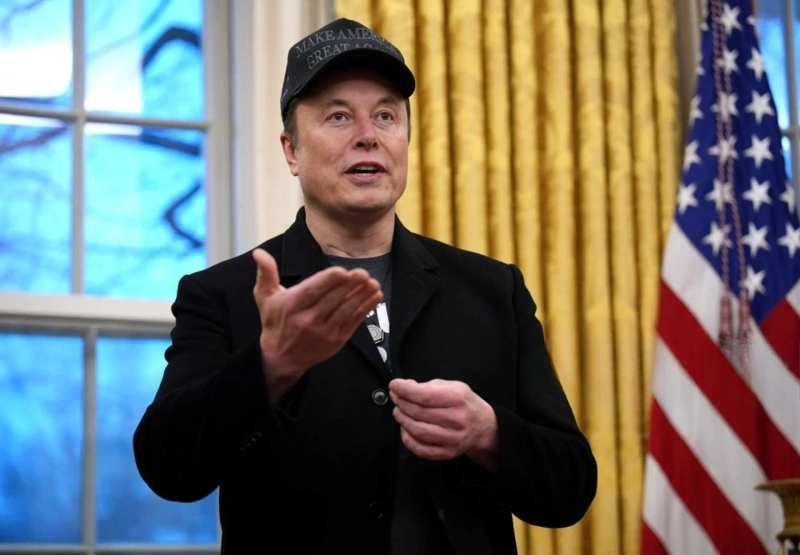
The U.S. government's budget deficit for the first five months of this fiscal year has reached a record high. Analysis suggests that despite Elon Musk leading government spending cuts through the Department of Government Efficiency (DOGE), significant effects have yet to be seen.
The U.S. Treasury Department announced on the 12th (local time) that the budget deficit for the first five months (October 2024-February 2025) of fiscal year 2025 totaled $1.147 trillion. This exceeds the $1.047 trillion from fiscal year 2021 during the COVID-19 pandemic, making it the largest deficit on record.
Medicare was the area with the most notable increase in spending during this period, reaching $518 billion, up $124 billion compared to the same period last year. The interest burden on U.S. government debt was calculated at $478 billion, an increase of $45 billion.
The U.S. government's deficit for the month of February alone was $307 billion, almost 2.5 times that of January. This represents a 3.7% increase compared to February 2024. A Treasury spokesperson stated that both revenue and spending in February hit record highs. Government spending in February was $603 billion, about 6% higher than the same period last year. Considering that President Donald Trump took office on January 20, spending relative to budget is larger than during the previous Biden administration.
DOGE aims to reduce the budget deficit by $1 trillion by 2026. Regarding this, a Treasury spokesperson said, "There is no clear impact from DOGE's efforts yet."
DOGE has claimed to have already saved over $100 billion in budget. However, only a few departments actually reduced spending. USAID's February spending was $226 million, about half of the same period last year.
However, spending increased by 3% ($5 billion) in the health sector and by 6% ($8 billion) in social security.
The Treasury's direct expenditures also increased by $29 billion compared to the same period last year. Debt servicing costs rose by $10 billion to $86 billion, and tax credits and related payments increased by $14 billion.
As President Trump has indicated he would supplement revenue through tariffs, the effects of the additional 10% tariff on China that took effect last month were not clearly reflected in February's revenue and expenditure statistics. A Treasury official said the tariff effects would become more apparent in March statistics.
Meanwhile, President Trump is pushing to extend the "Tax Cuts and Jobs Act" introduced during his first term. He argues that the tax cut policy will stimulate economic growth. CNBC reported, "Various U.S. think tanks warn that if this bill is extended, it will create an additional $3.3 trillion deficit over the next 10 years."
New York=Park Shin-young, Special Correspondent nyusos@hankyung.com

Korea Economic Daily
hankyung@bloomingbit.ioThe Korea Economic Daily Global is a digital media where latest news on Korean companies, industries, and financial markets.