

Wanting lower interest rates but appointing a 'hawk' as No. 2?... Trump's Fed big picture [Kim In-yep's Macro Decode]
Summary
- President Donald Trump has appointed Michelle Bowman as Fed Vice Chair to lower US Treasury rates, according to reports.
- Lowering US Treasury rates can stimulate consumption and drive investment, and the administration plans to ease bank regulations to promote Treasury purchases.
- The Trump administration is considering inducing a recession or promoting Treasury purchases through allies to push for rate cuts.
Trump wants to lower US Treasury rates for the people
$6.5 trillion in bonds mature in first half of year... need to reduce interest burden
Powell: "Will not yield to pressure for rate cuts"
Inducing 'recession' for rate cuts is risky
Pressuring allies to buy Treasury bonds takes time
Likely to ease bank regulations to increase Treasury purchases
Financial regulation 'dove' Bowman is the right person
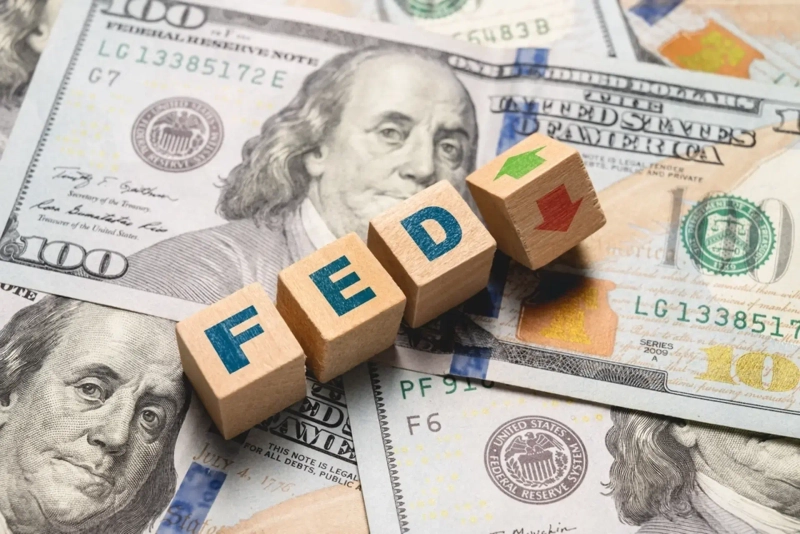
The New York Times (NYT), Wall Street Journal (WSJ), and other foreign media reported on the 12th (local time) that US President Donald Trump has appointed Michelle Bowman, a Federal Reserve (Fed) board member, as Fed Vice Chair.
Board member Bowman is classified as a definite 'hawk' (preferring monetary tightening) within the Fed. When the Fed cut its benchmark interest rate by 0.5% points last September, she was the only one on the board to cast a dissenting vote. Why would President Trump, who habitually pressured the Fed to cut rates, appoint the hawkish Bowman as Vice Chair?
To understand the background of Bowman's nomination as Vice Chair, we need to examine the US fiscal situation. According to Kiwoom Securities, US Treasury bonds maturing this year total $9 trillion (about 13,000 trillion won). Of these, 72.6% mature in the first half of the year. Lowering US Treasury rates would reduce the interest burden on about $6.5 trillion worth of bonds during the Trump administration. Additionally, since US Treasury rates serve as benchmarks for US consumers' mortgages, car loans, and corporate bonds, lowering rates can stimulate consumption and drive investment.
The fastest way to lower US Treasury rates is for the Fed to cut rates. Treasury rates are calculated as the sum of the policy rate (Fed benchmark rate) and the term premium (excess return). However, Fed Chair Jerome Powell did not yield to President Trump's pressure for rate cuts during Trump's first administration and maintains that he will not be swayed by external pressure now. Treasury Secretary Scott Bessent also said, "President Trump and I are focusing on the 10-year Treasury rate. We are not asking the Fed to cut rates."
Some analysts suggest that President Trump is trying to cause a short-term recession through trade wars to drive down Treasury rates. Generally, when signs of recession appear, the Fed cuts benchmark rates to stimulate the economy. In this case, the market could preemptively lower Treasury rates in anticipation of benchmark rate cuts. The analysis is that if the Trump administration cannot force the Fed to cut benchmark rates, their plan is to create a situation where rates must be cut. However, once the economy falls into recession, massive fiscal spending would be needed to revive it, limiting Trump's ability to induce a recession. It's like burning down the house to kill a bedbug.
Alternatively, the US could encourage domestic and foreign Treasury purchases to lower rates. When demand for Treasuries increases, their prices rise, and yields, which have an inverse relationship with prices, fall.
The first scenario involves forcing foreign governments to buy US Treasuries. Likened to the Plaza Accord, which forced Japan and Germany to appreciate their currencies, this would be a "Mar-a-Lago Accord" compelling allies to purchase US Treasuries.
This idea was included in a report published last November by Steven Miran, current Chair of the White House Council of Economic Advisers (CEA). Miran (then chief strategist at Hudson Bay Capital Management) argued that since US allies depend on American security, they should pay for it by buying Treasuries. However, it remains uncertain whether this could be achieved in the first half of the year, as it would require strengthening US negotiating power through trade wars.
Another idea is to ease regulations so US domestic banks can increase Treasury purchases. US banks have faced stricter Treasury purchase regulations since the Silicon Valley Bank (SVB) crisis in 2023. At that time, SVB held a significant portion of its assets in US Treasuries, considered safe assets, but when interest rates surged, Treasury prices fell, reducing asset values and triggering a bank run.
The Biden administration sought to strengthen Treasury purchase regulations for mid-sized banks with assets of $100-250 billion to prevent such incidents from recurring. It also pushed for stricter stress tests for Global Systemically Important Banks (G-SIBs). These efforts were led by former Fed Vice Chair Michael Barr.
Bowman holds the opposite position from Barr. When Barr argued for strengthening bank supervision regulations after the SVB crisis, Bowman countered that "we need to look at the unique characteristics and business models of banks affected by the SVB crisis" and that "imposing new and excessive regulations and supervision across all banks is not justified." She also voted against strengthening stress tests for G-SIBs like JPMorgan Chase and Goldman Sachs. While she's a hawk on monetary policy, she's a 'dove' on bank regulation.
The Trump administration has consistently advocated for easing bank regulations and lowering Treasury rates since taking office. Secretary Bessent stated on the 6th that he is focusing on the Supplementary Leverage Ratio (SLR) regulation, introduced to strengthen capital soundness of large banks after the financial crisis. He also said he would use the Financial Stability Oversight Council (FSOC) to change financial regulations that place excessive burdens on banks and correct misguided supervisory culture. It remains to be seen whether Bowman will help ease bank regulations and lower Treasury rates in accordance with President Trump's wishes.
[Macro Decode is content that explains global macroeconomic issues such as interest rates, exchange rates, growth, and labor markets in an easy-to-understand way. Please subscribe to the reporter's page for easier and deeper economic articles]
Reporter Kim In-yep inside@hankyung.com

Korea Economic Daily
hankyung@bloomingbit.ioThe Korea Economic Daily Global is a digital media where latest news on Korean companies, industries, and financial markets.