

US Government Warns of 'Tariff Bomb'... Korea Cannot Rest Easy Either
Summary
- The US has expressed its intention to impose reciprocal tariffs in April, and Korea is focusing on developing strategies to mitigate this, according to the report.
- Particularly, observations that the Korea-US FTA will be difficult to prevent reciprocal tariffs have grown, and non-tariff barriers are likely to become the main justification for US pressure.
- The government is requesting non-discriminatory treatment through this measure, but many forecast that trade pressure will intensify after April.
US Government Determined to Impose Tariffs in April... Korean Government Focuses on 'Minimizing Impact'
Non-tariff Barriers Such as Beef and Google Maps Likely to Become Justification for Pressure
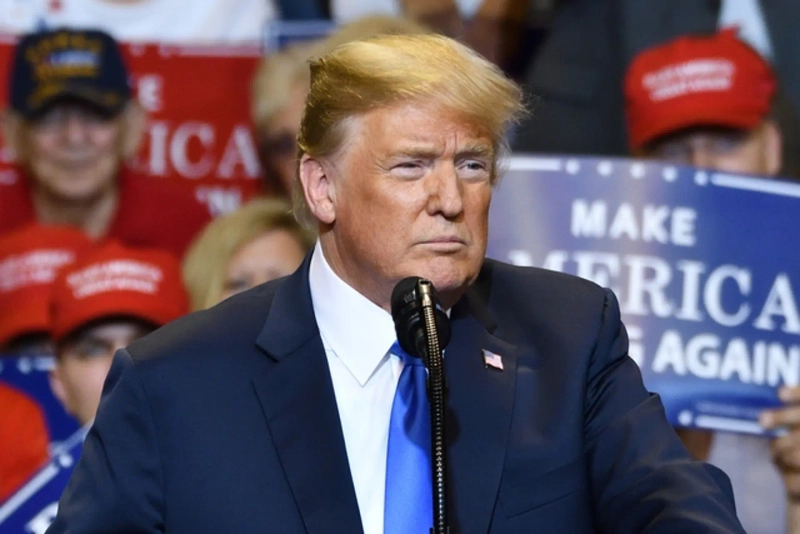
The United States has announced that it will first implement reciprocal tariffs against major countries around the world in April, then use this as leverage to pressure counterparts and restructure bilateral trade orders in ways favorable to itself. This is interpreted as a concrete implementation of the 'tariffs first, negotiations later' approach.
South Korea, a party to the Korea-US Free Trade Agreement (FTA), is understood to be within the scope of reciprocal tariffs for major items such as automobiles, and is working on strategies to mitigate US trade pressure that will likely focus on non-tariff items.
US Secretary of State Marco Rubio stated on the 10th (local time) on CBS, "After establishing a new baseline based on fairness and reciprocity, we will proceed with bilateral negotiations with countries around the world to create new trade methods appropriate for both sides."
Rubio's statement is seen as clearly revealing the US position that reciprocal tariffs will be enforced next month.
Despite world leaders and high-ranking officials, including Japanese Prime Minister Shigeru Ishiba and Indian Prime Minister Narendra Modi, flocking to Washington DC to promise large-scale investments, increased imports of US energy, and reduced tariffs on US goods, the Trump administration has indicated that negotiations will only come after April.
The Korean government has consistently maintained its position asking the US not to impose reciprocal tariffs on Korea, including through Trade Minister Ahn Duk-geun's visit to the US.
However, the Trump administration has stated it will impose reciprocal tariffs considering various non-tariff barrier elements, including sensitive agricultural import regulations such as the 'ban on beef imports under 30 months.' This has strengthened observations that the Korea-US FTA will not serve as a shield against reciprocal tariffs.
US Commerce Secretary Howard Lutnick also recently mentioned that reciprocal tariffs will be imposed on all imported cars regardless of nationality, including those from Korea, Japan, and Germany, increasing the possibility of immediate reciprocal tariffs on automobiles, Korea's main export item.
Chief Trade Negotiator Jung In-kyo, during his US visit on the 14th (local time), told Washington correspondents, "We requested (the US side) to provide at least non-discriminatory treatment compared to major countries." This shows that Korea's policy focus is shifting from 'complete exemption' to 'minimizing impact.'
The Korean government is focusing on minimizing the level of pressure on Korea by resolving US misunderstandings, such as the '4x tariff rate' mentioned by President Trump, through consecutive US visits by high-ranking trade officials including Minister Ahn and Chief Negotiator Jung, using Korea's cooperation in shipbuilding and gas as leverage.
However, as the US plans to pursue individual negotiations after April, many predict that trade pressure on Korea, the 8th largest trade deficit country for the US, will intensify afterward.
Since Korea has applied zero tariffs to most goods under the Korea-US FTA, non-tariff barriers are likely to become the main justification for US pressure in the future.
In particular, sensitive domestic issues such as the restriction on beef imports under 30 months, Google's export of precision maps, Korea's drug pricing policy, and the screen quota system are highly likely to become targets of pressure.
There are also concerns that the Korea-US trade order could be significantly disrupted if the US demands a revision of the Korea-US FTA or its complete abolition followed by a new agreement, as during Trump's first term.
Given that President Trump has strongly expressed his will to protect the US auto industry, which has a significant impact on domestic jobs, since his campaign, there is also the possibility that he might pursue a plan to institutionalize tariffs on automobiles in the long term by making them an exception to the Korea-US FTA exemption items.
Jang Sang-sik, head of the Korea International Trade Association's International Trade Research Institute, said, "Due to the effects of the Korea-US FTA, there is little basis for imposing reciprocal tariffs, but there seems to be room to impose them based on issues such as the trade deficit with the US, services, digital, and drug prices," adding, "Although I cannot predict with certainty, there is a possibility that this could be linked to a re-amendment of the Korea-US FTA."
Park Su-rim, Hankyung.com reporter paksr365@hankyung.com

Korea Economic Daily
hankyung@bloomingbit.ioThe Korea Economic Daily Global is a digital media where latest news on Korean companies, industries, and financial markets.