

PiCK
Trump's Manufacturing Revival Plan Backfires... Is Dollar Hegemony Shaking?
Summary
- The article reported that as President Trump's tariff policies take full effect, global investors are growing increasingly anxious.
- It stated that as a weak dollar policy is emphasized as an essential condition for manufacturing revival, the future value of US stocks and treasury bonds is becoming uncertain.
- The article reported that Europe's expanded military spending and China's economic stimulus are also encouraging dollar weakness, with changes expected in global fund flows.
US Pushing Tariffs to Revive Manufacturing
Weak Dollar Essential for Manufacturing Revival
EU's Expanded Military Spending and China's Economic Stimulus
Also Encouraging a Weaker Dollar
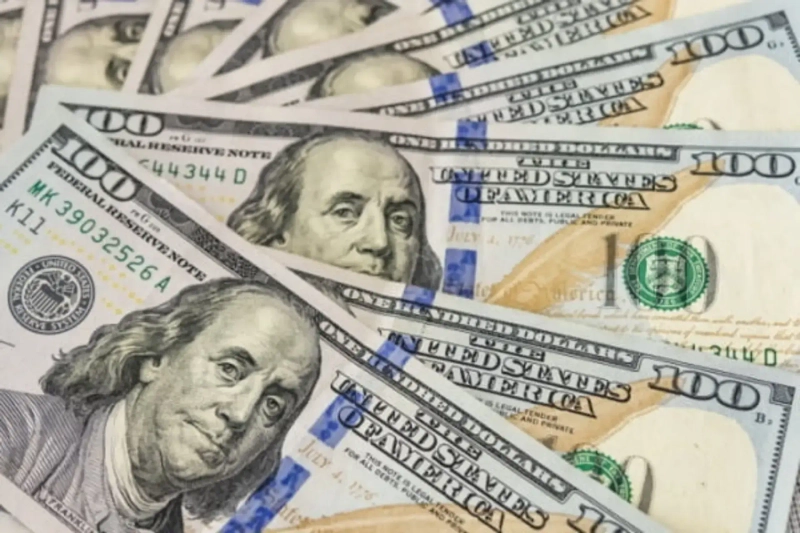
Global investors are growing increasingly anxious as the value of the US dollar continues to fall with Donald Trump's tariff policies taking full effect. This is because the future value of US stocks and treasury bonds becomes uncertain if the Trump administration continues to pursue a weak dollar policy.
In a recent interview, President Trump clearly stated, "Build it here, There is no tariff," making it clear that the purpose of imposing tariffs is to revive domestic manufacturing and secure jobs through it. A weak dollar must inevitably accompany efforts to secure manufacturing competitiveness.
Dollar Value↓ Since Trump's Inauguration
The Dollar Index, which represents the dollar's value against six major currencies, is barely above 103.7 as of the 17th (current time). The Dollar Index began rising last fall when Trump's election seemed likely and peaked at 109.96 on January 13 this year.
However, it has been on a downward trend as President Trump announced a series of tariffs on Canada and Mexico, reciprocal tariffs, and steel and aluminum tariffs immediately after taking office. This is because it has become increasingly clear that the main reason President Trump is pursuing tariff policies is to revive US manufacturing. For US manufacturing to revive, domestic and foreign companies need to build manufacturing facilities in the US while simultaneously securing export competitiveness through a weaker dollar.
President Trump described dollar strength as "a disaster for our manufacturers" last year. Steven Miron, nominated as chairman of the White House Council of Economic Advisers (CEA), has also expressed in previous research reports the need to move away from dollar strength.
Global dollar investors are anxious as it becomes clear that the Trump administration is prioritizing manufacturing enhancement. This is due to the possibility that the US government might change the direction of the strong dollar policy that has been maintained for generations.
Budget Cuts Also a Factor in Dollar Weakness
The Trump administration's move to reduce defense spending that had been poured into allied security is also a factor in dollar weakness. Scott Bessent, US Treasury Secretary, said in a speech at the New York Economic Club on the 6th, "Increased burden-sharing among allies for security is very important," adding, "American taxes, American military equipment, and sometimes American lives should no longer be the sole burden of maintaining friendly trade and mutual security."
The US government has poured astronomical budgets into defense spending for the purpose of allied security and managed this through issuing treasury bonds. In conjunction with this, foreign investors buying US treasury bonds maintained dollar strength. As a result, global funds flowed into US stocks and treasury bonds. However, if the US government tolerates dollar weakness, there will inevitably be major changes in these global investor fund flows.
In addition, the European Union (EU)'s expanded military spending, including Germany, and China's economic stimulus are accelerating dollar weakness. While the US has strengthened its resolve to reduce defense spending for allies, major European countries are considering expanding military spending and relaxing fiscal rules, which is raising the value of the euro.
Sonu Varghese, global market strategist at investment advisory firm Carson Group, told the Wall Street Journal (WSJ) that regarding these changes in Europe, "These movements could continue as they are commitments rather than one-time measures like pandemic stimulus."
Tariffs Could Be a Double-Edged Sword
It remains to be seen whether the current dollar weakness will continue. This is because if reciprocal tariffs are implemented from April 2 as President Trump has predicted, import prices in the US could rise, potentially reigniting inflation. In this case, the Federal Reserve's rate cut pace could be slower than expected.
Trump's promised tax cuts are also a variable. This is because the fiscal deficit will increase if tariff revenues cannot fill the fiscal gap created by tax cuts. If this causes US treasury yields to rise, it will act as pressure for dollar strength.
Trump's contradictory economic policies, wanting to solve the trade deficit while not wanting to give up dollar hegemony, add to the uncertainty. In January, regarding BRICS' de-dollarization discussions led by China and Russia, President Trump warned, "If they try to replace the dollar with another currency, I will impose 100% tariffs."
New York=Park Shin-young Special Correspondent nyusos@hankyung.com

Korea Economic Daily
hankyung@bloomingbit.ioThe Korea Economic Daily Global is a digital media where latest news on Korean companies, industries, and financial markets.