

"Trump's Reciprocal Tariffs, a Prescription for Stagflation"
Summary
- If Trump's reciprocal tariffs are implemented as planned, they could cause stagflation in the US economy and raise inflation to the 4% range, warned Professor Peter Morici of the University of Maryland.
- Current US manufacturing depends on imported semiconductors and computers, and when tariffs are imposed, US manufacturers are likely to bring some production back home from overseas.
- Reciprocal tariffs will lower Trump's approval ratings and increase US economic uncertainty, leading to greater business risks and reduced investment, Morici warned.
US Economist's Column Warns "Reciprocal Tariffs Will Lead to Trump's Downfall"
"When Average Tariffs Reach 20%, US Inflation Will Rise to 4%"
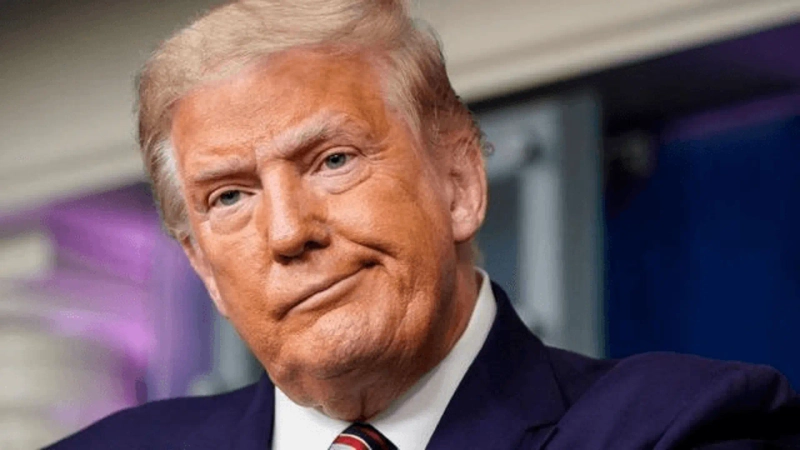
A US economist has warned that if Trump implements reciprocal tariffs as planned in April, it could become a prescription for stagflation in the United States.
Peter Morici, an economics professor at the University of Maryland and columnist, mentioned on the 18th (local time) through his MarketWatch column that "reciprocal tariff measures will eventually lower Trump's approval ratings and bring about his downfall."
Morici pointed out that Trump's reciprocal tariffs violate US trade policy implemented since the Reciprocal Trade Agreements Act of 1934. He also said it would be the most blatant violation by the United States of the World Trade Organization's basic rule that member countries do not impose tariffs higher than the most-favored-nation (MFN) rates negotiated with other member countries.
Trump's reciprocal tariffs are a prescription for stagflation that will undermine his credibility with American voters, he noted.
He argued that as the possibility of reciprocal tariffs being imposed in April increases, investors should understand three things.
First, raising tariffs will not solve the US trade deficit. The US trade deficit is determined by America's lack of savings. The United States sells Treasury bonds and other securities overseas, which is reflected in the trade deficit. This is because the sum of US household and business savings does not cover US government borrowing and business investment.
Second, the US dollar, as the world's reserve currency, enjoys strong demand. Compared to the World Bank's purchasing power parity exchange rates, the dollar is generally overvalued. For example, according to the World Bank, if prices for goods in China and the US were equalized, the purchasing power parity exchange rate would be about 3.81 yuan per US dollar, not the current market rate of 7.25 yuan.
This suggests that when the US exports its products to China, it will calculate a much higher 'average disadvantage' equivalent to tariffs, based on purchasing power, adding not only nominal tariff rates but also industrial subsidies and discriminatory regulations.
Trump's reciprocal tariffs will be calculated in the manner described above, which will lead to high tariffs. While foreign producers will suffer, American consumers will also suffer by paying higher prices, he pointed out.
During Trump's first term, he raised tariffs on Chinese goods from the existing 3.1% to an average of 19.3%, but at that time it had only a small impact on US prices. However, that was before the COVID-19 pandemic, when globalization kept inflation and inflation expectations low. Today, with companies barely adjusting their supply chains to geopolitical tensions, inflationary pressures are much stronger than they were then.
Americans are already struggling with persistent inflation. Trump's reciprocal tariffs will apply to imports from many countries, not just China, pushing up US inflation expectations. If average tariffs are raised to 20%, Americans will see inflation closer to 4% rather than 2%.
Trump has made easing inflation a goal of his campaign. If tariffs cause inflation, his approval ratings will drop significantly, Morici emphasized.
Third, US manufacturing already relies extensively and systematically on imports. US manufacturing cannot survive without imported semiconductors and imported computers. If today's automakers made all parts using only US components, car prices would be enormously expensive.
While White House trade advisor Peter Navarro is confident that foreign automakers will bear these costs for the US market, current margins for automakers and parts suppliers are only 6% to 7%.
When tariffs are imposed, US manufacturers are likely to bring some production back home from overseas and find suppliers in countries where US tariffs are lowest. Are Trump's tariffs a strategy to increase imports? Or a means to extract concessions? As long as this question remains uncertain and unanswered, the US will be exposed to greater business risks, reduced investment, and slower growth, Morici warned.
Kim Jung-a, Contributing Writer kja@hankyung.com

Korea Economic Daily
hankyung@bloomingbit.ioThe Korea Economic Daily Global is a digital media where latest news on Korean companies, industries, and financial markets.