

US to Designate 'Dirty 15 Countries' for Reciprocal Tariffs on April 2... What About Korea?
Summary
- The US Treasury announced plans to release a tariff list for 'Dirty 15' countries on April 2.
- Korea has a 0% import tariff rate on US goods due to the Korea-US FTA, but still faces risks from non-tariff barriers, according to the report.
- The Korean government's negotiating power is facing a crucial test, with pressure expected on agricultural tariffs and easing non-tariff barriers.
Bessent: "Varies by Country - Also Includes Non-Tariff Barriers"
Interpretation Suggests Possibility of Negotiations Until April 2
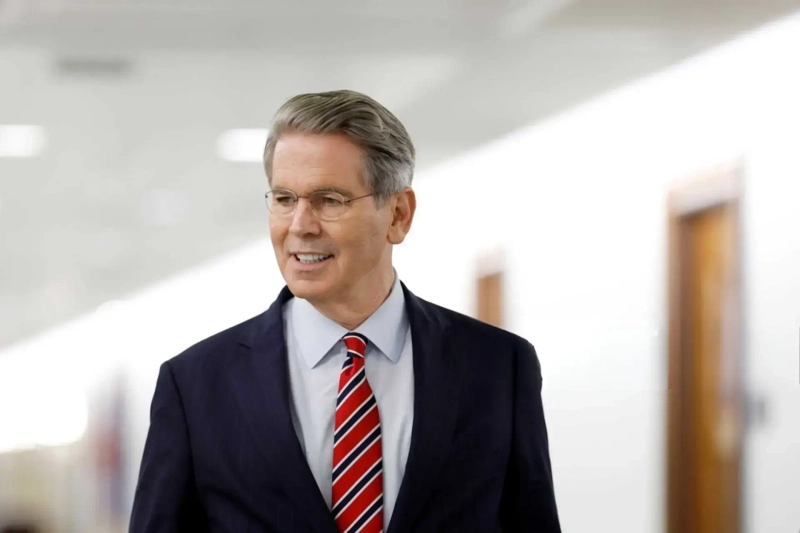
US Treasury Secretary Scott Bessent revealed that regarding the reciprocal tariffs scheduled for the next day, April 2, "some countries have already started negotiations, so tariffs may not be imposed on them." However, she mentioned that "there are countries we call the 'Dirty 15'," drawing attention to whether Korea is included in this 'Dirty 15' list and how it might affect negotiations with Korea.
Secretary Bessent stated in a Fox News interview that day, "We will release a list of tariffs for other countries on April 2," adding that "reciprocal tariff rates will differ by country."
She continued, "There are countries we call the 'Dirty 15,' which impose significant tariffs (on the US)," and said, "We will assign each country a number that we think corresponds to their tariffs."
Secretary Bessent did not disclose which countries are included in the 'Dirty 15.'
Looking at tariffs alone, observers suggest Korea is unlikely to be included in the 'Dirty 15.' India imposes an average 17% tariff on all countries, Brazil averages 11.2%, and Vietnam averages 9.4%. With the Korea-US FTA (Free Trade Agreement), Korea's import tariff rate on US goods is 0%. However, Secretary Bessent mentioned that "these countries have non-tariff barriers that are just as important as tariffs, such as requiring a certain amount of domestic production or conducting safety-unrelated inspections on food or products the US wants to export." This suggests that non-tariff barriers like agricultural tariffs, which the US has consistently demanded Korea address, could potentially be criteria for the 'Dirty 15.'
Secretary Bessent said, "Some countries that treat us the worst have proposed to President Trump that they would significantly lower unfair tariffs." This is interpreted as referring to promises of 'US tariff reductions' from countries like India. She left room for negotiation, saying, "I am optimistic that we may not have to implement some tariffs on April 2."
With about two weeks until tariff implementation, analysts say the Korean government's negotiating power is also being tested.
Currently, it's likely that the US will target non-tariff barriers they've been pressuring for, such as easing import regulations on genetically modified organisms (GMO) agricultural products and lifting age restrictions on beef imports. In this case, the Korean government is expected to face significant political pressure. A government official said, "The US already knows that just as Pennsylvania demands protection for its steel industry, there will be fierce opposition from Korea's agricultural and livestock industries."
Secretary Bessent also stated that tariff barriers would not be erected if currency manipulation, unfair funding, and labor suppression were stopped, suggesting these issues may also need to be addressed.
Ha Ji-eun/Kim Dae-hoon Reporters daepun@hankyung.com

Korea Economic Daily
hankyung@bloomingbit.ioThe Korea Economic Daily Global is a digital media where latest news on Korean companies, industries, and financial markets.