

Trump's Tariff Imposition Causes 20% Surge in Aluminum Prices
Summary
- The price of aluminum has risen by 20% over the past year, increasing the cost burden on beer and carbonated beverage manufacturers.
- The imposition of tariffs by President Trump has increased demand for securing quantities, and bauxite supply disruptions are also major reasons for the price increase.
- The rise in aluminum prices has also been influenced by the increase in premiums in Japan.
$2,678 per ton … 20%↑ in a year
Impact of Bauxite Production Decline
Beverage Industry: "Cost Burden Increased"
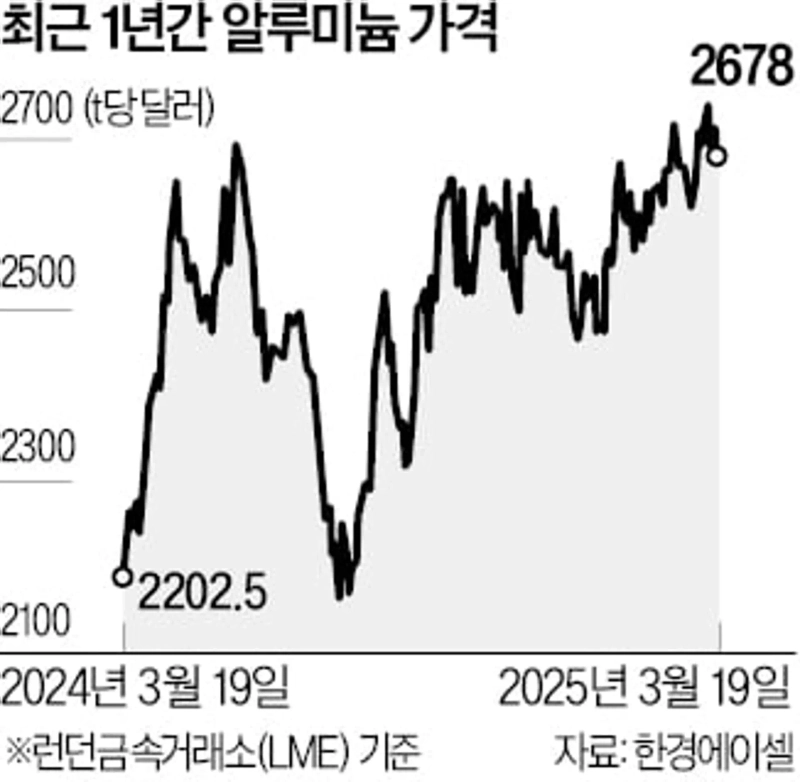
The price of aluminum, used in making cans for carbonated drinks and beer, is on the rise. It has increased by more than 5% this year alone and 20% over the past year. The main reasons are the instability in the supply of bauxite, the primary raw material for aluminum, and U.S. President Donald Trump's imposition of a 25% tariff on aluminum imported into the United States.
According to alternative data platform Hankyung Aicel, the price of aluminum on the London Metal Exchange (LME) was $2,678 per ton as of the previous day. This is an increase of 21.5% and 5.6% compared to a year ago ($2,202.5) and earlier this year ($2,536), respectively.
The price of aluminum rose to $2,737 per ton on the 12th, marking the highest level since May 2022. This is because President Trump started imposing a 25% tariff on steel and aluminum to enhance the competitiveness of the steel and aluminum industries in the United States. The U.S. produces little aluminum domestically and imports more than 80% from countries like Canada, Russia, and China. A raw materials market official said, "As President Trump's tariff policy was anticipated, demand to secure quantities in advance increased even before the actual tax was imposed."
The strong aluminum prices are also significantly influenced by the decline in bauxite production, the primary raw material. Last year, supply disruptions occurred in major bauxite-producing countries like Guinea and Brazil, and production was halted in Australia. Guinea was hit by floods affecting bauxite transportation, and in Brazil, bauxite shipments were suspended due to ship strandings at some ports. U.S. aluminum producer Alcoa also closed its Kwinana refinery in Australia, which could produce 2.91 million tons annually, in the second quarter of last year.
The rise in premiums in Japan, a major aluminum importer in Asia, is also affecting price increases. The premium, which Japan sets quarterly based on LME spot prices, serves as a benchmark for the Asian region. Japan decided to pay a premium of $228 per ton for the January-March period, a 30% increase from the previous quarter ($175).
The food and beverage industry, which makes cans from aluminum, is concerned about the increase in raw material prices. A beverage industry official said, "The can (aluminum) price accounts for the largest portion of beer manufacturing costs," adding, "The increase in raw material prices, combined with high exchange rates, is increasing the cost burden."
Reporter Hyunjin Ra raraland@hankyung.com

Korea Economic Daily
hankyung@bloomingbit.ioThe Korea Economic Daily Global is a digital media where latest news on Korean companies, industries, and financial markets.